


TrimUI has teased the Brick Pro, a vertical handheld that keeps the beloved Game Boy silhouette while adding modern inputs. The company confirmed a larger 4-inch screen and dual analog sticks, signaling a shift from ultra-pocketable simplicity to a more versatile device. A release window has been set for 2026, with hardware specs, pricing, and supported systems still under wraps.
A Modern Take on the Vertical Classic Form
Early images from TrimUI’s official channels show a familiar vertical frame, but the control scheme is newly ambitious: twin analog sticks sit below the D-pad and face buttons, a layout that preserves the classic look without sacrificing contemporary ergonomics. The jump to a 4-inch panel is notable; most compact verticals, like the Miyoo Mini Plus and Anbernic RG35XX, top out at 3.5 inches. That extra real estate should improve readability for text-heavy RPGs and reduce scaling artifacts in 8- and 16-bit titles.
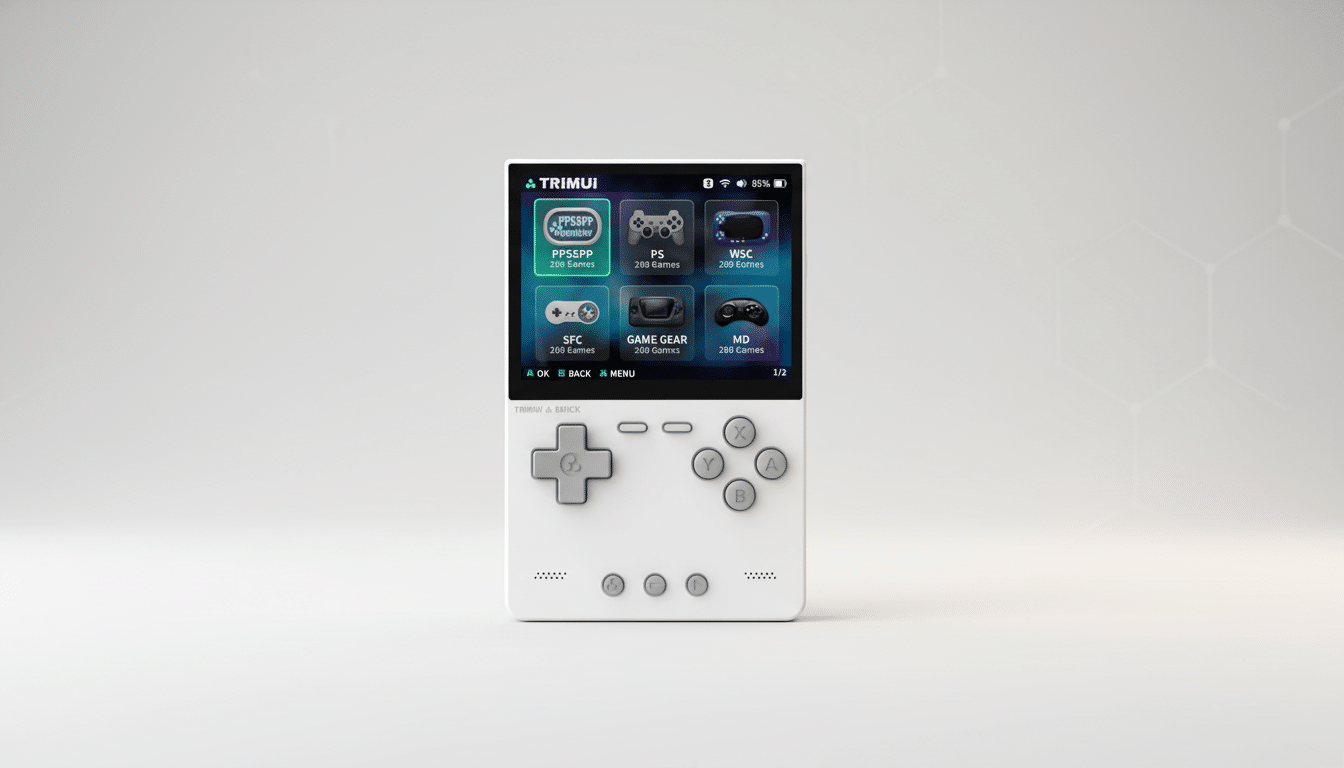
The original Brick leaned hard into portability, omitting analog inputs to keep the device truly pocket-sized. The Pro’s design suggests TrimUI wants to maintain that vertical charm while opening the door to more demanding control schemes. Expect a different hand feel, too: a taller screen and dual sticks typically invite a more substantial grip, which can reduce fatigue during longer play sessions.
Why Dual Sticks Change the Game for Handhelds
Analog sticks are more than a comfort upgrade. They unlock cleaner control mapping for 3D-era libraries and modern ports. Even in retro emulation, the second stick can shoulder camera movement or touchscreen emulation duties in front-ends like RetroArch, and it makes certain titles far more playable. A simple example: the original Ape Escape on PlayStation requires analog input, and twin sticks make it feel natural rather than compromised.
There’s also UI convenience. In many handheld firmware environments, an extra stick can be assigned to fast scrolling, quick save-state navigation, or shader adjustments on the fly. None of this confirms performance targets, of course—but it strongly hints that TrimUI is designing for broader use cases than the first Brick.
Placing Brick Pro in a Crowded Handheld Field
The vertical handheld segment has matured quickly. The Anbernic RG405V brought a 4-inch screen and dual sticks to the format, while devices like the Powkiddy RGB30 experimented with a square 1:1 panel for pixel-perfect scaling. At the premium end, the Analogue Pocket’s repeated sellouts underscored how strong nostalgia remains when paired with high-quality hardware.
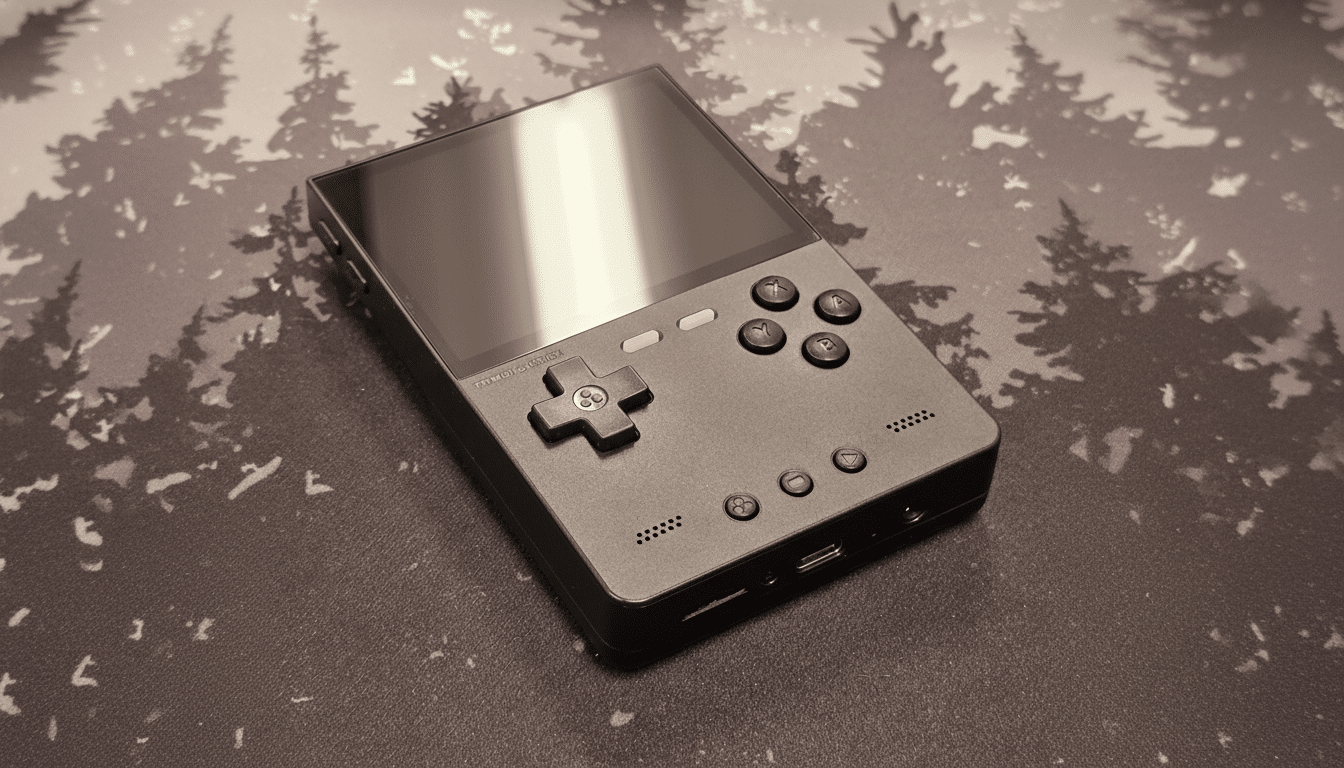
TrimUI’s pitch sits between those worlds: retain the iconic portrait silhouette but make it flexible enough for more than 2D console libraries. That angle is savvy. According to Nintendo’s historical sales data, the Game Boy and Game Boy Color family moved over 118 million units, cementing vertical handhelds as a form factor people instinctively understand. Marrying that familiarity with modern controls gives the Brick Pro a clear identity in a sea of lookalikes.
What We Know and What We Don’t About Brick Pro
Confirmed: a 4-inch display, dual analog sticks, a reworked modern-friendly layout, and a 2026 window. An image circulating on X appears to show a Brick Pro running an emulator-style menu with the twin-stick layout visible, consistent with TrimUI’s teaser. While compelling, it’s not an official post and should be treated as an early, unofficial glimpse.
Unanswered questions remain. TrimUI has not disclosed the chipset, RAM, battery capacity, screen resolution or aspect ratio, OS, or whether there will be features like trigger-style shoulder buttons, Hall-effect sticks, Wi-Fi, or HDMI out. Those details will determine whether the Brick Pro is best positioned for 8- and 16-bit systems with occasional 32-bit dabbling, or if it can comfortably handle more demanding platforms and higher native resolutions.
Early Takeaway: A Promising Vertical Handheld Direction
The Brick Pro looks like a thoughtful evolution rather than a nostalgia cash-in. By preserving the vertical ethos and adding dual sticks and a bigger screen, TrimUI is addressing the most common limitation of tiny portrait handhelds without abandoning their charm. If the company pairs this design with efficient firmware and a capable mid-tier chipset, it could land in a sweet spot for players who want classic aesthetics with fewer control compromises.
Until specs, price, and a firm launch date arrive, the Brick Pro remains a promising silhouette. For now, it signals that the vertical handheld isn’t just surviving—it’s adapting.
