


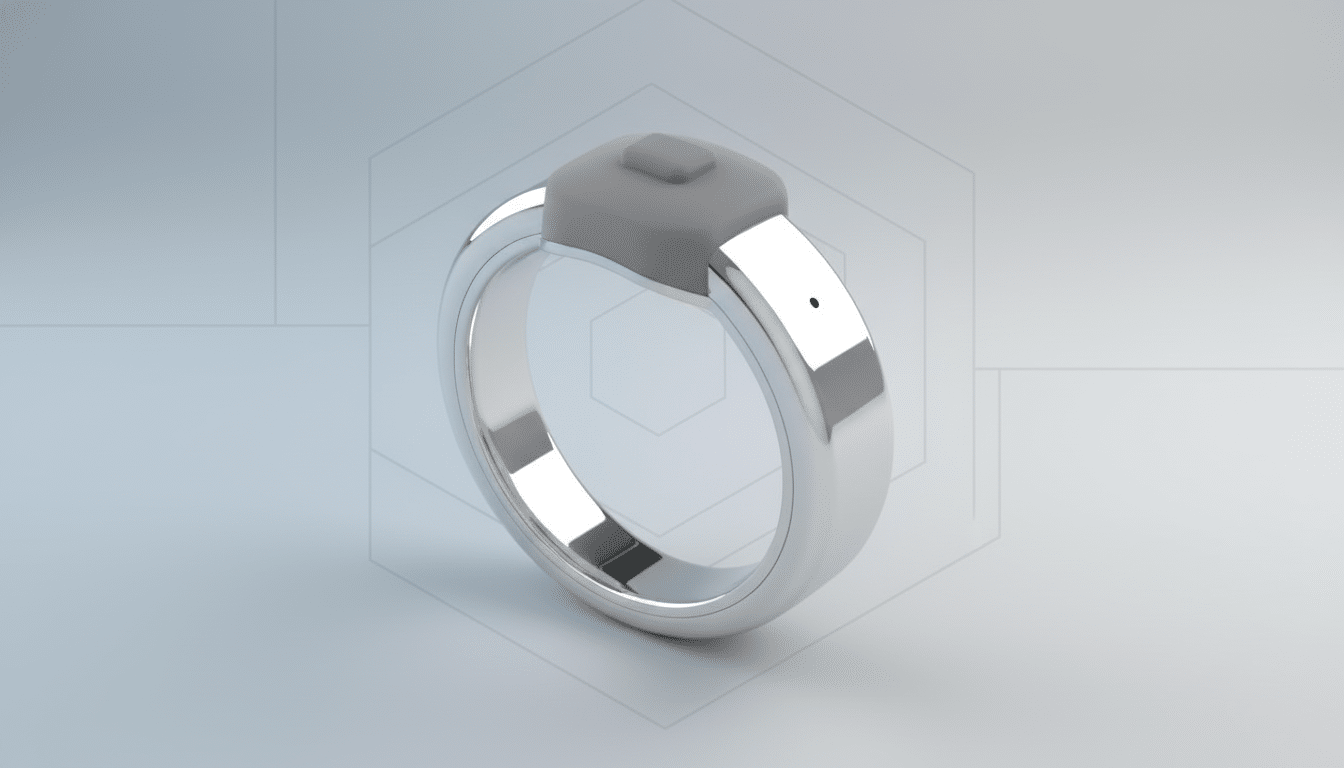
Eric Migicovsky, the mind behind Pebble and Beeper, is launching his take on a simple AI hardware project. His new Index 01 smart ring, available for preorder now for $75 (though it’ll eventually retail at an original price of $249), records short voice notes with the push of a button and transcribes them on your phone with local AI models. It’s not constantly listening and it’s not a health tracker, and it doesn’t have to be part of a subscription service — by design.
Button-first AI design avoids always-on recording
Index 01 is the answer to an always-on pendant or wrist mic. When you do start recording, it only begins when you press and hold the physical side button — and stops as soon as you let go. That interaction model is by design: it discourages you from secretly recording and dodges the social awkwardness of a live microphone. The ring records as much as five minutes per clip and saves audio locally on the accessory when your phone isn’t nearby, syncing to your handset at a later time for transcription.
Transcriptions run on your phone in the companion Pebble app with open-source speech-to-text and AI models, so that raw audio goes directly to your phone and notes stay private on-device.
According to the company, there is no cloud storage and no subscription. The original audio remains in place so you can re-transcribe or listen to it later. The ring works in over 100 languages for speech capture, a nice feature for travelers and multilingual homes.
Battery is the other light-’em-up departure from the watchocrats at wearables’ mainstream. He claims the cell will power through “years” of typical usage, while the ring can accommodate about 12 to 14 hours’ worth of recordings in aggregate before it’s drained. He says he is able to capture 10–20 thoughts a day, typically each being around 3–6 seconds long — this would mean that real-world battery life takes around two years. Once it finally kicks the bucket, the ring can be sent back in the mail for recycling.
Built for notes and ideas instead of biometrics
Index 01 does not pretend to be a medical instrument. There’s no heart rate sensor, SpO2 tracking, sleep measuring, or readiness scores. That sets it apart from health-focused rings like Oura, Ultrahuman, and the Galaxy Ring that push more sophisticated biometrics — and, in some cases, repeat memberships. Index 01 is an outright “memory device” for plucking ideas out of thin air in those moments where reaching for your phone would commit murderous violence to the proceedings.
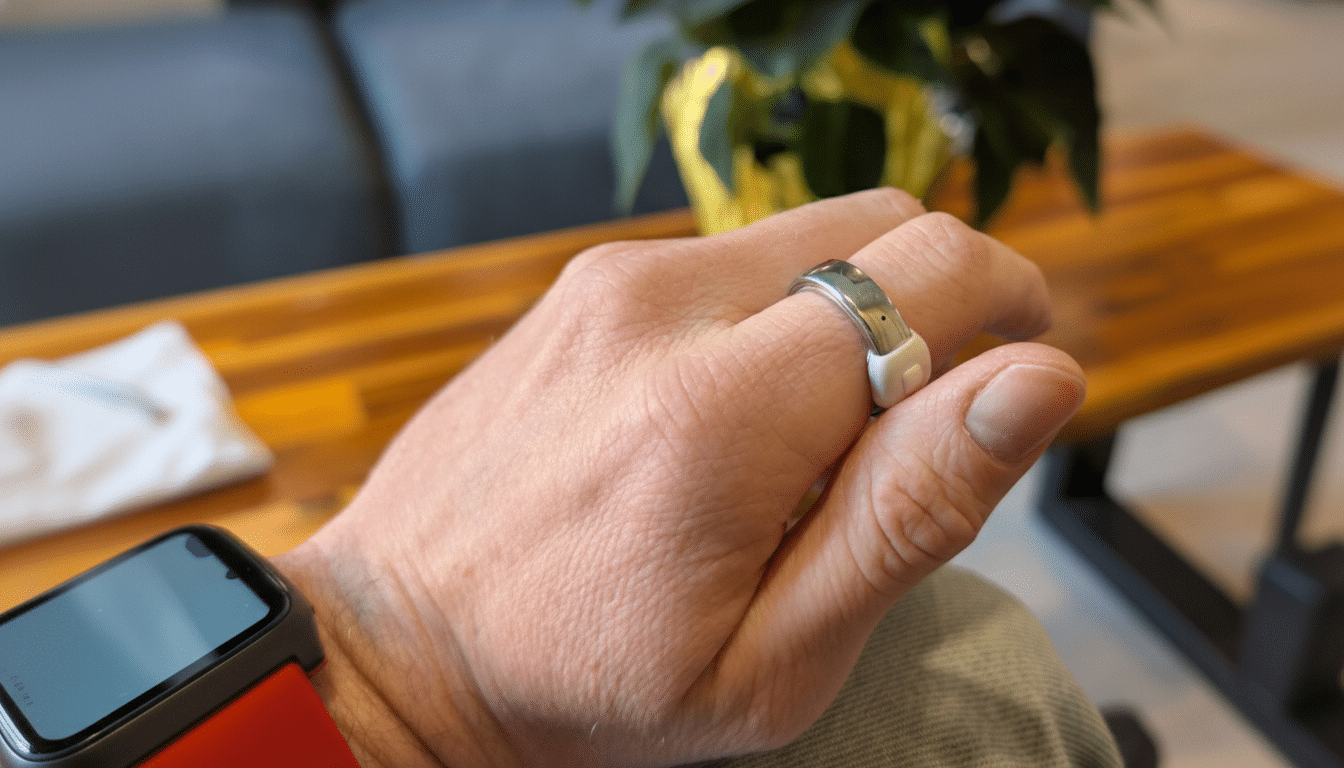
That stainless steel band is water-resistant up to one meter — good for showers, dishes, and rain, just not a swim. It comes in silver, polished gold, and matte black varnished versions in sizes 6–13. The hardware is low-key enough to get away as an ordinary ring (which matters, for social comfort, and also real-world wearability).
Open-source platform and customizable shortcuts
And because the stack is open source, tinkerers can change how the ring behaves. Programmable beyond press-and-hold recording, single- and double-press actions could serve as ways to play or pause your music (yes, this can control playback of various audio apps), snap a photo via your phone’s camera shutter, or just fire off a quick message using Beeper. Developers can further add their own voice actions. With modern agent protocols, this allows any power user to build custom workflows.
Your captured notes get deposited in the Pebble mobile app as both text and audio, with optional integrations into your phone’s calendar or apps like Notion. With a supported smartwatch on your wrist, the transcript can display on your watch face within seconds for speedy confirmation — a small yet handy loop that helps keep you in the flow without having to pull out your phone.
Price, availability, and the competitive landscape
Index 01 is up for preorder today at $75, a price the company claims will increase to $99 after this initial launch period. It is available on both iOS and Android. The outfit building the ring falls under Core Devices, an environmentalist-leaning, small company Migicovsky started to give rebirth to his Pebble-era ideas with more stripped-down hardware execution.
The product lands in a silent arms race over voice-note wearables. The New York start-up Sandbar recently revealed its Stream Ring, which is a touch-based mic that costs $249 and offers a free and $10-per-month Pro plan with more AI features. That juxtaposition — subscription vs. not, high price vs. approachable — provides the framework for Index 01’s wager that simplicity, privacy, and cost will matter more to those who want a frictionless capture experience than chatty AIs as they speak across rooms.
Why a note ring makes all of the difference
People who have lost a brilliant idea while stuck in traffic, or an important thought during a run, know the pain of cognitive drift. “I know I always feel better whenever I get things off my chest or out of my head,” writes the author and entrepreneur Tanya de Grunwald, whose blog post also set me thinking about the pros and cons of writing a list to capture thoughts at their point of occurrence. Behavioral science consistently demonstrates that by externalizing, we reduce our mental load and improve follow-through; it’s just how we can record those thoughts when they come up.
If the team can pull off that long-promised longevity and keep its software speedy on-device, Index 01 may end up carving itself a unique space alongside health rings and full-blown AI wearables: a silent tool that knows what counts exactly when it does.
