


Tinder’s new Year in Swipe finds a reoriented dating culture taking shape in 2026: clearer expectations, opinion-forward profiles, friend-assisted dates, and AI as an off-stage wingman behind the scenes. The headline trend is what the company refers to as “hot-take dating,” a movement toward leading with values, viewpoints, and policy preferences rather than waiting until post-coital nuggets — on birth control, say, or immigration — leak out.
Clear-Coding Becomes the New Norm in Online Dating
After years of swipe fatigue, singles demand clarity from their first message. Emotional honesty — young daters (64 percent) say that’s what dating needs most — but they (60 percent) also want intentions spelled out for them, according to Tinder. That’s clear-coding in practice: profiles where they have said what they want, where their boundaries are, and what on earth they won’t settle for.
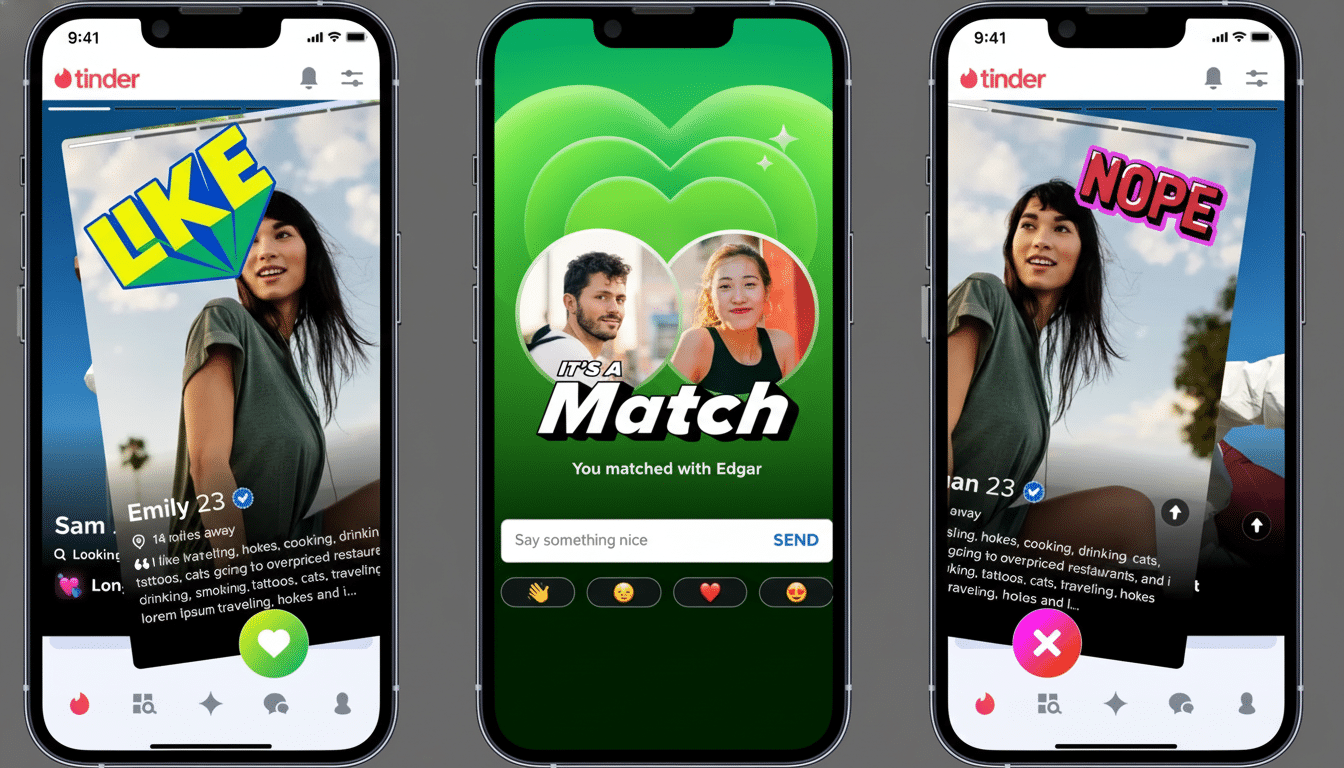
Look for bios that replace vagueness with specificity — labels like “long-term, child-free,” “open to moving,” or “introvert who plans ahead.” In product, this means apps should be pushing intent tags, availability cues, and prompt-based icebreakers that see compatibility at surface level early and cut the messaging churn.
Hot-Take Dating Redraws Compatibility Lines
Page one is moving to values. Forty-one percent of its users would not date someone; 46 percent say they would consider it — but that tolerance breaks down by gender: 35 percent of women note that they might versus 60 percent of men. Previously, Coffee Meets Bagel said there was a similar gap between the two earlier in its study — so this is not necessarily an app-specific OkCupid problem.
Principle-based dealbreakers now serve as an anchor: 37% say racial justice is a dealbreaker, 32% see L.G.B.T.Q. rights as a dealbreaker, and 36% cite “family values.” This doesn’t turn dating into a debate club; it just collapses the “are we aligned” talk into discovery, preventing mismatches further downstream.
Real-life example: rather than a generic “looking for someone kind,” one could write in the profile, leading with “union supporter and weekend volunteer” or “faith-based, wishes to have children.” The result is fewer potential matches and more decisive swipes. The risk is ideological echo chambers, but early signaling also dampens slow-burn incompatibilities that so often derail by month three.
Friends as Co-Pilots in Dating Becomes Mainstream
Dating is getting to be a team sport. Tinder data indicates that 37% of online daters expect to go on group or double dates if the relationship progresses to an in-person date, and 42% say they have a good time when dating with friends. And another third — 34 percent — say the relationships that their friends have give them hope for dating in the future.
Platforms are leaning in: Tinder’s Double Date Mode formalizes an offline behavior that is already common among Gen Z: social proof plus safety. Look for more features that let friends weigh in on a decision about which photo to use, what to workshop, or even who might be worth meeting through in-app vouching for matches — effectively bringing the group chat into the discovery flow.
AI Quietly Takes Over as the New Wingman
Some 76 percent of young singles say they’d use AI in their dating quest, according to Tinder. Most of the top use cases are practical: 39% would use AI to suggest dates, 28% to help them choose their most flattering photos, and 28% to write a series of prompts on their personal bio. This reflects wider trends — according to research conducted by Match’s Singles in America, AI use in dating has skyrocketed 300% on an annual basis.
For users, AI is definitely not for faking personality, but to meet the blank page and curb that anxiety while ensuring it counts. For platforms, the opportunity is to construct guardrails — labeling AI-assisted content, nudging toward authenticity, and coaching users to put AI suggestions in their own words before pressing send.
What These Trends Portend for 2026 Dating Culture
Clearer intent plus values-forward profiles will increase match quality and decrease volume. Apps that put intention filters first, followed by value prompts and reputation signals, will probably have the highest message reply rates and earliest IRL conversions. Profiles that combine a hot-take with a human touch — say, “climate voter who adores off-grid camping” — will beat out slogans or bio rants.
Group dating elements will promote safety and accountability. Look for adoption surges in friend-forward cities and campus towns, where co-dating will make first-date awkwardness a thing of the past. At the same time, AI will be doing its silent work in the background: reworking photo sets so that someone doesn’t say they were just tagged at a party when it was three months ago; sharpening prompts and nudging plans from chat window to calendar.
The through line is intentionality. Emotional honesty is in; ambiguity is out; and a lovable point of view trumps a clever but carefully bland profile. The singles of 2026 will not only be in search of chemistry, but on a quest for clarity — and they’ll seek it out with the help of friends and smart tools.
