


TikTok is rolling out a Local Feed in the U.S., an opt-in experience that uses precise location to surface videos about nearby news, events, dining, shopping, and travel. The feed builds on earlier tests in several European markets and marks the app’s most direct push into hyperlocal discovery—promising more relevant content for users and real-world foot traffic for businesses.
How TikTok’s Opt-In Local Feed Works for Nearby Content
Once users grant permission, TikTok taps precise geolocation to rank posts by proximity, topic, and freshness, aiming to prioritize what’s happening nearby right now. Expect clips highlighting a new ramen spot across town, a pop-up vintage market, or same-day ticket drops at a neighborhood venue.
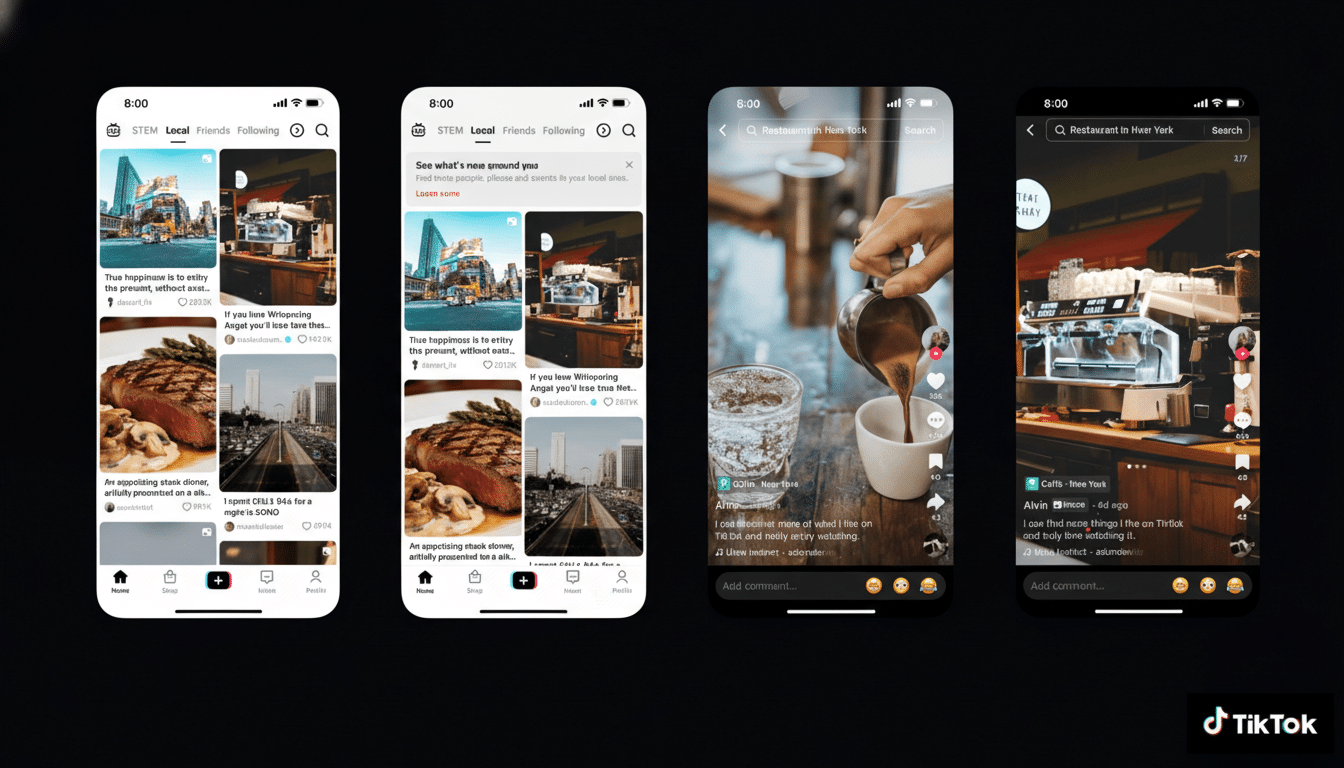
Access is restricted to adults, and TikTok says location data for this feature is collected only while the app is active. The default setting is off, keeping local recommendations opt-in. On mobile, the permission flow mirrors familiar OS dialogs that let people allow location just once, while using the app, or not at all.
TikTok positions Local Feed as a community connector rather than a separate social graph. The algorithmic signals are intentionally time-sensitive, tilting the feed toward utility and recency over popularity alone.
Why TikTok Is Going Hyperlocal With a Dedicated Local Feed
Local discovery is a commerce gateway. Oxford Economics estimated that 7.5 million businesses use TikTok, supporting more than 28 million workers. In research cited by the Small Business & Entrepreneurship Council, 84% of small firms on TikTok reported business growth tied to the platform, 75% said it expanded their reach beyond hometown customers, and 74% credited it with stronger local connections.
With a dedicated Local Feed, TikTok can drive in-person outcomes—store visits, reservations, ticket sales—while giving advertisers clearer intent signals. It also dovetails with TikTok’s expanding shopping and local services ambitions, offering creators and merchants a native showcase for time-bound offers and neighborhood events.
There is cultural momentum behind the bet. Google executives have acknowledged that a sizable share of younger users now start searches on visual social platforms for places to eat and things to do. A Local Feed channels that behavior into a single, high-intent surface.
Privacy Controls and the Regulatory Context for Location
Precise geolocation is considered sensitive data under state privacy laws such as the California Privacy Rights Act, as well as new statutes in Virginia and Colorado. By keeping the feature opt-in, limiting collection to active use, and gating it to users 18 and older, TikTok is aligning with requirements around consent and data minimization.
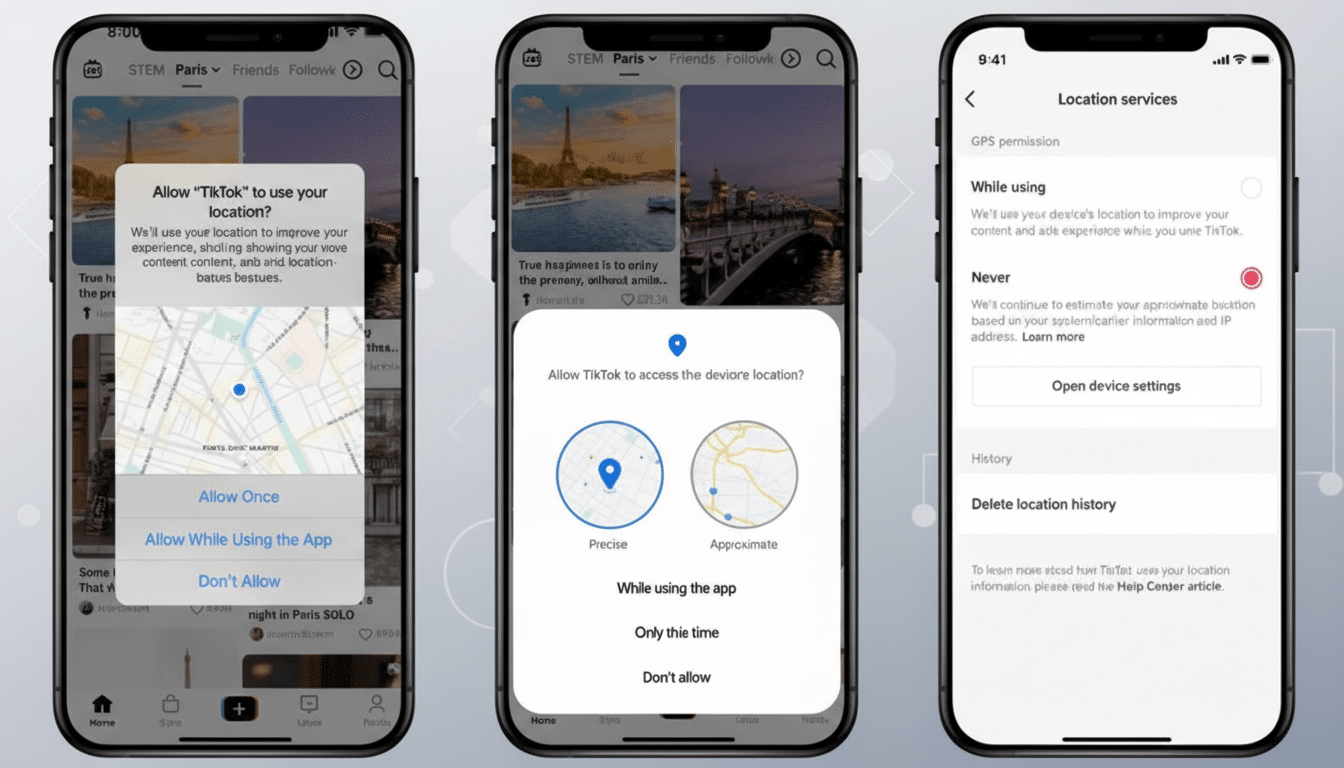
Still, precise location raises real questions. Even with controls, location trails can reveal daily routines and affiliations. Privacy experts at organizations like the International Association of Privacy Professionals recommend strict purpose limitations, short retention windows, and clear transparency reports for sensitive signals—guardrails users will expect if Local Feed scales.
TikTok says users can toggle precise location at any time, preserving the ability to browse the main For You feed without sharing it. The company will face scrutiny to ensure that opting out does not degrade the core experience or nudge people toward sharing more than they intend.
Competitive Landscape and Emerging Local Use Cases
Hyperlocal media is not new—Snap Map, local guides on Google Maps, and community feeds on neighborhood apps have long blended location with content discovery. TikTok’s advantage is its creator density and short-form video fluency, which could make local recommendations feel more authentic and timely than static lists or star ratings.
Expect early traction in food, nightlife, and events, where video excels at conveying vibe and urgency. A comedy club can push last-minute seats; a boutique can tease an in-store drop; a city newsroom can package explainers about transit changes. For local newsrooms and civic groups, distribution via Local Feed could become a meaningful reach channel—provided moderation keeps misinformation at bay.
What to Watch Next as TikTok Rolls Out the Local Feed
Key indicators will include opt-in rates, watch time in the Local Feed, and measurable conversions such as reservation clicks or promo redemptions. Advertisers will look for location-aware formats that respect consent while enabling radius targeting and event-based campaigns.
Operationally, TikTok will need to prevent location spoofing, handle cross-border commuters, and tune ranking so hyperlocal does not collapse into the same viral content everywhere. Transparent disclosures about how precise coordinates are processed—and for how long—will be crucial to trust.
If TikTok balances utility with privacy, Local Feed could become a daily habit for planning where to go and what to do—turning short videos into real-world intent at scale.
