


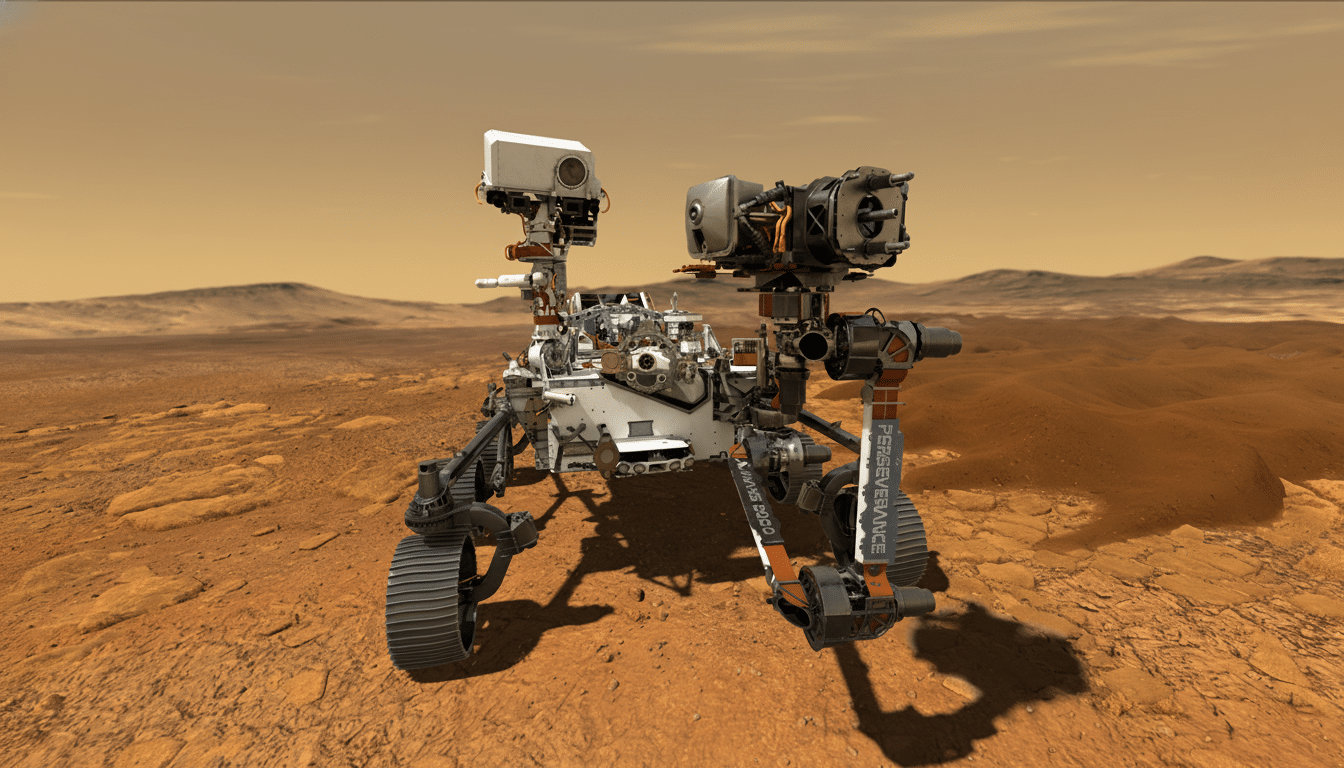
For the first time, scientists have captured the electric crackle of Martian lightning. Using a sensitive microphone on the Perseverance rover in Jezero Crater, NASA researchers captured crackling discharges inside dust devils and along the leading edges of dust storms, which is a long-suspected phenomenon that has now been confirmed with sound and electromagnetic data.
The findings, reported in Nature, conclude a decades-long debate over whether Mars’ famously dusty climate can produce lightning. Over more than two Martian years, the team worked to catalogue 55 brief electrical pops before releasing a curated audio clip so the public could hear it for themselves—no roaring thunder, just something closer to a static snap.
What Perseverance Heard Inside Martian Dust Storms
Don’t expect rolling thunder. The muffled atmosphere would inhibit the long, slow boom of thunder; on Mars, sound travels as a series of rapid-fire clicks—like the ones your winter-knuckle doorknob would produce after you shuffle across carpet. Perseverance’s SuperCam microphone captured these audible snaps as dust devils passed over the rover and when storm fronts drove gusts across the floor of the crater.
The team says that both strong dust devils they came across during the survey created detectable sparks. That implies the phenomenon is widespread on Mars, which hosts thousands of local and regional dust storms annually. One previous image from NASA’s Mars Reconnaissance Orbiter even captured a dust devil that towered some 12 miles high, evidence of just how vigorous these whirlwinds can be.
Why Dust on Mars Lights It Up with Electric Sparks
The physics is simple: when particles of dust and sand collide and rub together, they exchange charge, a phenomenon known as triboelectric charging. Over time, those charges accumulate to become powerful electric fields. On Earth, the effect is most dramatic with volcanic ash plumes and powerful sandstorms that occasionally light up with flashes of lightning.
Mars makes this easier. With surface pressures of less than 1 percent of Earth’s and an atmosphere rich with CO₂, the breakdown voltage—or the potential at which a spark jumps—is reduced. That means that even a small charge in a swirling column of dust can set off a discharge. When dust was not only lifting but also colliding—generating additional electric charges in the process—sparks occurred, say researchers from L’Institut de Recherche en Astrophysique et Planétologie and Johns Hopkins Applied Physics Laboratory.
How Scientists Confirmed the Snaps Using Multiple Sensors
Perseverance wasn’t just listening; it was measuring. Each acoustic crack was cross-referenced with simultaneous electromagnetic signals and environmental shifts—pressure dips that record a passing dust devil, for example, elevated wind speeds, or an abrupt rise in airborne dust witnessed by the sensors onboard the rover. This multi-instrument strategy linked the audible pops to actual, localized electrical events.
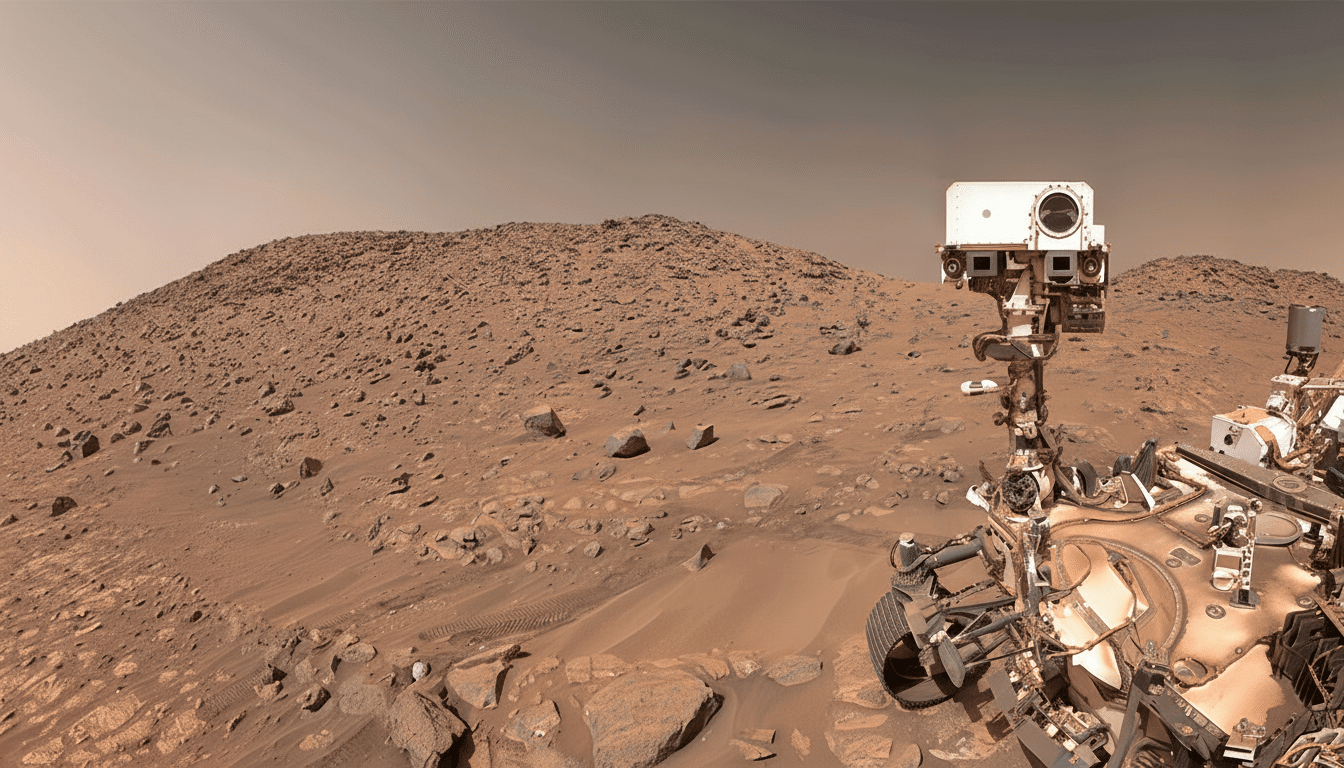
Over the span of two Mars years, the 55 discharges emerged as a recurring pattern: they all happened at the start of a gust front from an incoming storm or in the dense core of dust devils, where grain-on-grain collisions are at their highest. No same-time optical flashes were imaged (so they showed up only in radio waves), but the coincident timing of the audio and ground measurements is seen as the smoking gun that planetary scientists have sought since the days of Viking.
What It Means for Exploration and Future Mars Missions
Electrical activity is important for both science and safety. Discharges can stimulate surface chemistry, creating reactive oxidants such as hydrogen peroxide and perchlorates that decompose organic molecules. That muddies the search for fragile biosignatures on the surface—a puzzle hinted at by landers and rovers that have already had trouble locating well-preserved organics.
For hardware and upcoming crews, the news is mixed but generally workable. Decades of operations by NASA rovers have yielded no serious electrical damage from dust activity, a reassuring track record. But creating habitats, suits, and sampling tools with static mitigation could lessen risk during storm season. Engineers also look back at historical mysteries through this new electrostatic lens, such as why the Soviet Mars 3 lander failed minutes after touching down in a dust storm.
Hear Mars for Yourself: Listen to Perseverance’s Audio
NASA has published a brief recording that spotlights the distinctly crisp snaps in the rustling winds of Jezero Crater.
It’s a gut-level refresher that Mars isn’t just dusty—it’s alive with electricity. Now that microphones have proven to be a valuable tool on Perseverance, acoustic planetary science has entered the toolbox, providing another way to track storms, study surface processes, and keep explorers safe in an environment that still throws surprises at us.
The result was a planetary first, both rare and extraordinary: something we’ve never heard before, but have long suspected; something that gives a fresh way to sense our relation to Mars; and something that sheds new light on how we explore—and survive—the planets.
