


Tesla’s vehicle deliveries for the year dropped by 9% in its latest full-year count, handing the global electric-vehicle sales crown to China’s BYD as pricing pressure and policy shifts create choppier waters for the market’s best-known brand.
Tesla registered 1.63 million deliveries, and BYD recorded 2.26 million, underlining a shifting power dynamic in the world’s fastest-growing auto sector.
BYD surges past Tesla with scale and vertical integration
BYD’s rise is built on industrial scale and vertical integration. The company has an in-house battery design, relies heavily on the cost-effective LFP chemistry, and offers a sprawling lineup that extends from first-time buyers to premium shoppers. That approach has resulted in quick share gains throughout the populous country and increasing traction in Europe, Southeast Asia, and Latin America as auto industry tallies have been tabulated by groups like the China Passenger Car Association and the European Automobile Manufacturers’ Association.
Tesla is still heavily weighted toward the Model 3 and Model Y, which account for the majority of volume but now face price-sensitive headwinds. The “other models” bucket — which involves the Cybertruck, as well as the aging Model S and Model X — amounted to some 50,850 units, only a fraction of the whole. That combination puts a premium on efficient, high-volume production and aggressive pricing — in which Chinese rivals have squeezed margins across the board.
US demand hit by EV tax credit changes and whiplash
In the United States, elimination of the $7,500 federal EV incentive has already impacted purchasing decisions. That pulled forward purchases before the policy change, propelling a record 497,099 deliveries in the third quarter before sales slowed. The fourth quarter came in at 418,227 vehicles, a year-over-year decrease of 15.6%, which was steeper than that forecast by many analysts. Market analysts at companies like Cox Automotive and Edmunds have long observed how incentives can drive EV affordability to the double digits, particularly at mid-market price points.
The disappearance of the credit not only dented volume, but also cut the potency of Tesla’s price cuts that had previously led to spurts in demand. And with total cost of ownership accelerating all of a sudden, some buyers postponed or shifted to rival models that were favored by local incentives or lower entry prices.
Price pressure and product mix weigh on Tesla margins
Tesla has been fighting an extended price war to protect share in core markets. That approach supports utilization, but depresses gross margins and makes it more challenging to pass increased logistics and input costs onto customers. In Europe and China — where domestic competitors have filled showrooms with competitively priced compact EVs — Tesla’s share has declined, based on registrations compiled by ACEA and CPCA.
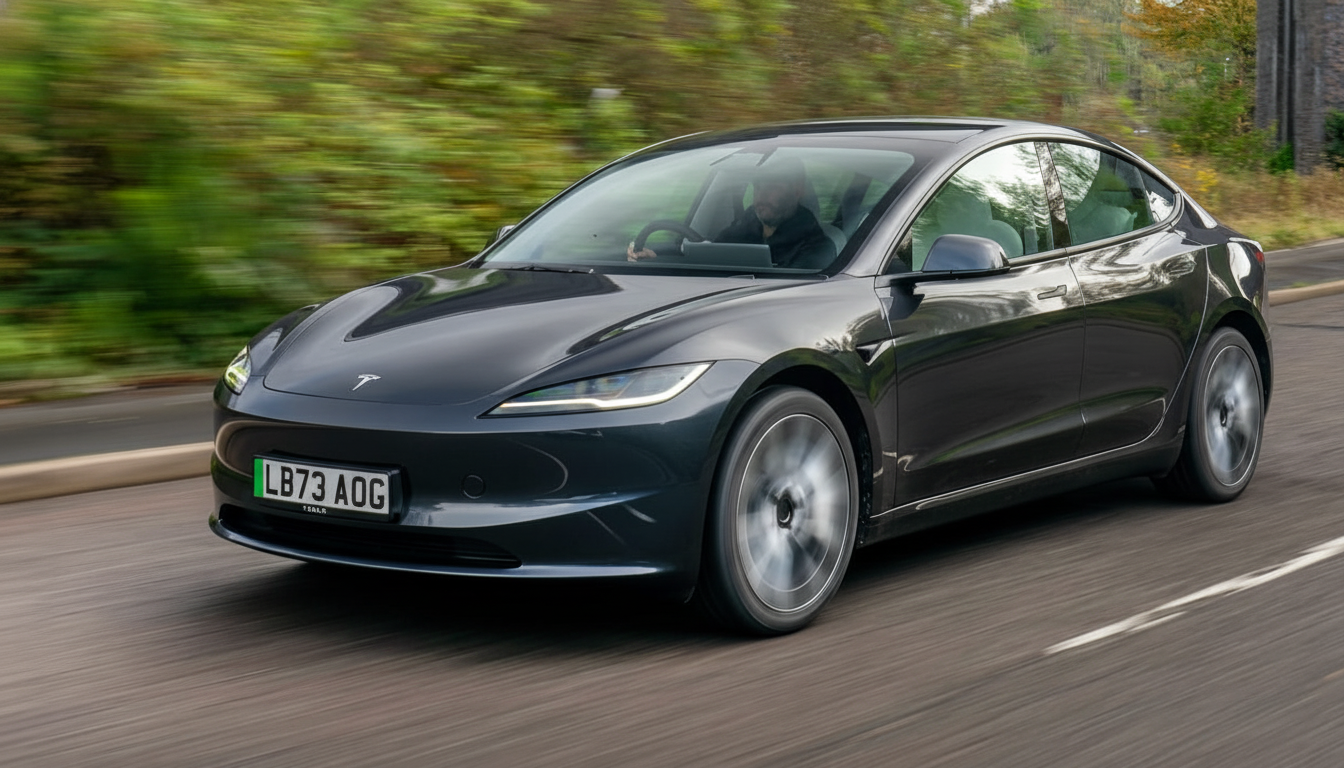
There is also a product-cadence question. Closer to home, Cybertruck’s ramp-up will be gradual; Model S and Model X are just that — premium-priced cars with relatively low volume. With no new, less expensive model to fend off a wave of small electric cars from China, Tesla has relied on software features, performance editions, and financing deals to drive sales.
Strategy Pivot Collides With Market Reality
Elon Musk, the company’s chief executive, has issued a sweeping vision that would take Tesla further into AI and robotics — from developing autonomous driving software to building humanoid robots — in what he described as a quest for “sustainable abundance.” But the company’s financial engine is still very much vehicular. Tesla delivered $28 billion in revenue — of which $21.2 billion came from vehicle sales — a reminder that profitability remains highly dependent on car volumes and pricing, even adjusting for the strength of the gross margin figure.
Autonomy remains a wild card. If there really is a path to widely agreed and monetizable autonomy beyond supervised driver-assistance, software margins might offset hardware compression. For the time being, regulatory schedules, safety validation, and consumer confidence leave that payoff uncertain. Energy storage and solar are scaling, but we’re far from the size of automotive in terms of final earning power.
What to watch next in the global EV competition
Three factors will set the stage for the next leg of the race.
- Product roadmap: A truly lower-priced Tesla could reset the math in price-sensitive segments.
- Policy and trade: Chinese brands are also largely missing from the U.S. (thanks to tariffs and political headwinds) but are ramping up manufacturing footprints elsewhere; this is the year Europe weighs subsidy probes and possible duties that could remap import math.
- Battery economics: Decelerating cell costs and shorter supply chains to meet local-content rules will determine who can deliver enough sub-$30,000 EVs at scale.
But so far, the scoreboard is blank. Tesla’s deliveries fell 9%, and BYD expanded its lead with 2.26 million electric vehicles. The race is far from over — but it’s no longer a one-company competition.
