


Tesla is introducing a tiny but useful update to its connected cars called the Phone Left Behind Chime, which will let drivers who leave their phone behind in the vehicle know they’ve done so.
The feature comes in the company’s Holiday Release and is supposed to help address lost phones, lockouts, and general frustration for owners who use their smartphone as a digital key.
How Tesla’s Phone Left Behind Chime Works in Practice
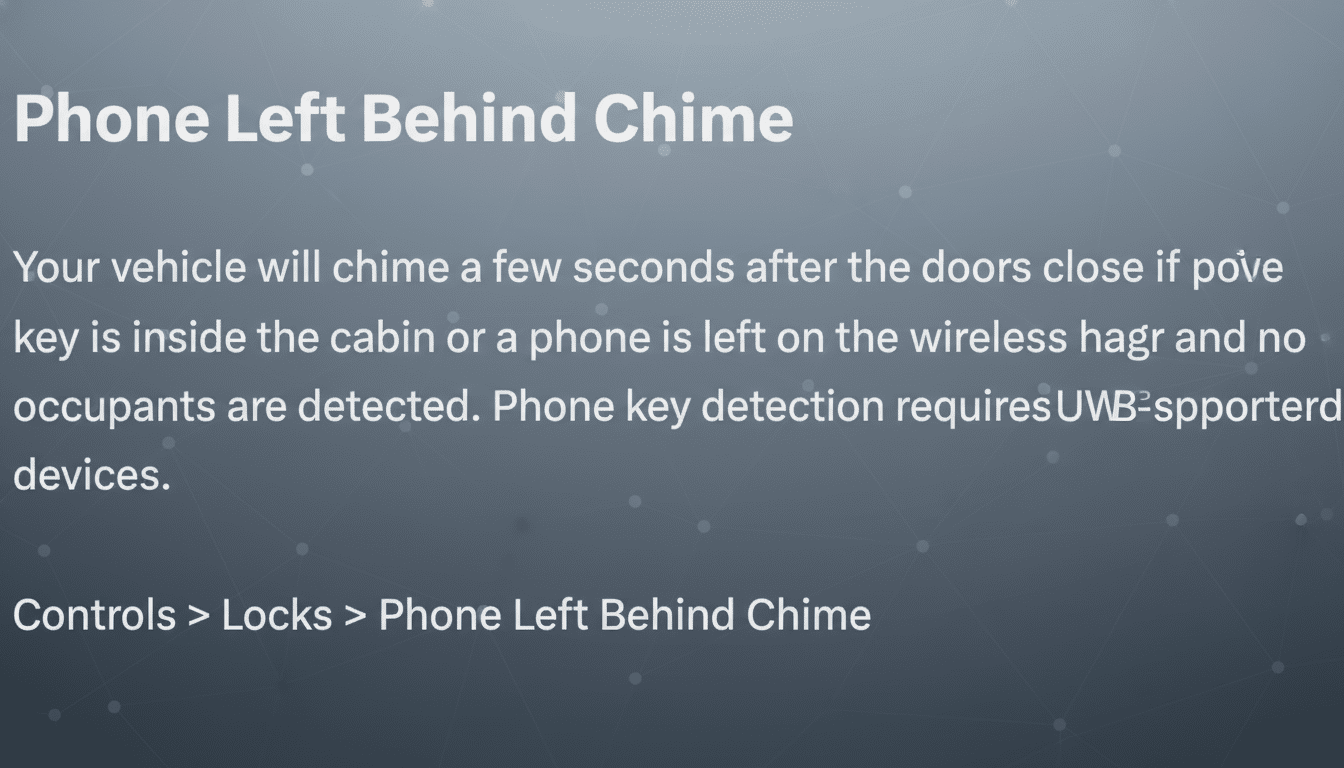
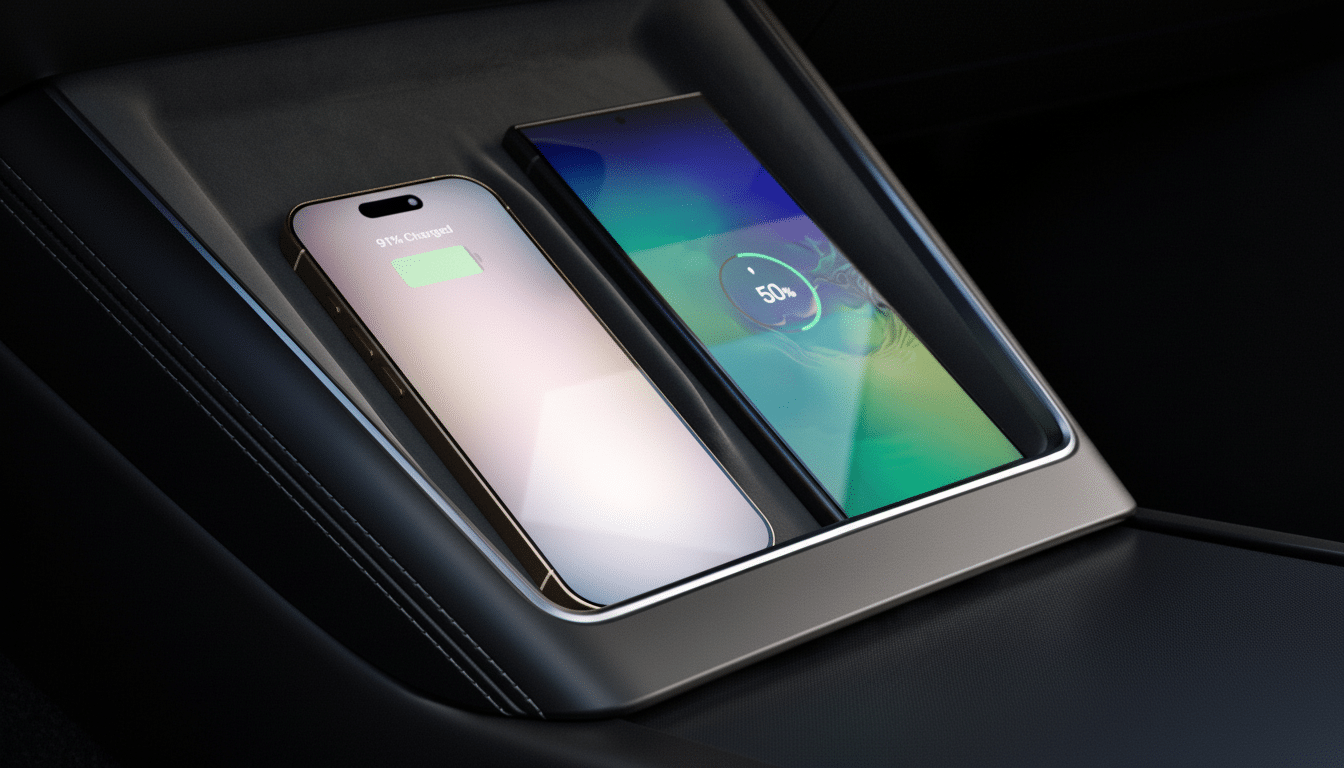
Once you’ve shut the doors and started walking away, it knows there’s a little bit more time to listen. If it senses that the phone in use as a key is still inside, an audible chime sounds to alert you. Tesla says the alert won’t sound if the car detects other occupants, and it also extends to devices that are on its built-in wireless charger.
Owners can enable or disable the feature from Controls > Locks > Phone Left in Car on Walk Away. As with most Tesla updates, availability may be adjusted for both model and region, and the rollout itself usually occurs in an uneven cadence over either days or weeks as individual vehicles are set to receive over-the-air updates.
UWB Compatibility and Limitations for Supported Phones
The chime uses ultra-wideband (UWB) ranging to determine whether the phone is still in your car’s cabin. UWB provides distance measurement far more accurate than Bluetooth by itself, preventing the false positives and sporadic-sounding alerts that would make the “safe” in “social distancing detector” so annoying (and uninformative) as to not be useful.
UWB is supported on most recent iPhones, as far back as iPhone 11 models, but it doesn’t appear the feature will work with Apple’s new iPhone 16e or iPhone SE. When it comes to Android-based systems, UWB is still mostly the domain of high-end devices like Google’s Pixel 10 Pro and Samsung’s Galaxy S25 Ultra. Industry analysts at Counterpoint Research have said they believe UWB penetration in smartphones to be in the low double digits, meaning a meaningful share of owners may not get any use out of it until the feature trickles further down into midrange phones.
Why This Matters for Digital Car Keys and Daily Use
Tesla’s Phone Key has become a boon to those looking to slim down their pockets, but it also opens up new edge cases: You zip out to do an errand, keep the phone on the charging pad and lock the car; you’re halfway down the sidewalk before you realize what you did. The chime exists to end that moment there and then, saving you time and helping avoid a potential situation where the door locks behind you and you don’t have another key card or companion device.
The decision also reflects a more widespread pivot in the industry toward UWB-secured digital keys, which meld ease of use with resistance to relay attacks. The Digital Key 3.0 specification from the Car Connectivity Consortium uses UWB to provide precise proximity, and it’s already been adopted by brands like BMW, Hyundai, and Kia. Tesla’s use of UWB for presence detection falls in line with that trajectory and throws a consumer-friendly feature on top.
How It Compares and Related Options for Other Brands
Some Audi models already offer the same left-behind notifications, and Apple users have a sort of equivalent safety net: the Notify When Left Behind feature can ping an Apple Watch when you leave your iPhone behind. Wear OS is missing a system-level, universal equivalent for Android watches still—meaning automaker integrations like Tesla’s are making up the difference for many users.
The value is straightforward. The main entry key for many Tesla owners is the phone, and with millions of Teslas each day on the pavement, even a modest reduction in remembered devices could save countless hassles. At a time when today’s motorists can pay, get directions, charge, and even start their vehicles up remotely—with 1 in 6 cell phones left annually in taxi cabs—it turns out keeping track of your phone may be as important to the car owner as remembering where you put your wallet.
Rollout Details and Settings for the Holiday Release
The Phone Left Behind Chime is a feature of the Holiday Release now rolling out to compatible vehicles via OTA. Owners can locate the toggle in Controls > Locks > Phone Left Behind Chime and have the option to disable it if they don’t want to use it. Like other Tesla features, the way it reacts can be improved over time as more software updates are pushed out with input from the real world.
That same update brings several new features unrelated to the chime, like an expanded Dog Mode that can send the car’s interior temperature and battery status along with photos of each, as well as Tesla’s AI assistant running a more informal navigation tool in the car; a new feature for photographing nearby points of interest while in-car (which also allows users to sift through footage captured by the vehicle’s onboard dashcam); richer details when viewing clips taken by your TeslaCam dashcam system; and a space-docking game. Those are additions that round out the release, but the left-behind alert is a practical win most owners will certainly take on Day 1.
Bottom line: A can’t-beat quick chiming sound may be the epitome of a low-tech idea, but when combined with UWB precision and a phone-as-key lifestyle, it’s also exactly the kind of quality-of-life upgrade that keeps minor mistakes from turning into major hassles.
