


Tesla has started offering paid robotaXi rides in Austin with no human safety driver in the front seat, marking the company’s first public deployment of fully driverless service in its home state. CEO Elon Musk announced the launch on X and used the moment to recruit engineers for Tesla’s AI efforts, underscoring how central autonomy has become to the automaker’s strategy.
The rollout builds on Tesla’s earlier, invite-only pilot in the city that used in-car safety monitors. Now, some rides are running entirely driverless. Early riders report being charged for trips, and several noted a chase car trailing the vehicles, a common practice in initial phases to observe performance and collect data.
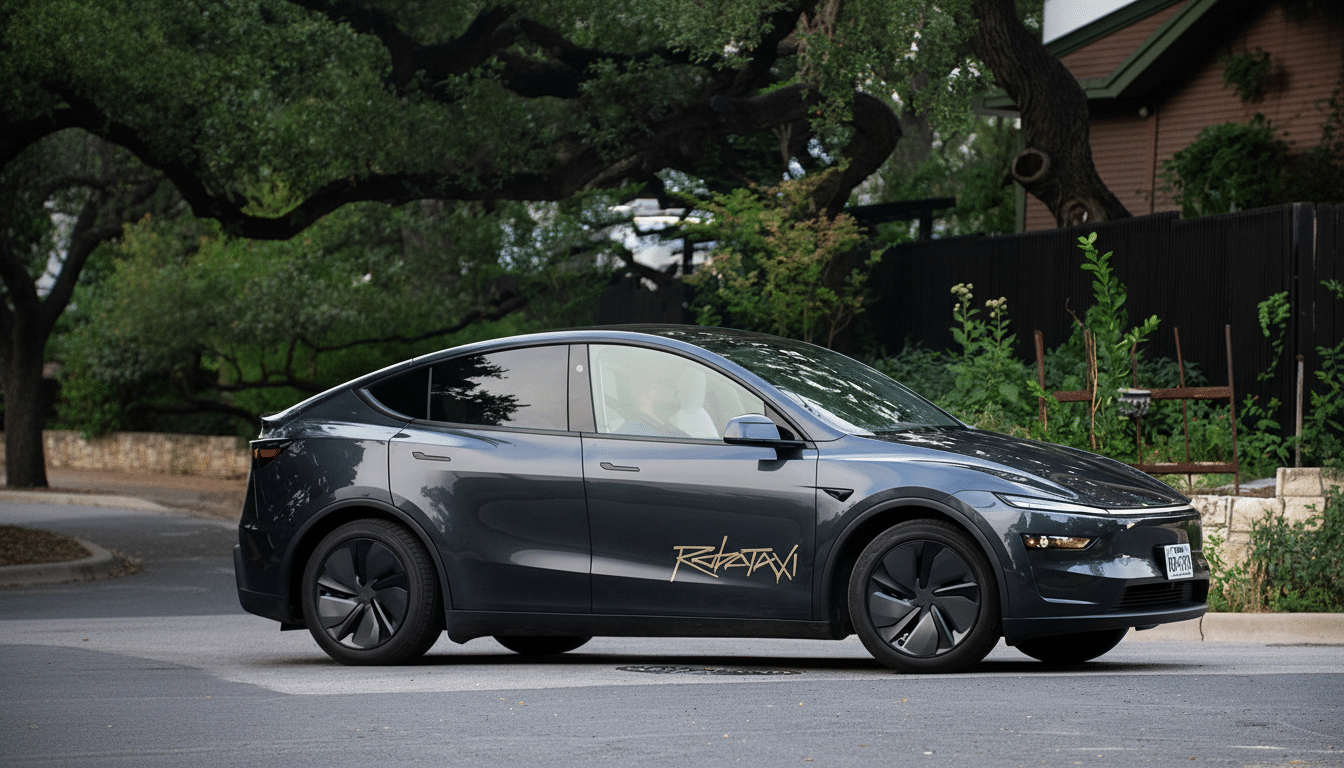
How Tesla’s Driverless Robotaxi Service Works In Austin
Tesla’s AI lead Ashok Elluswamy said the company is starting with a mix of unsupervised robotaxis and vehicles that still carry safety monitors, with plans to increase the share of unsupervised cars over time. That blended approach lets Tesla compare behavior across configurations, rapidly iterate its software, and manage risk while scaling.
Charging riders at launch is a notable departure from peers. Waymo and Zoox initially offered free or limited promotional rides when they began rider-only operations in new markets. Tesla’s decision to collect fares immediately signals confidence in service quality and hints at a push to validate the business model as much as the technology.
The Tech Behind Tesla’s Driverless Rides
Tesla’s stack relies on a vision-only sensor suite—cameras powered by the company’s in-vehicle compute—and large neural networks that perform end-to-end driving tasks. That contrasts with the lidar and radar-heavy systems used by rivals like Waymo and Zoox, which also lean on high-definition maps. Tesla argues that training on billions of real-world frames from its global fleet allows the system to generalize and handle novel situations without expensive sensors or map dependency.
In practice, both approaches aim to minimize disengagements and improve ride comfort, but they have different failure modes. Vision-only systems prioritize pattern recognition at scale; lidar-centric systems emphasize precise ranging and redundancy. Industry researchers and groups such as the National Highway Traffic Safety Administration (NHTSA) have long cautioned that simple disengagement tallies are an incomplete safety metric. More telling figures include miles between interventions, severity-weighted incident rates, and performance in rare edge cases.
Regulation And Safety Oversight For Driverless Taxis
Texas law allows autonomous vehicles to operate on public roads without a human driver, provided they comply with traffic rules and carry required insurance. The framework largely preempts local restrictions, giving companies a relatively clear path to deploy citywide once they meet state and federal requirements.
At the federal level, NHTSA oversees safety and can investigate crashes and defect trends in driver assistance and automated driving systems. Tesla’s driverless service will fall under Automated Driving System (ADS) reporting obligations, and any significant incidents must be disclosed. After high-profile AV setbacks elsewhere, regulators, insurers, and safety advocates will scrutinize Austin’s data for evidence of consistent, repeatable performance across weather, construction zones, and complex downtown scenarios.
Competition And Market Implications For Robotaxi Services
Waymo is expanding its robotaxi footprint in multiple cities, recently opening service to the public in Miami, while Zoox continues geofenced deployments with purpose-built vehicles. Tesla’s advantage is a massive installed base and an AI pipeline trained on fleet-scale data, but its camera-only philosophy is a deliberate bet that diverges from industry orthodoxy. If Austin proves out, the company bolsters its argument that software-first autonomy can scale faster and cheaper.
Economically, the prize is lower cost per mile than human-driven ride-hailing. Analysts broadly agree that driver labor is the largest single cost in rideshare. If Tesla can sustain high utilization, reduce remote assistance, and keep maintenance predictable, it can pressure fares while protecting margins. Fare collection from day one indicates Tesla wants to test pricing elasticity and operational costs immediately, not after a promotional grace period.
What To Watch Next In Austin’s Driverless Robotaxi Rollout
The near-term questions are straightforward:
- How quickly does the ratio of unsupervised vehicles rise?
- When do chase cars disappear?
- Does service expand to more neighborhoods and late-night hours?
- And can the system maintain consistent performance during heavy rain, rush-hour merges onto highways, and dense curbside pickup zones near venues?
Rider experience will matter as much as raw safety stats. Smooth lane changes, confident unprotected turns, and intuitive drop-offs are the difference between a demo and a dependable service. Early riders in Austin say they were billed for trips and observed a trailing vehicle, suggesting Tesla is simultaneously validating both user satisfaction and operations monitoring.
For Tesla, Austin is more than a launch city—it’s a real-world exam for its end-to-end AI philosophy. For regulators and the public, it’s a test of whether driverless rides can deliver reliability at scale without compromising safety. If the company can meet those benchmarks, it won’t just have launched a robotaxi; it will have strengthened the case for a new economic model for urban mobility.
