


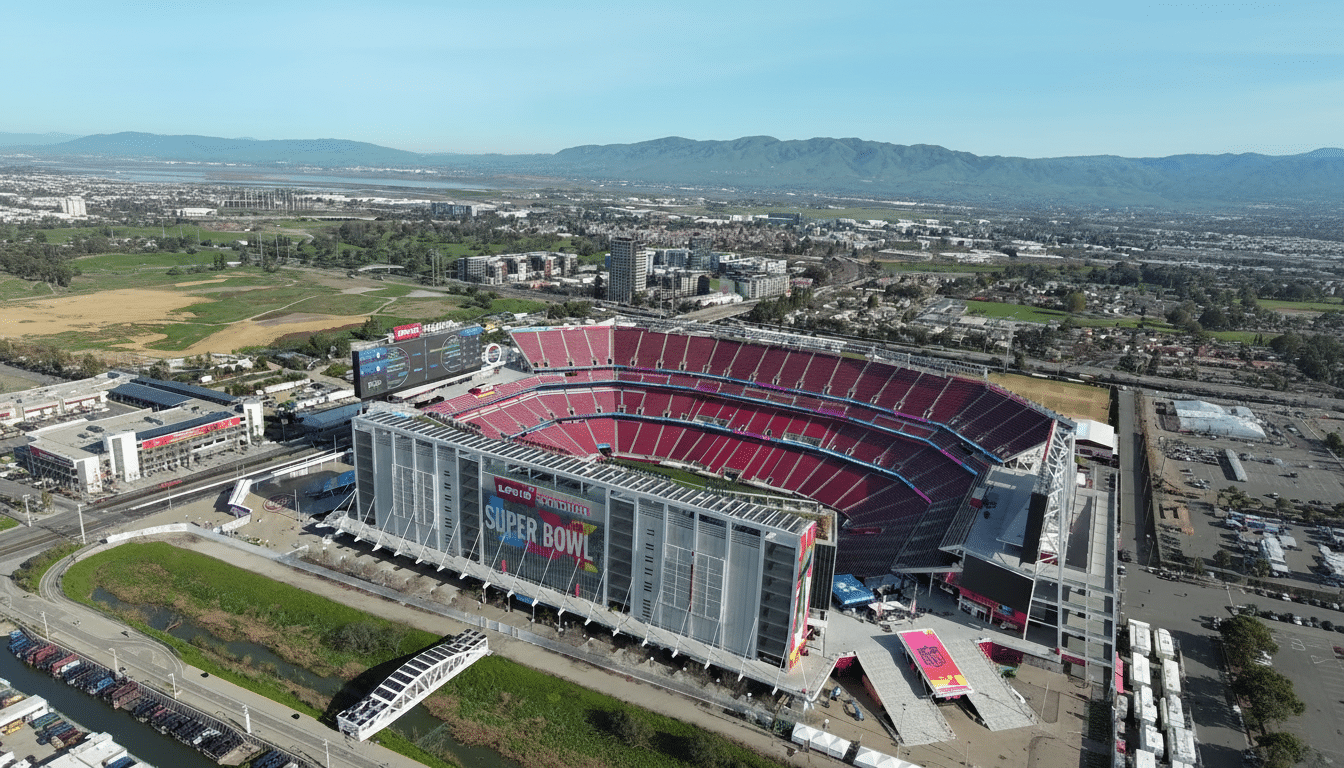
The Super Bowl lands in Silicon Valley with a crowd that once sat at the edges of the gym floor but now owns the luxury suites. Venture capitalists, Big Tech CEOs, and AI founders are descending on Levi’s Stadium, turning football’s biggest stage into a high-gloss meetup for the industry that has redefined wealth and influence.
The New VIPs Of The 50-Yard Line In Silicon Valley
Expect to see Apple’s Tim Cook, YouTube’s Neal Mohan, and Amazon’s Andy Jassy among the familiar faces. The Bay Area setting means many can commute from home, reinforcing how tech’s center of gravity now overlaps with the NFL’s marquee event.
Longtime investor Venky Ganesan of Menlo Ventures captured the mood in comments to the New York Times, joking that the Super Bowl crowd now features plenty of former “picked-last” kids paying tens of thousands for a seat near the athletes who were picked first. The quip lands because it’s true: tech’s social capital has gone mainstream, and the league’s hospitality machine knows it.
Menlo Ventures was among the firms to back Anthropic early and often, part of a broader rush to fund frontier AI. That capital now buys more than stakes in model labs—it buys cultural presence, and this week, the 50-yard line is where that presence shows.
Ticket Prices Soar As Tech Opens Wallets
Sticker shock is part of the spectacle. Average resale prices have hovered around the high four figures, according to New York Times reporting, with some last-minute seats observed on StubHub dipping closer to mid-$3,000s. That still prices out most fans, but not the sector that has minted fortunes from IPOs, M&A windfalls, and AI-fueled valuations.
Only about 25% of tickets reach the general public under the NFL’s allocation model; the rest flow to teams, sponsors, and league partners. Travel data for prior games shows the largest buyer cohorts often track with the participating teams’ home states—Washington State fans, for example, have represented roughly 27% of some Super Bowl buyer pools—shaping who fills the lower bowl versus the suites.
AI Ad Wars Hit The Biggest Stage Of The Super Bowl
This year’s ad breaks double as a live-fire demo of the AI arms race. Google, OpenAI, Anthropic, Amazon, and Meta are spending heavily on spots designed to make generative AI feel safe, useful, and ubiquitous—at home, in the office, and on the go. Kantar estimates a 30‑second Super Bowl placement runs around $7 million, and tech’s share of national TV ad spend has been climbing as AI competition intensifies.

Expect fewer abstract promises and more product proof points: assistants handling complex tasks, real-time translation, and copilots for code and productivity. With Nielsen tallying triple-digit millions of viewers, brand lift from a single well-executed ad can rival months of digital campaigns. The risk is just as large—one awkward claim and rivals will roast it before the next snap.
Bay Area Stage And Local Impact Of The Super Bowl
This is only the third Super Bowl hosted in the Bay Area, following the Stanford Stadium game that crowned a 49ers dynasty and a more recent Levi’s Stadium showcase. Proximity to Sand Hill Road and the Peninsula tech corridor makes this edition feel particularly Silicon Valley.
Hotels and restaurants are bracing for sellouts. STR has historically tracked Super Bowl weekend occupancy above 90% in host regions, with average daily rates surging. Sports Business Journal has documented six-figure suite packages and sprawling corporate hospitality builds; this week, many of those badges will belong to founders, fund managers, and product chiefs.
Economists like Victor Matheson have long warned that headline economic-impact numbers are often overstated due to displacement effects. Still, for local hospitality workers, contractors, rideshare drivers, and event crews, this surge is real money in real time.
Why This Year Feels Different For Tech And Sports
Tech’s relationship with sports used to be about gadgets and streams; now it’s about identity. The Apple Music halftime sponsorship put a platform company at the heart of the spectacle, while AI brands are writing themselves into the national conversation between kickoffs.
In a valley built on code commits and pitch decks, the Super Bowl has become a mirror for a new kind of power. The kids once picked last aren’t just in the building anymore—they’re setting the guest list, buying the airtime, and, for one night, owning the huddle.
