


I got hands-on time with TCL’s new RayNeo Air 4 Pro on the show floor, and the headline is clear: this is now the brightest, most convincing “personal cinema” AR viewer I’ve worn at this price point.
TCL is framing it as a premium display in an affordable package, and the first impressions support that.
- HDR Micro-OLED panel that shines in real-world use
- Tethered connectivity and onboard audio impressions
- Design, comfort, and weight balance during extended wear
- Pricing is on the radar for the AR viewer market
- A look at untethered AR and the RayNeo X3 Pro eSIM concept
- Early takeaway from hands-on time with RayNeo Air 4 Pro
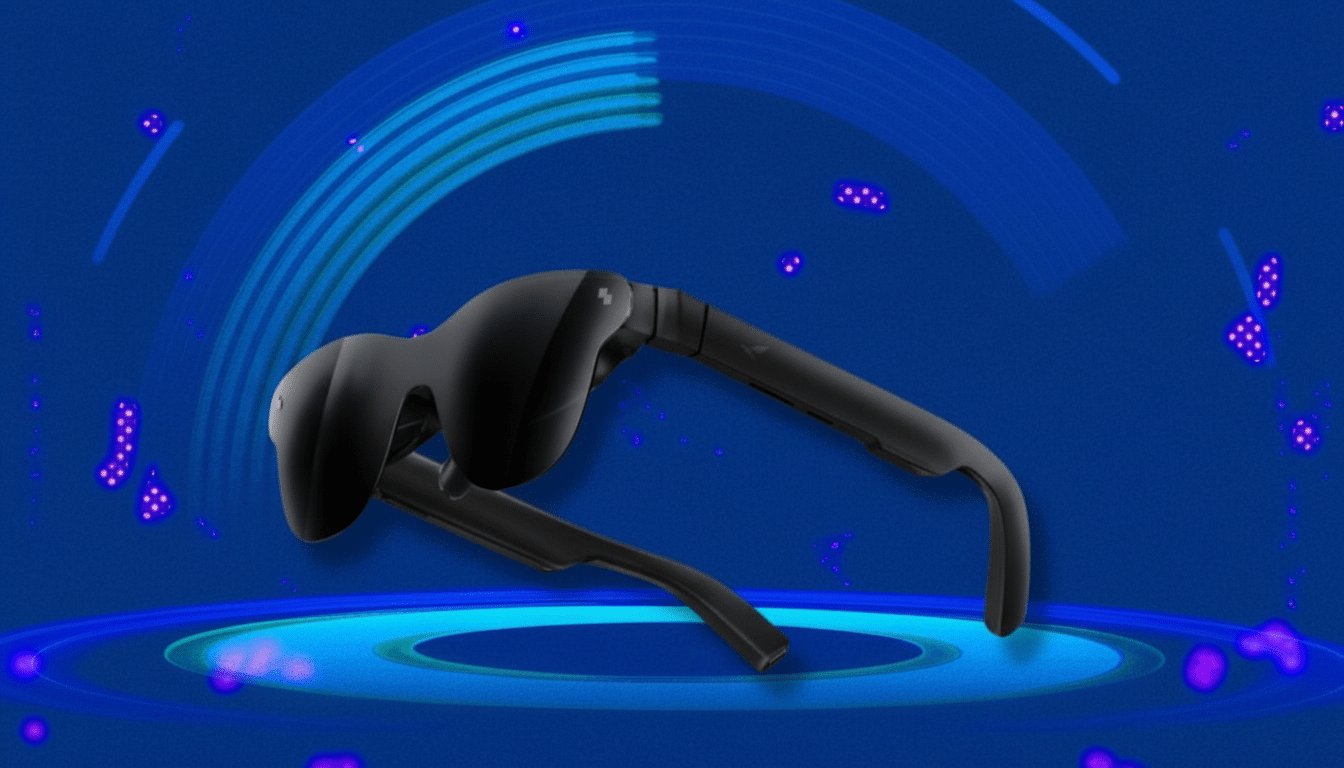
HDR Micro-OLED panel that shines in real-world use
The Air 4 Pro employs a SeeYa Micro-OLED measuring just 0.6-inch with HDR10 support, another atypical feature in glasses this lightweight. TCL quotes up to 1,200 nits, 98% DCI-P3 color, and a refresh range of 60-120 Hz. In the real world, the panel looks punchy and saturated, unlike dimmer AR viewers, without any of the muddier midrange you can sometimes spot.
Next to my daily-driver Xreal One Pro, the TCL model appeared significantly brighter and cleaner in highlights. In a well-lit booth, HDR clips displayed contrast rather than washing out, and text remained legible throughout the frame. The blacks didn’t gray out, which is the benefit of Micro-OLED’s per-pixel illumination.
TCL also touts this as the world’s first consumer AR glasses that support HDR10, and while “firsts” can be fuzzy, that has real-world meaning. High-contrast content—space scenes, night shots, UI elements—benefit from that extra dynamic range. If streaming and productivity are your main uses, this is the differentiator you’ll actually feel.
Tethered connectivity and onboard audio impressions
As with other display-first AR viewers, the Air 4 Pro tethers over USB-C to a phone, laptop, or handheld. You pop that in your pocket, and the headset is no bulkier than a big pair of ski goggles, yet you get a virtual screen floating somewhere out in front of you—perfect for watching movies on a flight or serving as a private second monitor at the cafe. TCL says the built-in speakers are tuned by Bang & Olufsen; I wasn’t able to get a good sense of audio in the noisy hallway, but it should be fuller sound without having to use earbuds.
There’s also an AI-powered 3D video conversion mode on the menu. For depth-curious viewers, it’s an ambitious add-on—though I didn’t have enough time with it to evaluate artifacting or discomfort in longer sessions.
Design, comfort, and weight balance during extended wear
At 76 grams, the Air 4 Pro lands in the “wearable for a movie” zone. The weight distribution felt even, and the bridge pressure did not feel sharp during my demo. There was little light leakage under the overhead LEDs, and the image remained stable as I switched focus between the virtual screen and the real world.
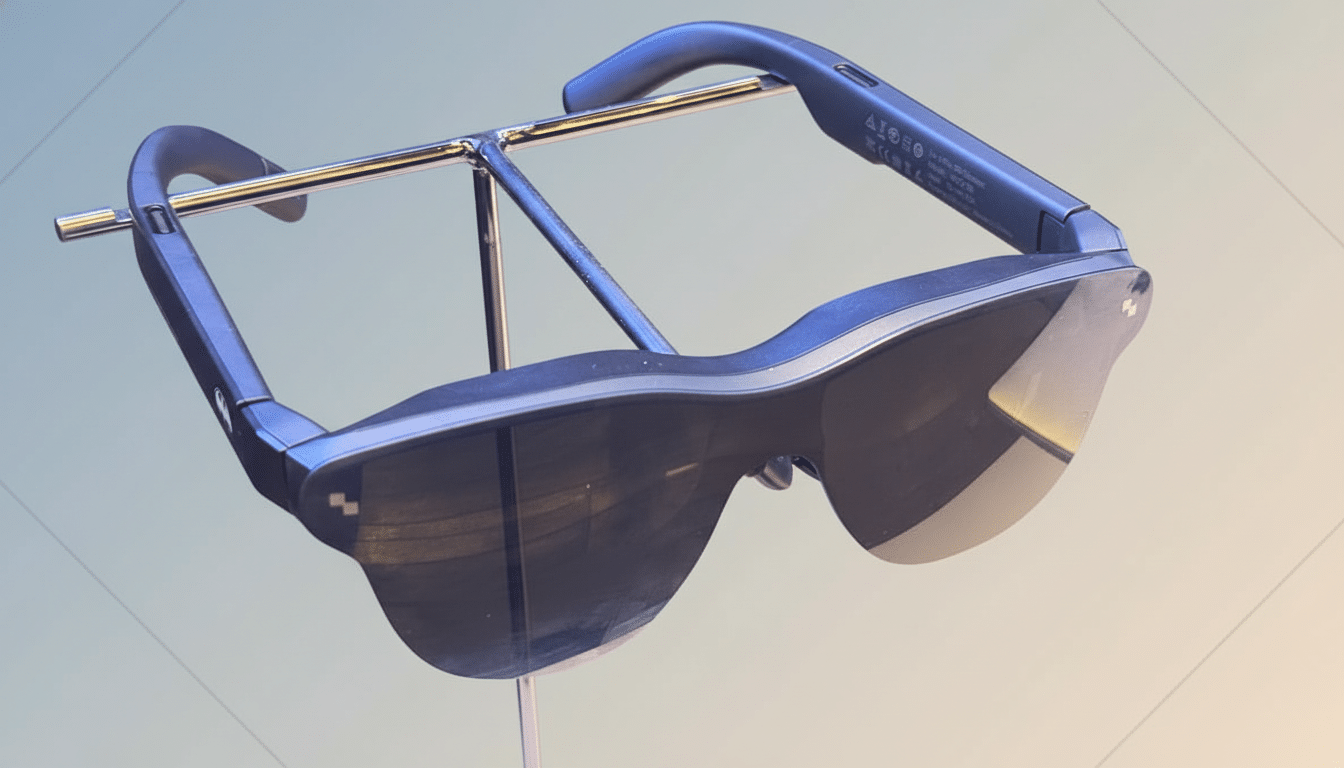
You still look like you’re wearing tech, not fashion eyewear, but amid bulkier early AR frames this is subtle. The frames didn’t groan with light flexing, and the hinge action felt solid—subtle cues that matter when you’ll be using them every day.
Pricing is on the radar for the AR viewer market
With a price of $299, TCL undercuts most competitors that live in the $399 to $499 range, and it does so while promoting HDR and higher peak brightness. That matters. The AR viewer category had been a niche superuser play; knocking the price floor down while pushing display quality up changes the value proposition for commuters and students.
It also boxes out “smart glasses” without displays. Camera-toting frames are still widely favored by creators, but if you care about private viewing and productivity, the Air 4 Pro comes across as the more practical purchase. IDC analysts predict that the head-worn display category will continue to grow at double-digit rates through the middle of this decade, with aggressive pricing like this as a stimulant.
A look at untethered AR and the RayNeo X3 Pro eSIM concept
TCL also displayed a concept that it calls the RayNeo X3 Pro Project eSIM, which has built-in LTE for use as a standalone device. It’s a lofty idea—true, phone-free AR juxtaposed against the current tethered reality. As a point of reference, the regular RayNeo X3 Pro (no eSIM) has a list price of $1,299, which puts into perspective just how expensive onboard compute and radios still are.
Wireless glasses would enable workouts, smooth navigation, and language prompts untangled from a cable. But three factors in particular are the real blockers: battery density, heat, and optics efficiency. Analysis firms like Display Supply Chain Consultants have observed investments in Micro-OLED capacity, which ought to improve power draw and brightness over time.
Early takeaway from hands-on time with RayNeo Air 4 Pro
The RayNeo Air 4 Pro doesn’t attempt to be everything; it attempts to be a great screen for your face. From my demo, the HDR-capable Micro-OLED, high brightness, and wide color coverage check off that brief well, and at $299 it’s an obvious pick for travelers and remote workers whose product wagon doesn’t already include a cinematic-class pair.
The caveats should sound familiar: you’ll need a USB-C device, and the audio and 3D claims remain to be put to the test in real-world scenarios. But if TCL’s production units are anything like what I saw, competitors need to pay attention. This is an unusual AR product in that it feels both better and cheaper, rather than one or the other.
