


Tavus is helping make the holiday season a proving ground for emotionally attuned AI. Families are having “hours” of these conversations with the company’s AI Santa most days, according to Hassaan Raza, the founder and CEO of the startup, bumping into usage limits; that’s an unusually sticky engagement pattern for any consumer chatbot (let alone one based on a seasonal character).
A Santa With Some Agency in Tavus’ Real-Time Stack
The new AI Santa offering is based on Tavus PAL, the company’s real-time agent stack enabling humanlike abilities to see, hear, and respond. This Santa does more than take dictation and respond; he reads facial expressions, interprets gestures, remembers past conversations, and otherwise customizes his follow-up chats around every detail — whether a child referenced a beloved pet or a favorite game the previous week.
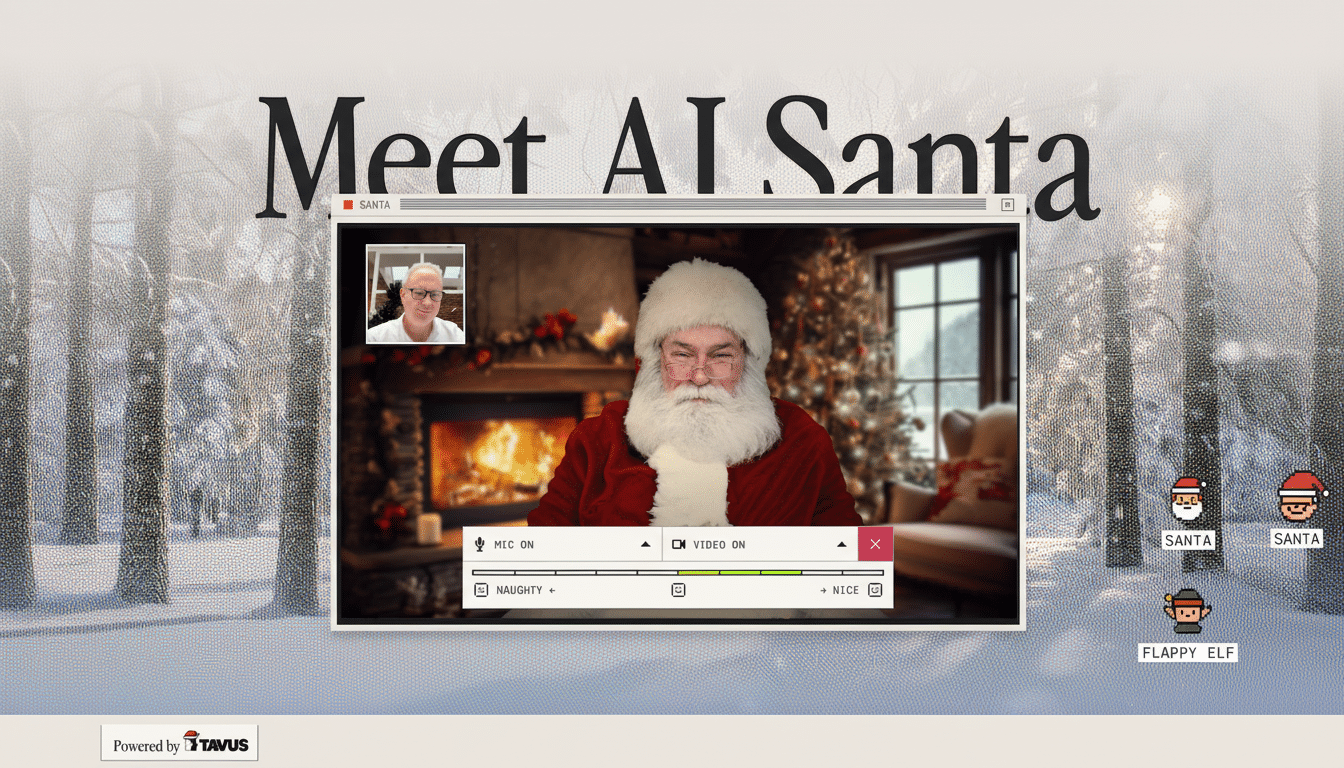
But besides signals of empathy, Santa can perform. The agent can look up gift ideas, craft simple messages, and handle little tasks while you’re unavailable, Tavus says. Parents and children can see each other through text, phone, or video. In demos provided by the company, the bot can riff on particular game titles once someone mentions a console, and it mimics facial language with an on-screen smile — impressing some users while feeling strange to others.
Engagement Signals and Why This Is Key for Tavus
Last season’s Santa alone drew millions of visits, Raza says, and this year’s usage is pacing well ahead. The detail that stuck out is the length of sessions: hours-long conversations imply this agent crosses from novelty into companionship. For consumer apps, that kind of time-on-agent is closer to people’s behavior around gaming and streaming than it is chatting up a chatbot.
And if that pattern holds, branded characters could represent a new kind of “appointment AI,” agents to whom people look forward for ritual moments. It suggests a playbook for events and franchises beyond the holidays: mascots who know you, sense your mood, and assist with mundane chores while staying in character.
Child Safety and the Santa Illusion in AI Agents
It’s the same traits that make an AI Santa endearing that also bring about familiar worries. Very young kids may have difficulty recognizing when they’re talking to a human versus a bot, and psychologists are concerned that very reactive agents can lead children into parasocial relationships. The American Psychological Association has recommended circumspection in intense social tech use by young people, and Common Sense Media is calling for parents to demand transparency about what AI systems are capable of — and what they’re not.
Raza explains it is something intended for families to use together and features safety tooling that includes content filtering as well as conversation control.

Tavus can close a chat itself and direct users to mental health resources in sensitive situations. Asked about its nature, the character readily admits that it’s not the “real” Santa but an AI-powered one — a small but crucial piece of information that helps to manage expectations going forward.
The rest of the market is also heading for narrower guardrails. Character-driven chat platforms have introduced age gating and a sterner approach to minors, evidencing an increasingly shared understanding that child-oriented AI requires a higher bar of safety.
Data Practices and Parental Controls for Families
Tavus says it collects conversation logs, timestamps, and metadata, as well as information that users opt to share with Tavus in order to maintain service quality and safety. The company says families can ask for data to be deleted. For products that are appealing to children, experts cite age-old regulations like the Children’s Online Privacy Protection Act, which mandates parental consent before gathering personal data from kids below a certain threshold. Clear parental controls, data minimization, and short retention windows are now table stakes for youth-facing AI.
The Emergence of the Character Agents in AI
AI Santa is part of a fast-growing niche: personality-driven agents that combine conversation, memory, and performance. Start-ups such as Replika helped bring the concept of companion chatbots into vogue, and big platforms are now turning out multimodal assistants that can see and speak. Voice cloning from companies such as ElevenLabs, and progress in avatar generation at the likes of Synthesia and HeyGen, have turned text boxes into vivid, real-time characters.
The thing that sets Tavus apart is its emphasis on agents with both perception and agency. “If your brand mascot can see a smile, remember the last story from last week, and do something small to help you in that time, it goes beyond gimmick to actual utility, especially if it’s all encapsulated as I received it through Santa,” Goldberger said.
What to Watch Next for Tavus and AI Santa
Two questions will determine if AI Santa is more than buzz during the holidays. First, can Tavus hold for hours-long interaction after the holidays with other characters or examples? Second, can the company show me that it will exhibit world-leading safety and data stewardship at child-scale? If the answer to both is yes, the North Pole might have just previewed not only what comes after voice assistants but also another promising category of consumer AI: agents people opt to spend real time with as opposed to open and close.
