


T-Mobile’s high-flying marketing just hit turbulence. The National Advertising Division of BBB National Programs recommended the carrier discontinue or significantly revise promotions touting “free” in-flight Wi-Fi, finding the ads could mislead consumers about availability and about what rival customers actually pay. The review followed a challenge from Verizon, with AT&T supporting parts of the complaint.
Ad watchdog faults savings message in T-Mobile Wi‑Fi ads
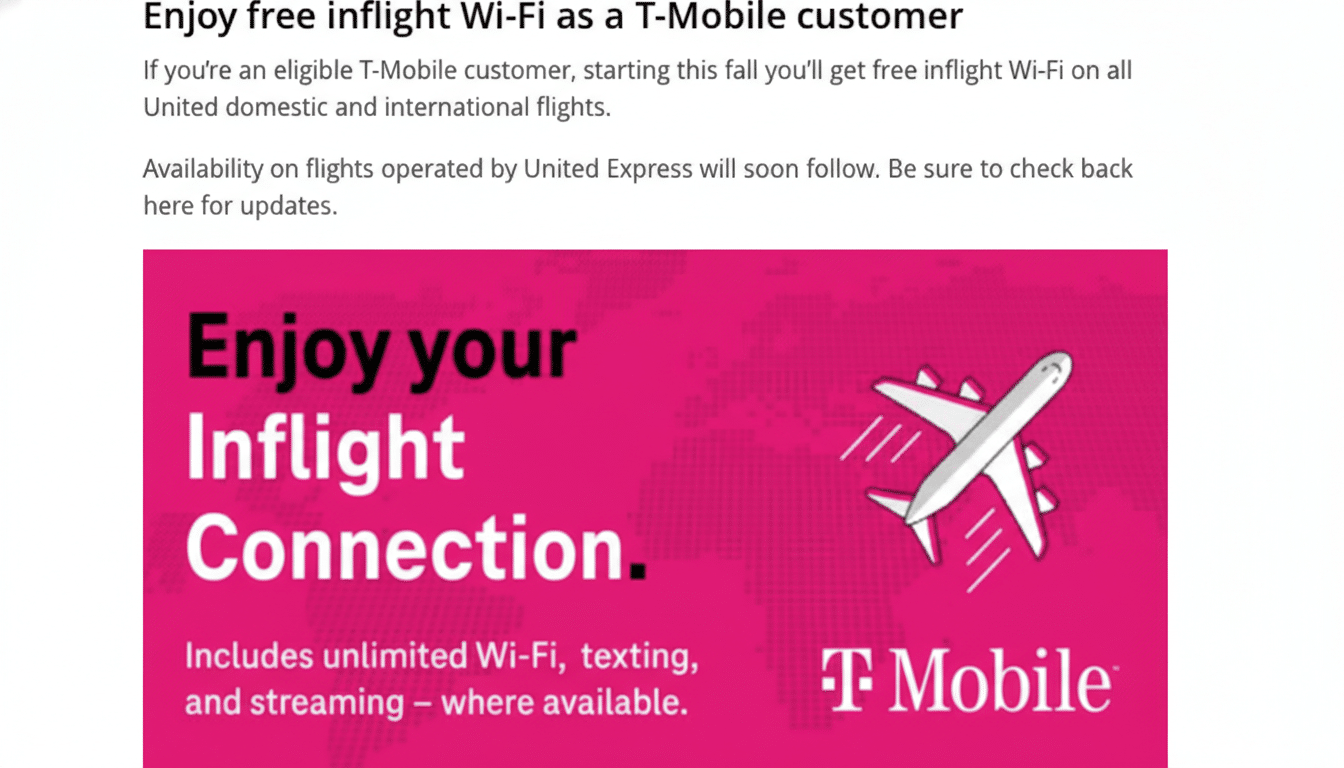
At issue is T-Mobile’s presentation of its in-flight Wi-Fi perk and a claim implying Verizon customers face $147 per month in Wi-Fi costs. NAD concluded the figure wasn’t substantiated and that T-Mobile’s disclosures didn’t clearly spell out material limits—most notably that the perk is only available on certain airlines and networks. In NAD’s view, consumers could reasonably walk away believing the benefit works broadly and that non-T-Mobile users routinely incur a specific monthly out-of-pocket cost.
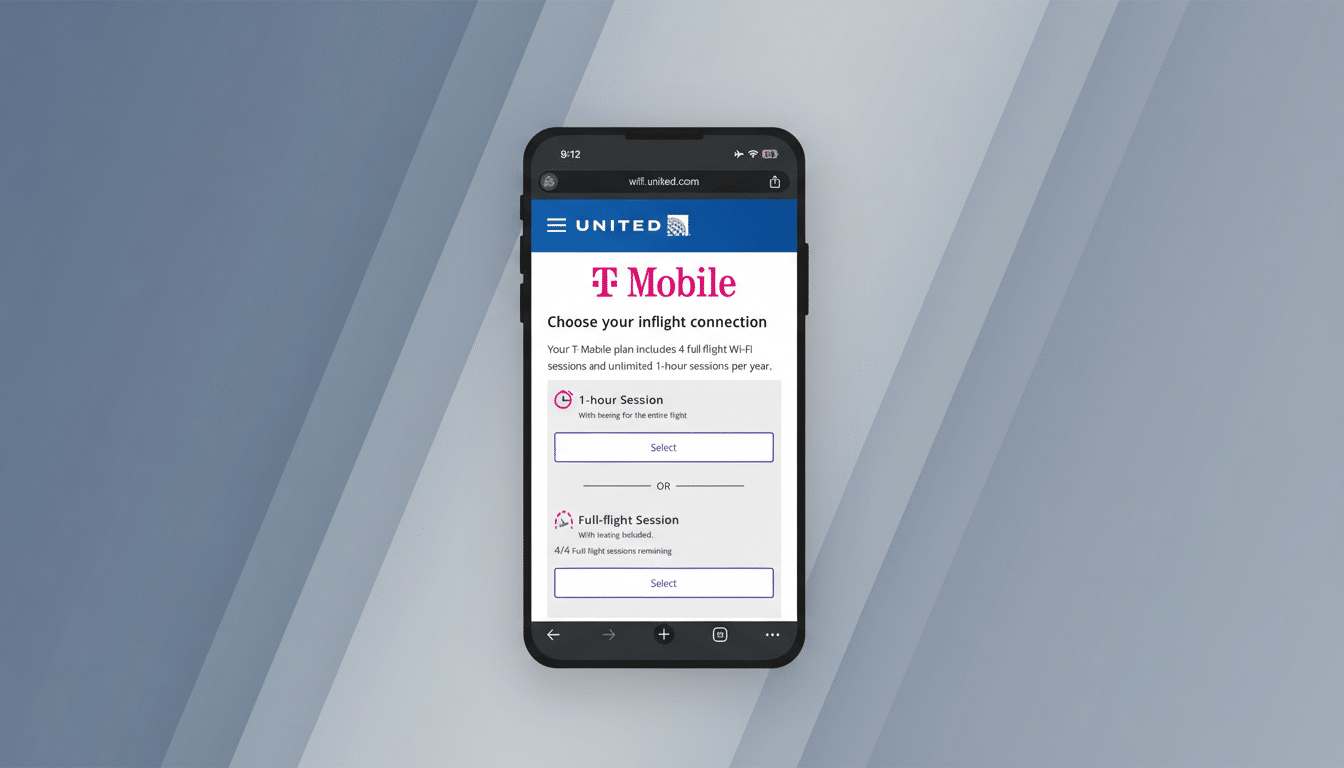
NAD’s recommendation is straightforward: drop the comparative cost assertions or back them with solid evidence, and clearly and conspicuously disclose the exact nature of the in-flight benefit—including that fees are set by participating airlines and that coverage varies by carrier, aircraft, and route.
What T-Mobile Argued—and Why It Fell Short
T-Mobile maintained it was simply illustrating what a customer might pay to replicate the Wi-Fi access bundled with eligible T-Mobile plans. The company also cited internal usage data to show subscribers regularly use the perk. NAD, however, said that evidence doesn’t substantiate claims about what Verizon customers actually pay and called the messaging “ambiguous,” particularly because availability depends on specific airline partnerships and onboard systems.
In advertising law, “free” claims must carry any material conditions in close proximity and plain language. NAD found T-Mobile’s qualifying language too thin for an in-creative disclosure. Fine print buried elsewhere or broad statements that “airlines may charge a fee” won’t cut it if the ad’s main impression suggests universal coverage or a predictable monthly cost for non-customers.
Why the $147 number raised red flags in ad review
Airline Wi-Fi pricing is all over the map. On many U.S. carriers, a single-flight pass often runs $8–$20, while monthly subscriptions can start around $50 and vary by region, aircraft, and provider. Some airlines, like JetBlue, offer free Wi-Fi fleetwide, and others have introduced free access for members on large portions of their networks. With such variability, a blanket monthly charge implied for “Verizon customers” can overstate typical costs and ignore routes where Wi-Fi may be complimentary or unavailable.
Network operators on aircraft—Viasat, Intelsat/Gogo, Panasonic, and others—also determine service performance and availability. Take rates can swing widely by route and fleet; Viasat has reported connection rates topping 30% on certain flights. Those dynamics make precise cross-carrier cost comparisons especially fraught unless tightly defined and meticulously sourced.
What changes could be coming to T-Mobile’s Wi‑Fi ads
If T-Mobile keeps promoting the perk, NAD advised it to specify which airlines and aircraft are covered, note that fees are charged by the airlines (not competitors), and avoid speculative statements about what non-T-Mobile customers “pay.” Expect clearer qualifiers in on-screen text, product pages, and potentially separate messaging for different plan tiers if benefits differ by subscription.
NAD decisions are self-regulatory guidance, not court orders. If a company declines to follow a recommendation, NAD can refer the matter to the Federal Trade Commission or state regulators. Separately, Verizon has already taken legal action in another false advertising dispute involving the carriers, underscoring how competitive claims around perks and network performance are drawing closer scrutiny.
Why it matters for wireless customers and advertisers
Perks have become a proxy battleground as carriers approach a 5G coverage and speed stalemate. In-flight connectivity is valuable but complicated, hinging on airline deals, satellite capacity, and evolving policies. For consumers, the practical takeaway is simple: “Free” can be a great value, but only if it’s available on the airline you fly, on the aircraft you board, and under the plan you actually have. Advertisers now have a fresh reminder that those caveats must be front and center.
