


T-Mobile just lobbed a pricing grenade into the family-plan wars, unveiling a Better Value plan that undercuts comparable offers from AT&T and Verizon by more than $1,000 a year for households with three lines. The headline number is $140 per month for three lines before taxes and fees, a limited-time rate that breaks down to roughly $46 per line and folds in popular perks many families already pay for separately.
What You Get And What It Costs on T-Mobile’s Better Value Plan
The Better Value plan is positioned alongside T-Mobile’s flagship offerings and includes streaming benefits like Netflix and Hulu, built-in scam protection, and satellite connectivity features, plus a five-year price lock. The launch price is $140 per month for three lines with AutoPay; T-Mobile says the standard price will be $155. Skip AutoPay and you’ll pay $5 more per line each month. Taxes, surcharges, and a device connection charge of up to $35 per line are extra.
- What You Get And What It Costs on T-Mobile’s Better Value Plan
- How It Stacks Up Against AT&T And Verizon
- Eligibility And Fine Print To Watch Before Switching
- Who Should Switch And Who Should Sit Tight On This Offer
- Network Reality Check: Coverage, 5G Speeds, And Tests
- Bottom Line: How T-Mobile’s Family Plan Adds Up For You
Those extras matter, but so do the bundled services. Streaming subscriptions alone can add meaningful value: ad-supported plans for Netflix and Hulu typically cost in the high single digits to low double digits each month, representing roughly $240 to $360 in annual value for a family that would otherwise subscribe. Add in anti-scam tools and emerging satellite messaging for dead-zone coverage where compatible devices are supported, and the package becomes more compelling.
How It Stacks Up Against AT&T And Verizon
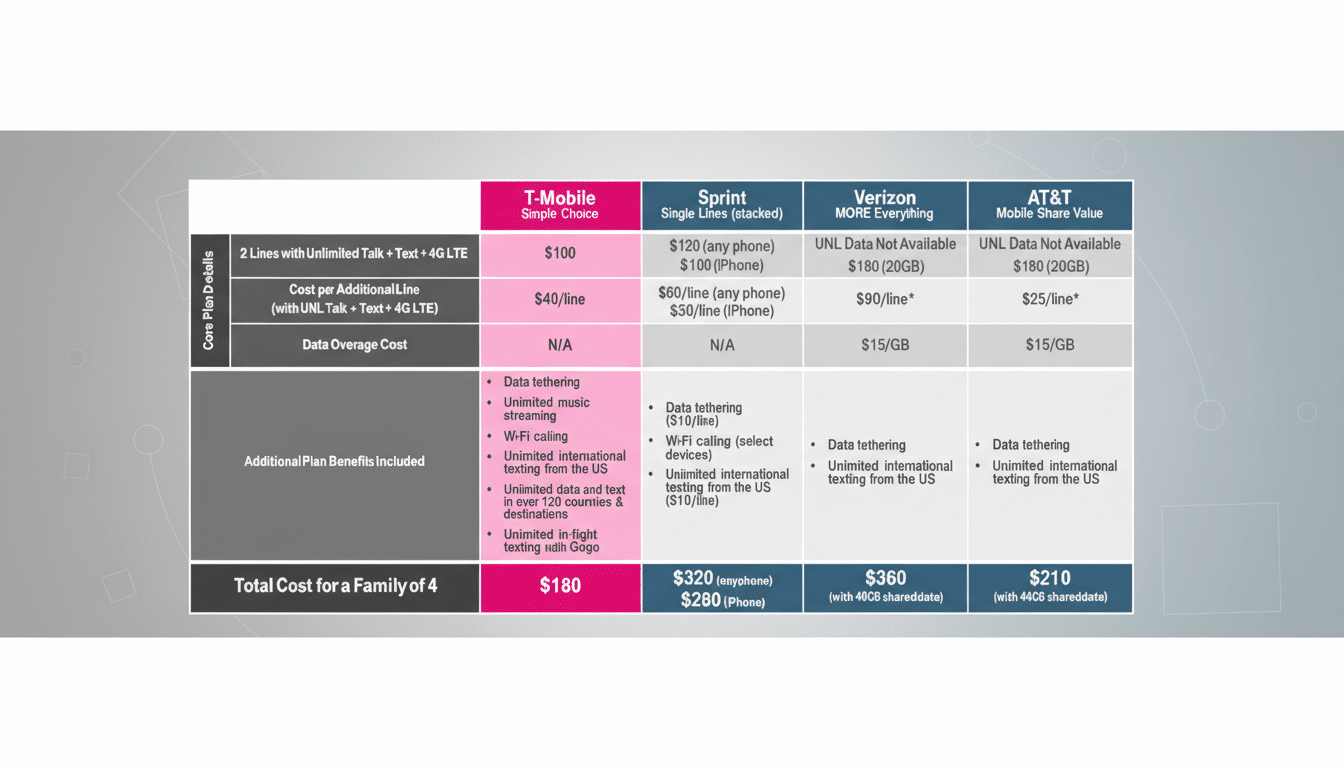
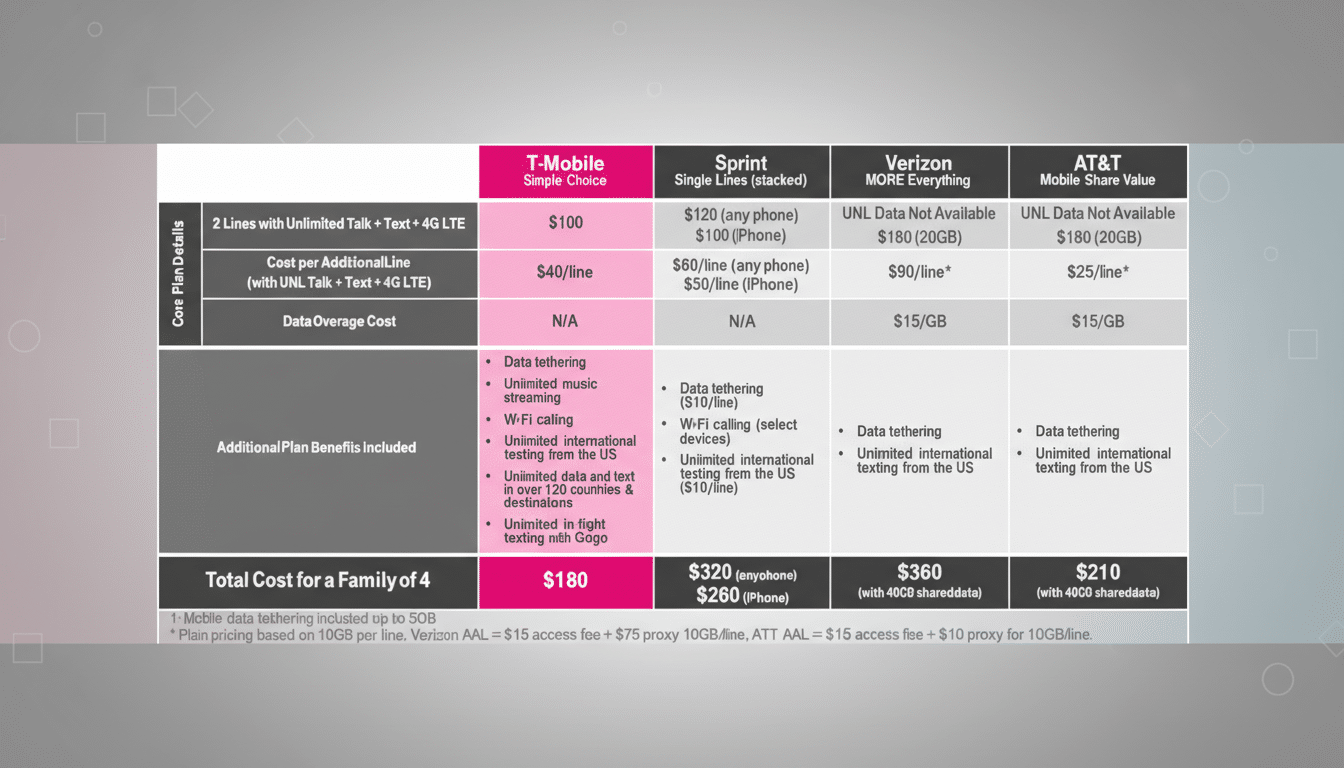
Based on current carrier pricing pages, three-line unlimited plans with premium data from AT&T and Verizon typically run around the mid-$170s to near $200 per month before taxes and fees—and that’s before adding common perks like streaming or cloud storage. Verizon’s add-on model, for instance, charges extra per “perk,” while AT&T’s top tiers don’t routinely bundle major streaming subscriptions. When you net out T-Mobile’s $140 promo rate and the baked-in subscriptions, the savings can clear $1,000 over a year for many families.
Consider a conservative scenario: if a rival plan totals $180 per month for three lines, T-Mobile’s $140 pricing saves $40 monthly, or $480 annually. Layer in $20 to $30 per month in streaming value and you pass $700 to $840 in effective annual savings. Many households also add other paid extras on competing plans, pushing the gap beyond $1,000. Your mileage will vary depending on current discounts, trade-ins, and how many add-ons you actually use.
Eligibility And Fine Print To Watch Before Switching
There are a few strings. You need at least three lines to get the advertised price. AutoPay—typically via a bank account or debit—unlocks the $5-per-line monthly discount. The price excludes taxes, regulatory fees, and a one-time device connection charge of up to $35 per line. T-Mobile also notes switching requirements for new accounts and tenure requirements for some existing customers moving from older T-Mobile plans.
If you’re bringing balances from another carrier, T-Mobile will pay off eligible devices up to $800 per line for as many as four lines via a prepaid Mastercard, subject to approval and trade-in rules. That can erase a key switching hurdle if you’re still under installment agreements elsewhere. As always, read the data priority, hotspot, and roaming details—hotspot allotments and deprioritization thresholds vary by plan and can matter for heavy users.
Who Should Switch And Who Should Sit Tight On This Offer
This deal lands best for families that actually use the perks. If you already pay for Netflix and Hulu, the embedded value is immediate. Frequent travelers and anyone who occasionally finds themselves off-grid will appreciate the scam protection and satellite messaging support as it rolls out to more devices and areas. Households consolidating three or more lines will see the steepest effective discount.
If you’re on a legacy T-Mobile plan with a rock-bottom, price-locked rate, do the math before moving. In some cases, older promotional plans remain tough to beat, especially if you don’t care about bundled subscriptions. Also check whether your current carrier offers loyalty credits or multi-line discounts that narrow the gap—these aren’t always obvious on public pricing pages.
Network Reality Check: Coverage, 5G Speeds, And Tests
Plan economics matter, but so does performance. Independent testing firms like Opensignal and Ookla have repeatedly reported T-Mobile leading the pack in 5G availability and median download speeds through 2024, thanks in part to its mid-band spectrum footprint. J.D. Power surveys consistently show that experience varies by region, so check local coverage maps and talk to neighbors before you switch. Satellite connectivity is a noteworthy new safety net, but for now it complements—not replaces—traditional terrestrial coverage.
Bottom Line: How T-Mobile’s Family Plan Adds Up For You
T-Mobile’s Better Value family plan is a direct shot at AT&T and Verizon customers who want lower monthly costs without giving up popular perks. At $140 for three lines with AutoPay, a five-year price lock, and streaming included, the math favors T-Mobile for many households—often by $1,000+ a year once add-ons are counted. As always, the smartest move is to compare your all-in monthly bill, including fees and subscriptions you already buy, against this offer’s total package.
