


SwitchBot is introducing a new E Ink Weather Station, a 7.5-inch, always-readable display designed to live by your front door and save you another trip to your phone.
The device cross-references that data with local forecasts, surfacing the kind of context you want as you grab your keys — temperature, humidity, air quality, wind, and a six-day outlook — without the glare, notifications, or visual clutter of a tablet.
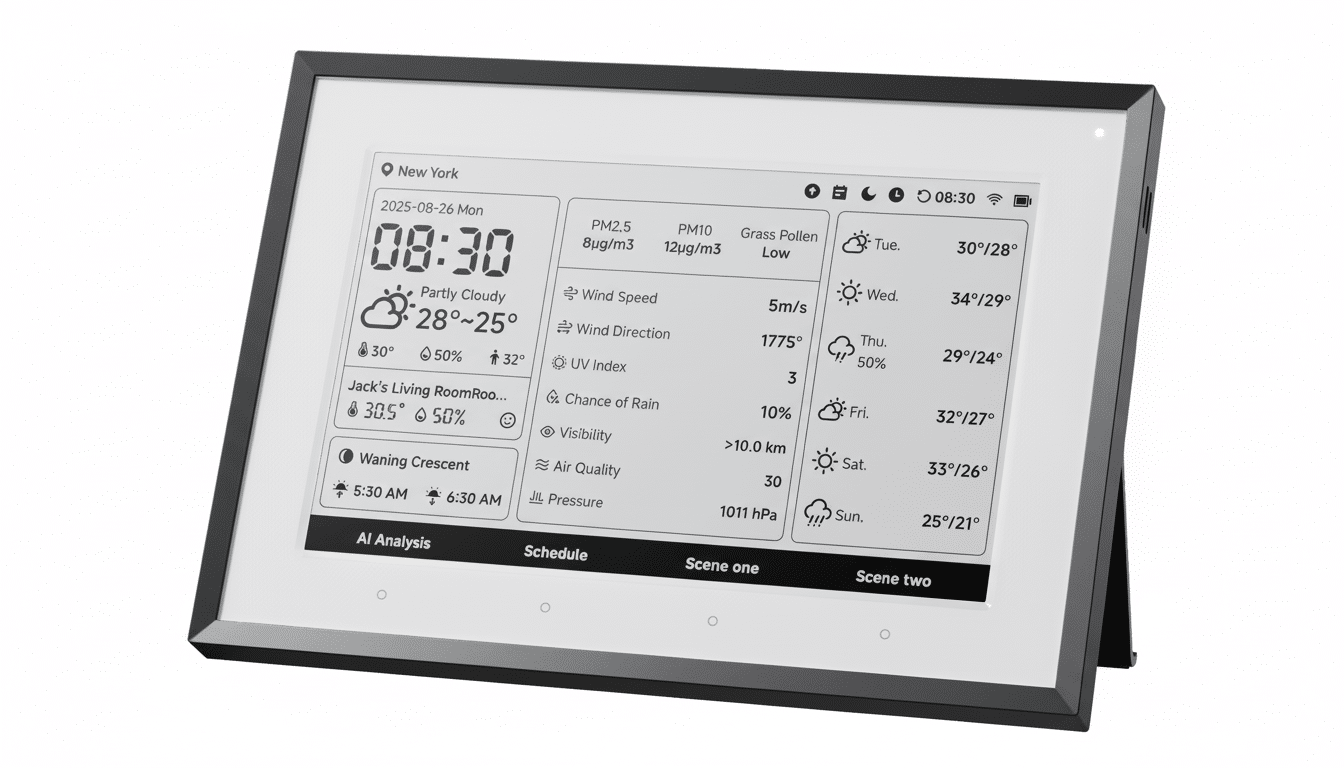
Unlike shiny smart displays that are constantly seeking your attention, this screen is designed to be peaceful. It’s information-first, it’s the result of a company that wants you to be able to take quick glances at things, and it fits in perfectly with those moments when I’m entering or exiting the house: Do I need a jacket? An umbrella? Should I kick on the dehumidifier before walking out the door?
SwitchBot is pitching the Weather Station as a touchstone for household awareness, combining a battery-sipping E Ink panel with light automation and AI-driven daily briefings. Details of pricing and availability are still under wraps, but the idea plays to an increasing hunger for low-distraction smart home interfaces.
A Glanceable Entryway Display for Quick Weather Checks
For die-hard fans, the draw here is the E Ink itself. Reflective displays only use power when pixels need to change, so they are great for persistent, glanceable information. E Ink Holdings has trumpeted this benefit for e-readers and signage for years, and smart home is a convenient extension of the claim: In daylight, the display remains crisp and readable, with no glow from a backlight in dim hallways.
There’s a behavioral angle, too. According to Asurion (a mobile device insurance company), Americans rack up 96 phone checks a day. By raising the defaults — indoor comfort readings and today’s forecast, with an artificial breakpoint at an entry table — the Weather Station tries to divert some of those checks and cut decision friction on the way out.
What the 7.5-inch Panel Shows at a Glance
SwitchBot’s layout is intentionally structured. On one side, sensors embedded in the device report indoor temperature and humidity at a glance. Alongside that appear outdoor conditions like temperature and humidity, as well as a more detailed breakdown of data — wind speed and direction, visibility, and air quality — pulled from local weather sources. Time, date, and sunrise/sunset are all located at the top, with the rightmost part dedicated to a six-day forecast for forward planning.
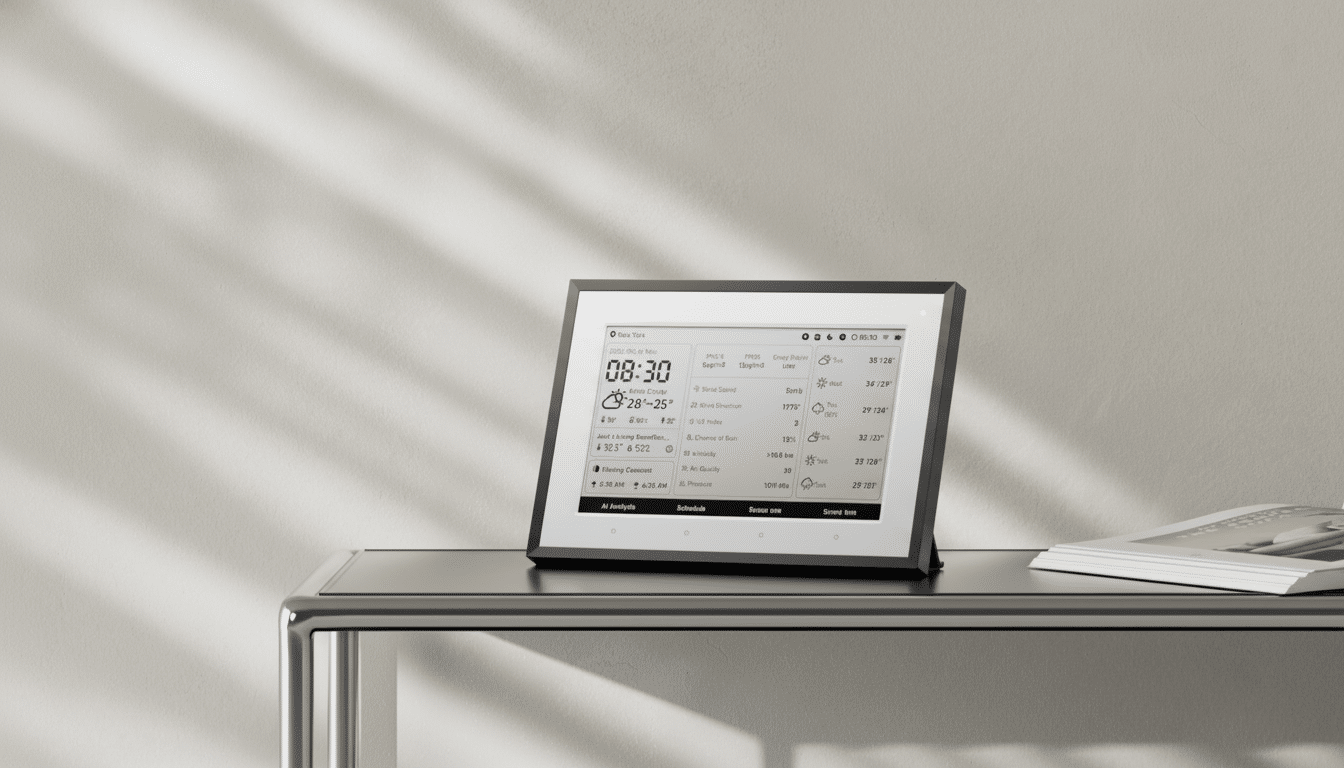
The result feels dense enough to be useful but not so cluttered as to overwhelm. The high-contrast nature of E Ink keeps it readable from across a room, a consideration when the device finds itself parked by an entryway or kitchen counter.
Smarter Than a Thermometer: Automation and Insights
Beyond passive display, the Weather Station connects to SwitchBot’s app and automation. You can match changes to the scene by time, temperature, humidity, or weather conditions so that the home responds as you see fit. Think: when indoor humidity goes beyond the comfort range, hint that a connected dehumidifier should spring into action; when the forecast calls for poor air quality, have the purifier hum to life before bedtime; when the wind and rain blow in, suggest that everyone close balcony doors.
Onboard calendar syncing means upcoming events will be shown on the same canvas as weather, so you can make more informed on-the-go decisions. SwitchBot is also adding layers of AI-powered briefings that sum up the day’s conditions, with a splash more local context — whether you should take an umbrella or leave earlier because visibility will be low. A rotating selection of weather-themed quotes adds personality without being noisy.
Why E Ink Fits the Smart Home Better in Busy Spaces
Smart displays are everywhere, but some places don’t need apps or video. In heavily trafficked areas, there’s more information to be gleaned from a low-powered, glanceable panel than from an all-purpose screen. Reflective E Ink is viewable from wide angles and in sunlight, and slow to drain the battery compared with emissive LCDs that draw power throughout. The issue of energy consumption is one that the Consumer Technology Association has called out as an emerging issue for connected homes, so efficiency is also a practical win — not just being nice.
It also alters how we engage with information. Rather than asking a voice assistant or rousing a tablet, the answer is right where you are. That’s a meaningful change for households that would rather not add more microphones and more distractions.
Price, availability, and how it fits in the ecosystem
SwitchBot isn’t revealing pricing or a release timeframe yet. The Weather Station will join the company’s blossoming stable of home devices — everything from retrofit robots to climate sensors — and it makes the most sense with pieces like SwitchBot hubs and accessories you already have for more complex automations inside the app.
The display, announced at CES and available to preorder now, shows another working example of the broader trend toward more subtle, utility-first smart home gear. If you just want a screen that lets you know what matters as you walk out the door — not to tempt you to look at messages — and are willing to pay for it, the E Ink Weather Station looks tailor-made for that.
