


A new survey of mobile language learners points to a clear shared habit—most open their app every day. In the poll, 79% of respondents reported daily use. Excluding the 6% who said they are not currently studying a second language, that comes out to roughly 84% of active learners checking in daily, with smaller groups engaging only a few times per week or per month.
Daily Use Dominates for a Reason, Backed by Science
Daily practice persists because it is simple, repeatable, and scientifically sound. The “spacing effect,” documented in decades of cognitive psychology research, shows that spreading study into short, frequent sessions improves retention compared with occasional cramming. Classic work on the forgetting curve by Hermann Ebbinghaus, and later meta-analyses by researchers such as Nicholas Cepeda and colleagues, detail how spaced repetition slows memory decay and boosts long-term recall.
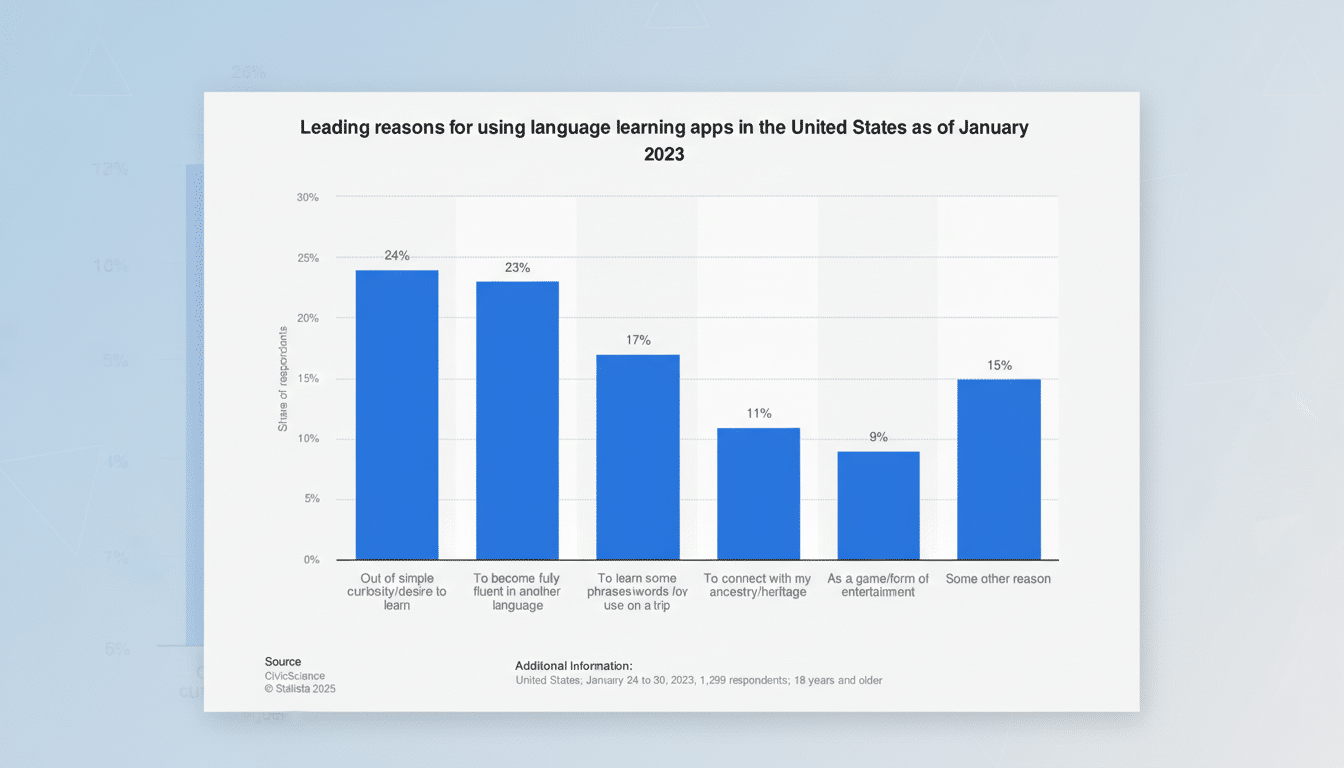
App design nudges users into this rhythm. Streaks, timed reminders, and bite-size lessons reduce the friction of getting started—a major barrier in any learning endeavor. Habit-formation research from University College London suggests that regularly repeating a small behavior in a consistent context helps it stick over time, which is precisely the loop many apps aim to create with daily goals, XP points, and leaderboards.
There’s also practicality. Five to ten minutes fits between meetings or on a commute, and the perceived “low cost” of a short session makes it more likely you’ll show up again tomorrow. That consistency compounds, especially when material is recycled with spaced repetition systems and active recall.
What Daily Sessions Actually Deliver for Learners
Short bursts can be powerful when they involve retrieval and feedback. Studies in learning science consistently find that active recall—producing an answer rather than re-reading—strengthens memory. Many popular apps lean on this with quick prompts, listening checks, and translation drills, and organizations such as the American Council on the Teaching of Foreign Languages emphasize frequent, meaningful exposure as a pillar of progress.
However, daily taps are not the same as daily gains. Ten minutes per day adds up to about 61 hours a year. The Foreign Service Institute estimates that learners of closely related languages like Spanish or French typically need 600–750 hours to reach upper-intermediate proficiency, and far more for languages like Arabic or Mandarin. The takeaway: a daily habit is indispensable, but it must be paired with deeper sessions and real-world practice to move beyond the basics.
This is where the quality of that daily time matters. Sessions that include speaking aloud, listening to natural speech, and using new vocabulary in context outperform passive tapping.
Consider weekly “anchor” tasks such as:
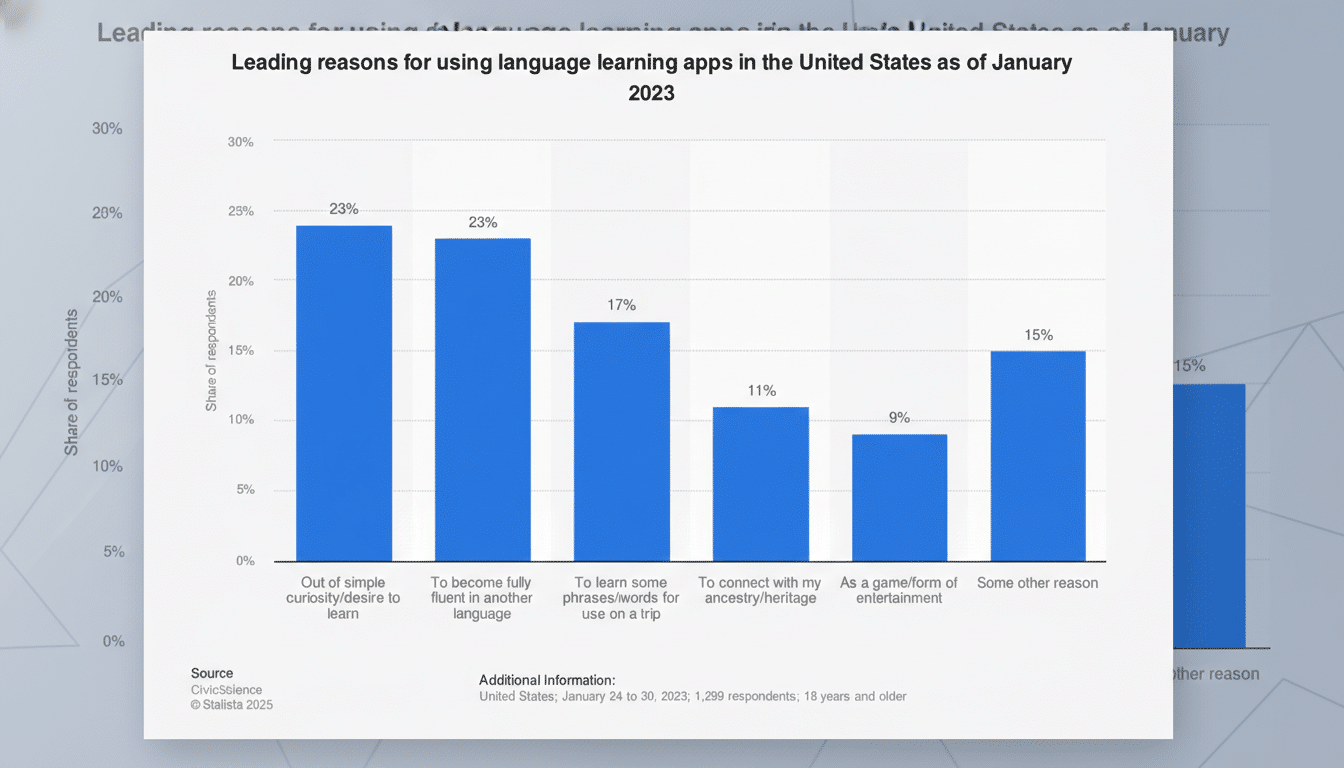
- A 30-minute conversation exchange
- A podcast episode
- A writing prompt
These can convert daily maintenance into measurable skill growth.
Apps Are Shifting Toward Speaking and Real Practice
As the daily-use habit becomes standard, developers are shifting from streaks to substance. Several platforms now offer AI-powered conversation practice, immediate pronunciation feedback, and role-play scenarios tailored to a learner’s level. Apps focused squarely on speaking aim to bridge the notorious gap between knowing the right answer on a screen and saying it confidently in the wild.
Advances in speech recognition and large language models make this possible at scale, surfacing mistakes in real time and nudging learners to reformulate sentences or try new structures. For daily users, this turns a five-minute check-in from a box-ticking exercise into a mini speaking workout—an important shift if the goal is communicative competence rather than pure streak preservation.
What This Means for Learners and Everyday Progress
The survey confirms that the winning habit is showing up every day. To turn that habit into outcomes, prioritize active tasks (recall, speaking, listening) over passive ones, and layer in weekly challenges that stretch your skills.
Consider tracking metrics beyond streaks:
- Words used in a sentence
- Minutes of conversation
- Comprehension of native content
For builders, the message is equally clear: the daily loop is established for most users, so the differentiator is what happens inside that loop. Features that elicit output, personalize review schedules, and connect learners to authentic language use will matter more than cosmetic rewards. Daily engagement is the shared habit; meaningful practice is the competitive edge.
