


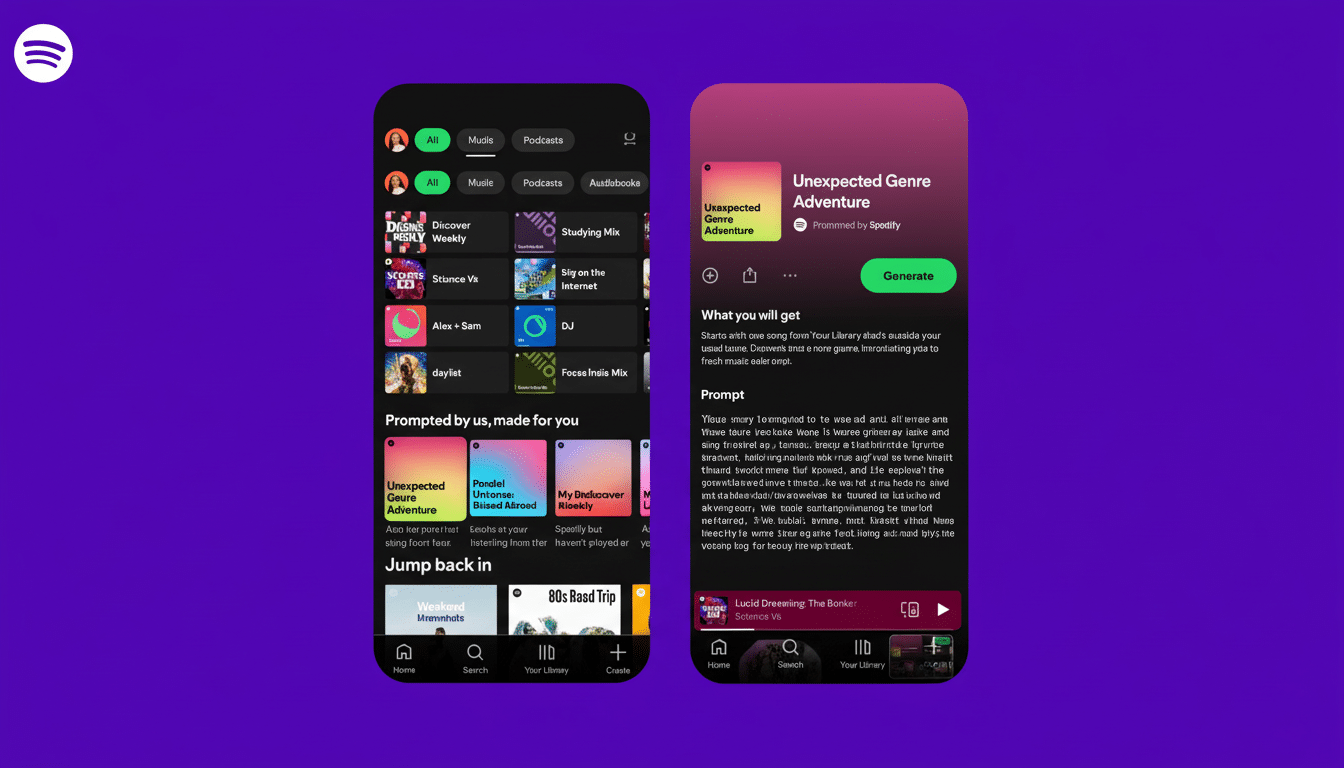
Spotify is testing a new feature called Prompted Playlists, a sort of AI-powered tool that brings together data from the user and around the web to create custom mixes when they provide input in natural language. The test is being introduced first to a group of Premium users in New Zealand, in English and as a beta product, which the company hopes will give users more control over how its recommendation system influences their queues.
Instead of just relying on behind-the-curtain algorithmic blends, Spotify is offering users a chance to hand the car keys over to people. The system, the company says, takes into account the full arc of a listener’s taste — including years of play history — and explains why tracks appear in order to inject an extra layer of transparency into its selections.
What Spotify’s New AI-Prompted Playlists Can Do
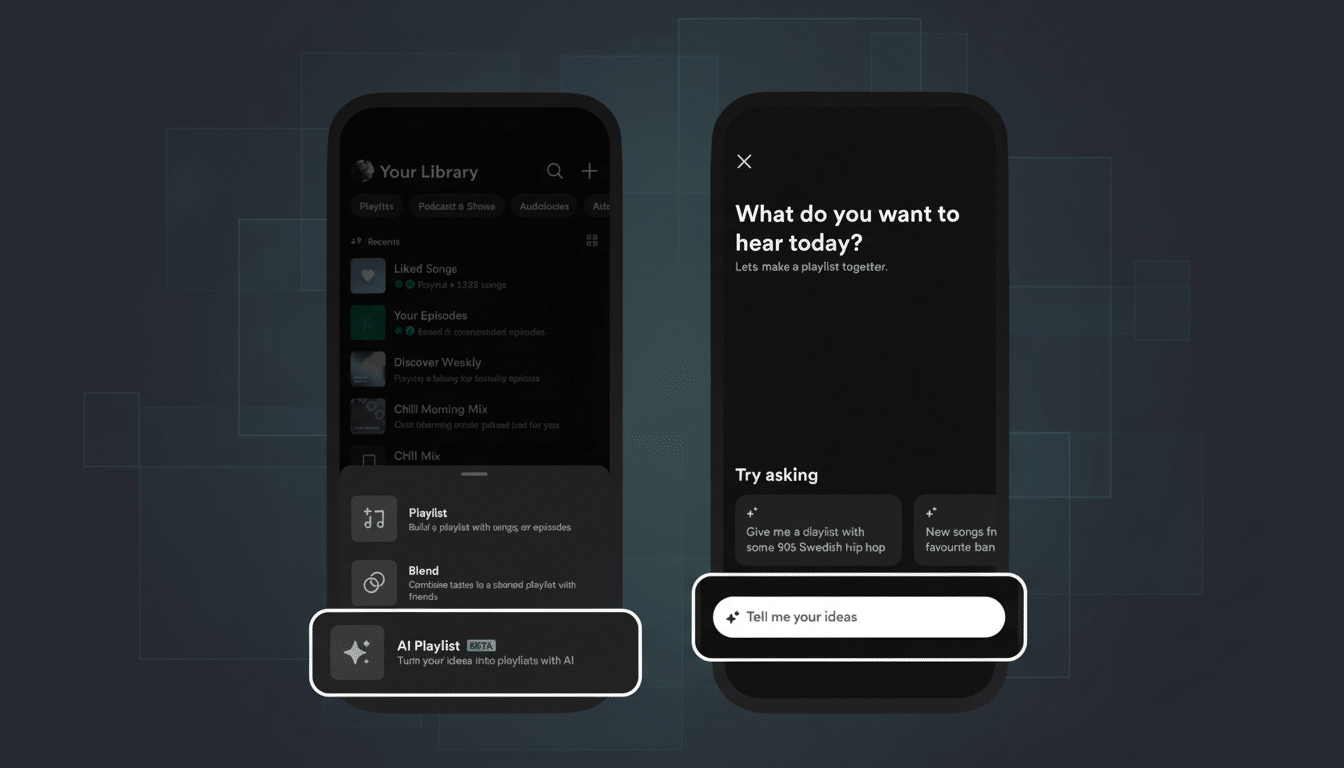
With Prompted Playlists, you can give plain-English requests (“Make me a mix I’d listen to on my commute”), and Spotify will create a personalized setlist drawing from how you’ve listened in the past and what’s in your catalog.
You could say “music from my top artists over the past five years with deep cuts I missed,” and the system will dig into your historical behavior — surfacing less-played tracks equally alongside hits.
The prompts can be multipart and developed specifically for the activity. For instance: “High-energy pop and hip-hop for heart-pumping 30-minute 5K fast pace, then chill out to tracks that have relaxed beats for cooldown.” Or: “Songs from the buzziest movies and series of this year that I will like.” These are the instructions explaining the pacing of the playlist and which genres or discovery it should prioritize.
Crucially, you can iterate. After users hear that first version, they can tweak the prompt — tightening or loosening the time window, changing moods, requesting more new music — then select how often the playlist should refresh (daily, weekly). That refresh cadence, however, is a nifty twist — it effectively allows fans to build their own personalized Discover Weekly–style engine around certain contexts or eras.
How It Is Different From Current AI Features
Spotify has long been testing the waters with personalization, from its original Discover Weekly to Blend, Daylist, and an AI-powered DJ. The DJ is a host-style, guided experience which narrates choices. Prompted Playlists flip the script: listeners set the rules, and they do so in a way that comes after deep pulls from long-term behavior — not just recent plays.
The feature also introduces a text explanation for why certain tracks were included. That’s in line with an industrywide push toward user control. Social platforms have made controls available to modulate what their feeds display — last year, Instagram released more tools to shape Reels, and decentralized networks such as Bluesky allow users to switch out algorithms entirely. Spotify wants to take the same approach when it comes to discovering music.
Why It Matters For Listeners And Artists
At Spotify’s scale — more than 600 million monthly active users and about a quarter billion Premium subscribers, according to recent earnings — a small interface change can send ripples through listening habits. The International Federation of the Phonographic Industry says that streaming now makes up upwards of two-thirds of recorded music revenue, and discovery surfaces within apps increasingly dictate what rises to the top.
By prompting with posts like “deep cuts I haven’t heard,” the feature could help direct attention toward catalog and long-tail tracks that algorithms might otherwise ignore. For artists and labels, it’s new potential to be woven into context-driven mixes — training runs, study sessions, late-night jazz — without requiring dedicated editorial slots. It also might be a factor in marketing strategies, as teams ponder how songs do or don’t map to prompt-friendly descriptors like tempo, mood, and cultural hooks.
There are trade-offs to watch. Hyperpersonalized mixes run the risk of narrowing taste, should prompts verge on too narrow, but the time range-setting, genre blending, and force in songs you’ve never streamed all help to scatter any filter-bubble effect. The explanations can also foster trust by rendering the logic of a recommendation more readable to listeners.
Availability And What To Watch As The Beta Expands
The beta is open only to Premium subscribers based in New Zealand and is English-only at the moment. Spotify regularly begins trialing new experiences in smaller regions before rolling out more broadly; strong engagement, satisfaction, and repeat usage generally predict a broader expansion — along with support for additional languages.
Those signals include how often users loop prompts, whether they choose to be refreshed daily or weekly, and the percentage of songs played that were new to them. If Prompted Playlists takes off, I would anticipate more intense integration with features such as Daily Mixes and social functionality like Blend and Group Sessions — as well as closer links to fitness workouts or in-car listening, where context-rich prompts are golden.
For now, the experiment represents a clear step toward giving listeners knobs and sliders over the black box — without asking them to build playlists from scratch. It’s algorithmic personalization, on your own terms.
