


SpaceX is preparing to fly an upgraded Starship for the first time, aiming to move the super heavy-lift system into its next phase of testing in the coming weeks. CEO Elon Musk signaled the new target on X, framing the attempt as contingent on regulatory approvals and final hardware readiness at the company’s South Texas launch site.
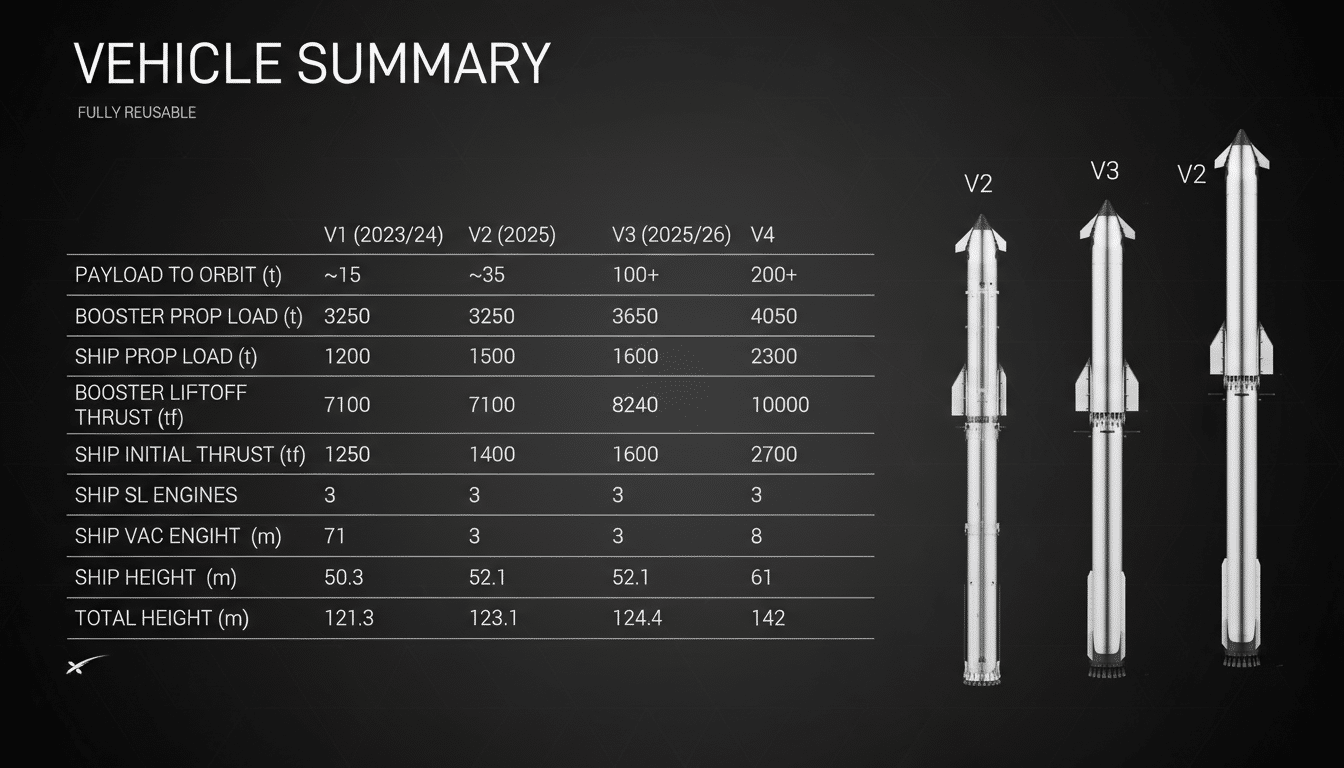
The vehicle, commonly referred to as Starship V3, is larger and more capable than prior iterations. It is designed to carry heavier next-generation Starlink satellites and to demonstrate in-orbit docking that will be essential for deep space missions. The flight will test whether the architecture can mature from ambitious concept to repeatable operations.
How the Starship V3 upgrade changes design and performance
V3 introduces structural and propulsion refinements meant to improve performance, reliability, and turnaround time. SpaceX has reworked plumbing and avionics, expanded propellant capacity, and iterated on thermal protection tiles to better withstand high-energy reentries. The booster retains a dense cluster of Raptor engines, with SpaceX indicating higher thrust and simplified engine layouts to reduce failure points.
A key mission for V3 is lofting larger, heavier Starlink satellites that promise higher throughput and new services such as direct-to-cell connectivity. FCC filings describe these spacecraft as more powerful and more demanding to launch, a combination that suits Starship’s volume and lift capability. Consolidating dozens of satellites per flight could cut network deployment costs and accelerate coverage improvements.
Why this Starship V3 test flight matters for NASA and beyond
NASA’s human lunar lander program depends on Starship’s ability to dock in orbit and transfer propellant, enabling the multi-launch campaigns required to reach the Moon. NASA’s inspector general has repeatedly flagged technical and schedule risk around these milestones; a successful V3 test would retire some of that risk by proving hardware and ground systems at scale.
Starship’s previous campaign advanced the state of the art. The company reached orbit, deployed dummy payloads that simulated next-gen Starlink, and executed tower-assisted booster recoveries more than once. The program also absorbed hard lessons, including a booster anomaly during ground testing that tore open part of the vehicle. SpaceX’s iterate-fast ethos—pushing hardware to and beyond limits, then updating designs—remains central to its approach.
Regulatory approvals and launch pad readiness for Starship V3
Before the countdown, the Federal Aviation Administration must grant or modify a launch license and close out prior mishap reports. SpaceX has been working with the FAA, U.S. Fish and Wildlife Service, and range partners on environmental mitigations and operational constraints, building on lessons from earlier flights at Starbase.
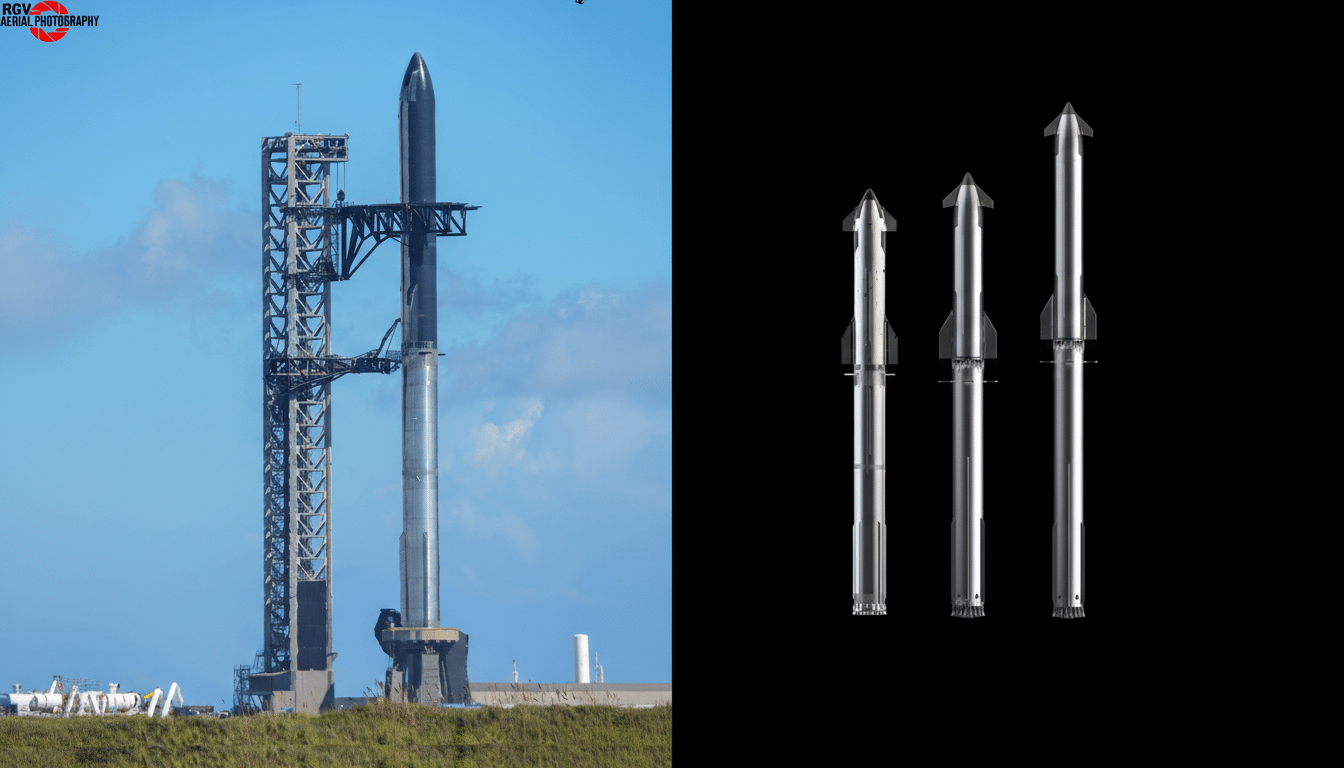
The company fortified ground infrastructure with a water-cooled steel flame deflector and enhanced deluge system to protect the pad and manage acoustic loads. The launch tower and “chopstick” arms—which support stacking and attempted catches—have also seen upgrades intended to improve reliability and safety margins during booster recovery attempts.
Competitive landscape and financial context shaping Starship
SpaceX’s cadence has reshaped the global launch market. According to BryceTech, the company has recently been responsible for roughly 60% of worldwide orbital missions, a share enabled by Falcon 9 reusability and a deep manifest. Sustaining that dominance into the next decade likely requires Starship to move from demonstration to routine service.
Starlink’s rapid growth is another driver. Industry analysts estimate the broadband business now contributes more than 50% of SpaceX’s revenue, and larger satellites riding on Starship could expand capacity, reduce cost per bit, and support mobility and enterprise products. Investors are watching closely, with frequent speculation about an eventual public listing of the satellite unit or a broader offering.
Competition is intensifying. Blue Origin’s New Glenn has flown twice, delivered a NASA payload, and achieved a booster landing on its second mission, with another launch expected soon. The company has also outlined a larger future variant aimed squarely at the super-heavy segment. Europe’s Ariane 6 is ramping, and China continues to field increasingly capable heavy-lift concepts, raising the stakes for Starship to execute.
What to watch during the Starship V3 test flight milestones
Early milestones will include the ignition of the clustered Raptor engines, liftoff, and hot-staging separation. SpaceX may attempt to return the Super Heavy booster to the launch site for a tower-assisted catch, a maneuver that, if perfected, could dramatically improve turnaround time and economics. The upper stage is expected to follow a near-orbital trajectory, with a controlled splashdown to validate heat shield performance and structural loads.
Success will be measured in data, not headlines. Even if every objective is not met, telemetry on engine performance, stage separation dynamics, reentry heating, and the new docking interfaces can inform rapid rework. Clear progress will pave the way for operational Starlink deployments and, eventually, the complex refueling campaigns NASA will require for lunar missions.
For SpaceX, the first V3 flight is more than a test. It is a referendum on scaling the world’s most powerful rocket—about twice the liftoff thrust of Saturn V—into a system that flies often, lands precisely, and carries heavy payloads at a price point competitors struggle to match.
