


SpaceX has asked federal regulators to approve a constellation of up to 1 million satellites designed to operate as solar-powered data centers in orbit, a plan that would dwarf every existing space network and reframe how artificial intelligence workloads are powered and delivered. The filing positions space-based compute as a leap in efficiency, tapping uninterrupted sunlight and global coverage while pointing to a long-term vision of scaling humanity’s energy use far beyond Earth.
What SpaceX proposed in its new FCC constellation filing
In its request to the Federal Communications Commission, the company describes a fleet of satellites that would not only relay data, but host AI processing on board, effectively turning each spacecraft into a small data center. The application calls this approach the most efficient path to meet surging AI demand and frames it as an early step toward harnessing solar energy at unprecedented scale, echoing the Kardashev concept of civilizations that capture stellar power.
- What SpaceX proposed in its new FCC constellation filing
- Why put AI compute in orbit and how it could work
- Regulatory and spectrum hurdles for a mega-constellation
- Traffic and orbital debris risks in low Earth orbit
- Industrial Scale And Competitive Context
- What comes next in the FCC review and industry response
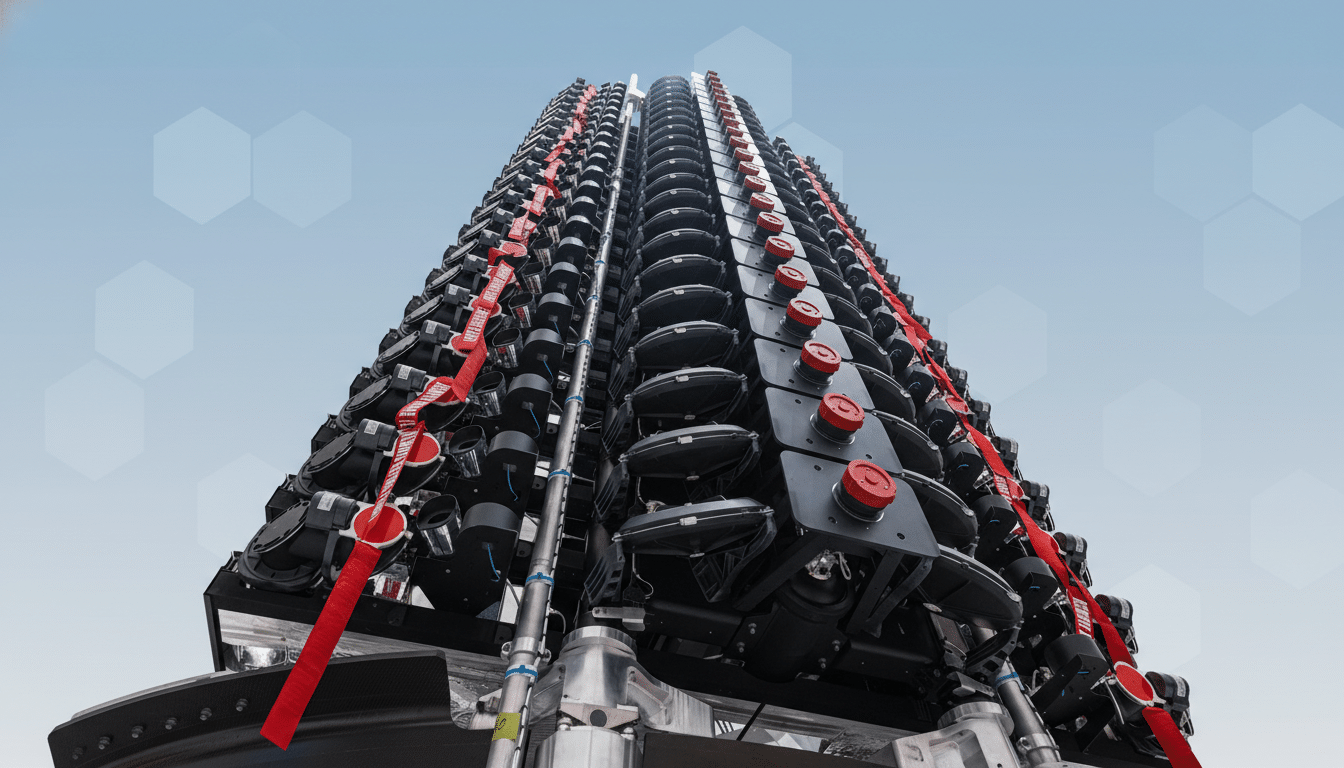
The scale is staggering. For context, the FCC most recently authorized 7,500 Starlink Gen2 satellites while deferring nearly 15,000 additional spacecraft for later consideration. Industry analysts, including coverage in The Verge, note that a 1 million satellite cap is unlikely to be granted outright and is more plausibly a negotiating anchor that sets an upper bound for future rounds.
Why put AI compute in orbit and how it could work
Electricity and cooling dominate AI data center costs on Earth. The International Energy Agency estimates global data center electricity use could roughly double by the mid-2020s, reaching up to around 1,000 terawatt-hours, with AI a major driver. In orbit, satellites can harvest continuous solar power in sunlit regimes and radiate heat into space without water-intensive cooling, which could improve the watts-per-inference equation if networking constraints are solved.
There are tradeoffs. Moving large training datasets to orbit is bandwidth-heavy and costly, suggesting that initial use cases may skew toward inference, preprocessing, or edge analytics where raw data is already spaceborne—think Earth observation, weather, and secure networking. SpaceX already uses laser inter-satellite links for high-throughput routing in Starlink; a compute constellation would require similar or greater capacity and robust on-orbit fault tolerance to handle radiation-induced errors.
Regulatory and spectrum hurdles for a mega-constellation
Any approval will hinge on spectrum coordination, orbital debris mitigation, and space safety. The FCC’s Part 25 process demands detailed collision-avoidance plans, end-of-life disposal, and interference analyses. The United States has moved toward a five-year deorbit guideline for low Earth orbit missions, tightening expectations on how quickly satellites must be removed after retirement.
International coordination through the ITU will be essential, given the sheer scale. NASA and other stakeholders have previously cautioned the FCC about cascading risks from large constellations, pressing operators to demonstrate reliable propulsion, automation, and transparency in conjunction assessments. A compute-focused network would face the same scrutiny, plus questions about optical and RF downlink capacity for moving results back to users on Earth.
Traffic and orbital debris risks in low Earth orbit
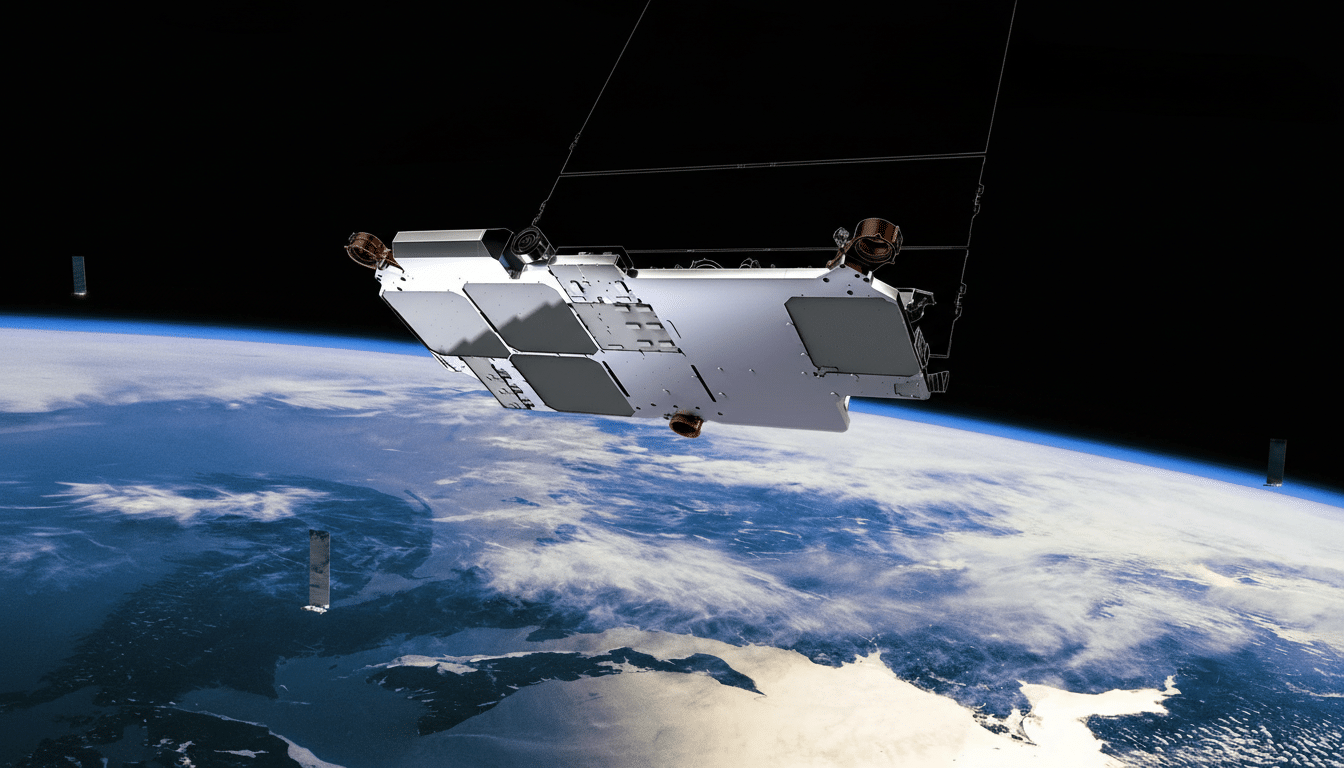
Low Earth orbit is already crowded. The European Space Agency estimates there are roughly 15,000 active satellites and more than 36,000 tracked debris objects larger than 10 centimeters, with millions of smaller fragments posing additional hazards. Astronomers have also flagged brightness and radio interference from mega-constellations, prompting mitigation steps such as darker coatings, sunshades, and coordination with observatories.
A 1 million-satellite architecture would demand unprecedented fleet orchestration: autonomous avoidance maneuvers at scale, high reliability to prevent dead objects, frequent deorbiting, and designs that minimize breakup risk. SpaceX has implemented automated collision avoidance in Starlink; scaling that to orders of magnitude more spacecraft would be a defining technical and safety challenge.
Industrial Scale And Competitive Context
Even a fraction of the requested number would require manufacturing and launch cadence far beyond today’s norms. SpaceX’s vertical integration—satellite production, laser links, and reusable launch—gives it a unique pathway, especially if Starship reaches regular operations. Competitors are watching closely: Amazon’s Project Kuiper, for example, has sought more time to meet deployment milestones amid launch supply constraints, underscoring how logistics can bottleneck even well-funded constellations.
Reports have also suggested potential corporate moves among companies led by Elon Musk to align AI and space ambitions. While speculative, such reshuffling would mirror a broader convergence trend, as satellite connectivity, cloud computing, and AI chip development increasingly intertwine across the sector.
What comes next in the FCC review and industry response
The FCC typically opens major applications to public comment, drawing input from spectrum experts, astronomers, competitors, and safety officials. Expect calls for demonstration satellites that validate thermal management, radiation-hard compute, brightness mitigation, and autonomous traffic management before any scaled authorization.
Whether the final number is 1 million or something far smaller, the filing marks a pivot in how the space industry imagines its role in the AI era. If power and cooling are the constraints on Earth, the Sun-rich vacuum of orbit is the counteroffer—provided industry and regulators can prove it is safe, sustainable, and commercially sound.
