


SoftBank’s energy arm is preparing one of the most ambitious bets yet on America’s power-hungry future, moving to develop a 9.2-gigawatt natural gas plant on the Ohio–Kentucky border with an estimated cost of $33 billion, according to reporting from Bloomberg. If realized, the project would surpass any existing U.S. power station by capacity and target surging demand from data centers and heavy industry.
At 9.2 GW, the facility would eclipse the Grand Coulee Dam’s roughly 6.8 GW of installed capacity and, depending on utilization, could supply electricity comparable to millions of homes. The move signals how quickly capital is pivoting to firm generation as AI, cloud computing, and electrification strain regional grids.
- Why SoftBank Wants 9.2 GW of New U.S. Capacity Now
- Location and grid impact along the Ohio–Kentucky border
- Costs tower over industry norms for gas megaprojects
- Emissions and environmental scrutiny for a 9.2 GW plant
- Timeline, permitting, and supply chain hurdles ahead
- Who pays and how it could pencil out for SoftBank
- What to watch next as SoftBank advances the project
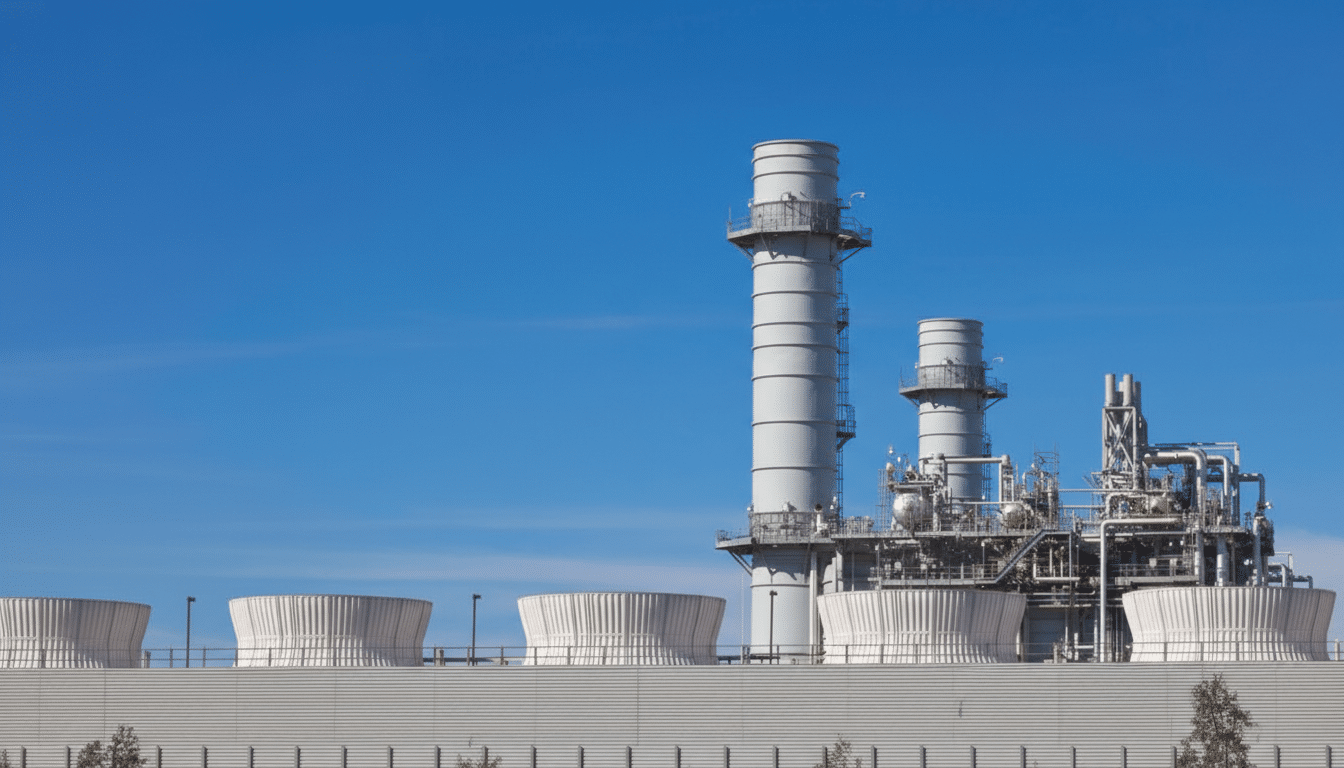
Why SoftBank Wants 9.2 GW of New U.S. Capacity Now
SoftBank subsidiary SB Energy is aligned with the data center boom through its involvement in the Stargate initiative with OpenAI. The company has been working on a proof-of-concept data center at GM’s former Lordstown plant in Ohio. While SB Energy has not said whether the new gas plant will feed the bulk grid or directly power compute campuses, the scale suggests a design that can support both merchant sales and dedicated offtake for hyperscale loads.
The Ohio Valley sits near prolific shale gas basins and in the orbit of PJM, the nation’s largest wholesale power market. Regional planners have raised load growth expectations as server farms proliferate; PJM has flagged higher peak demand trajectories in parts of its footprint, and utilities across the Midwest and Mid-Atlantic are revising capacity plans to accommodate 24/7 digital loads.
Location and grid impact along the Ohio–Kentucky border
The Ohio–Kentucky border has long hosted large coal and gas stations with river access for cooling water and barge logistics. Plugging a single project of this size into the PJM interconnection queue will be complex. Transmission expansion, voltage support equipment, and gas pipeline upgrades are likely prerequisites, and interconnection studies can take years to complete even after recent PJM reforms streamlined the backlog.
Reliability bodies like NERC have warned about tighter reserve margins as older plants retire and electrification accelerates. A multi-gigawatt combined-cycle complex could ease capacity shortfalls but would also reshape local grid flows, requiring careful coordination with transmission operators and state siting boards in Ohio and Kentucky.
Costs tower over industry norms for gas megaprojects
At roughly $33 billion, the implied cost of about $3,600 per kilowatt far exceeds pre-inflation industry averages for advanced combined-cycle plants. The U.S. Energy Information Administration’s recent capital cost benchmarks for gas combined cycle have hovered closer to $1,100–$1,800 per kilowatt in many cases, depending on site and scope. The premium here likely reflects a mega-campus with multiple blocks, on-site transmission, potential pipeline expansions, interest during construction, and supply-chain premiums for top-tier turbines.
Global heavy-duty turbine supply is tight. Manufacturers such as GE Vernova, Siemens Energy, Mitsubishi Power, and Ansaldo Energia have reported robust order books and extended lead times as developers chase firm capacity. Securing enough H- or J-class machines for 9.2 GW could require staggered phases and long-term vendor commitments.
Emissions and environmental scrutiny for a 9.2 GW plant
A plant of this magnitude would carry significant carbon implications. Using EPA emissions factors for natural gas generation, annual CO₂ could land on the order of 15–20 million metric tons at typical capacity factors, akin to adding several million passenger vehicles’ worth of emissions. Local air permits will also scrutinize nitrogen oxides and other criteria pollutants.
The upstream methane footprint is pivotal. Research led by organizations like the Environmental Defense Fund has shown leakage rates in some basins above 2%, which can erode gas’s climate advantage over coal. New federal methane rules and the Inflation Reduction Act’s methane fee are intended to curb emissions across the supply chain, but monitoring and enforcement will be closely watched.
Timeline, permitting, and supply chain hurdles ahead
Even under favorable conditions, a 9.2 GW buildout could span much of a decade. Developers must navigate state siting approvals, Clean Air Act and water permits, FERC-jurisdictional gas infrastructure, and PJM interconnection milestones. Community engagement—covering water use, air quality, land footprint, and tax benefits—will influence the project’s path as much as engineering timelines.
Long-lead components, from heat recovery steam generators to large transformers, face global bottlenecks. EPC availability and labor constraints in the Ohio River Valley, already stretched by data center and manufacturing projects, could further shape sequencing and cost.
Who pays and how it could pencil out for SoftBank
Bloomberg’s reporting leaves open the central question of financing. Because SoftBank is not a regulated U.S. utility, traditional rate-basing is unlikely unless a utility partner emerges. More plausible paths include long-term power purchase agreements with hyperscalers, capacity revenues in PJM’s markets, and merchant energy sales hedged against gas price volatility. Appalachian supply proximity helps, but commodity risk remains a core variable.
If SB Energy integrates carbon capture, the project could access federal 45Q tax credits, though capture would add capital and parasitic load. Absent subsidies, the economics hinge on high utilization from around-the-clock compute demand and robust spark spreads—conditions that data center growth may sustain in the medium term.
What to watch next as SoftBank advances the project
Key markers include a formal site announcement, technology selection (combined cycle vs. phased blocks), PJM interconnection filings, and offtake disclosures. Watch for turbine orders from major OEMs, any moves toward hydrogen blending or carbon capture, and signals from state regulators on siting and environmental reviews. The decisive factor will be whether SoftBank secures anchor customers that justify building America’s next supersized power plant.
