


Apple’s AirTag is brilliant for keys and bags, but a puck is awkward in a billfold. A new ultra-slim card tracker, the KeySmart SmartCard Gen 3, fixes that geometry problem and adds something Apple can’t match out of the box: it works with both iOS and Android. For anyone who wants wallet tracking without platform lock-in, this card-shaped tracker is the more thoughtful fit.
Why a Card Beats a Puck in a Wallet for Tracking
The SmartCard is just 1.8mm thick—about two stacked credit cards—so it slides into a standard slot without creating a bulge. Compare that with the roughly 8mm thickness of an AirTag plus a holder, which can pinch leather and distort minimalist wallets. The card’s IPX8 water resistance also matters in real life; spilled coffee or a rainy commute won’t sideline it.
An integrated chime is surprisingly loud for a device this thin, and left-behind alerts add a second safety net when you wander away from your wallet. In daily carry, that combination of unobtrusive shape and audible recovery is the difference between noticing a problem in minutes versus hours.
Cross-Platform Tracking Without Lock-In Explained
Here’s the standout: the SmartCard can be set up to work with Apple’s Find My network or Google’s Find My Device network. You do have to pick one at a time—the card can’t live on both ecosystems simultaneously—because each network assigns its own cryptographic identity and encrypted crowd-locate pipeline. If you switch phones or platforms, a quick hardware reset lets you reassign the card to the other network.
Coverage matters for trackers, and both networks now have serious reach. Apple has publicly cited more than 2 billion active devices feeding its Find My mesh. Google has said Android is active on over 3 billion devices, and in 2024 it expanded Find My Device into a crowdsourced network with privacy protections including end-to-end encrypted location and aggregated reporting. Apple and Google also jointly rolled out an industry specification for unwanted tracker alerts, which is now supported across modern iOS and Android versions, helping curb misuse without breaking legitimate finding features.
Practically, this means the SmartCard can harness whichever ecosystem you live in today—without forcing you to keep an old phone around. That’s a tangible advantage over AirTag, which shines on iPhone but loses precision and network benefits on Android.
Battery and Charging That Fit Real Life Use
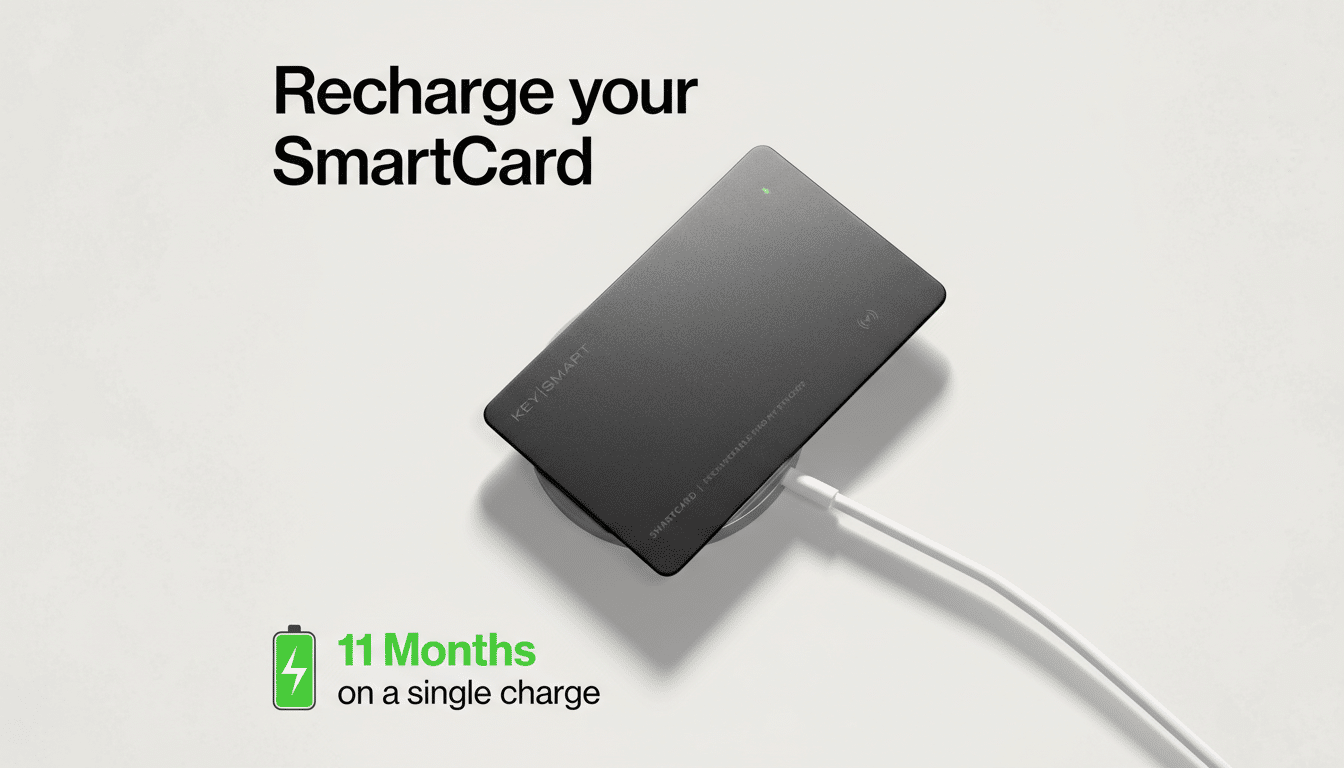
Battery life is rated up to 11 months per charge, and unlike many ultra-thin card trackers that use sealed cells, the SmartCard recharges wirelessly. Drop it on a Qi pad at home or top it off from a phone that supports reverse wireless charging. AirTags last about a year too, but they rely on a replaceable CR2032 coin cell and, crucially, don’t come in a wallet-native form factor. The SmartCard’s rechargeability means you aren’t tossing batteries or retiring the device when a sealed cell dies.
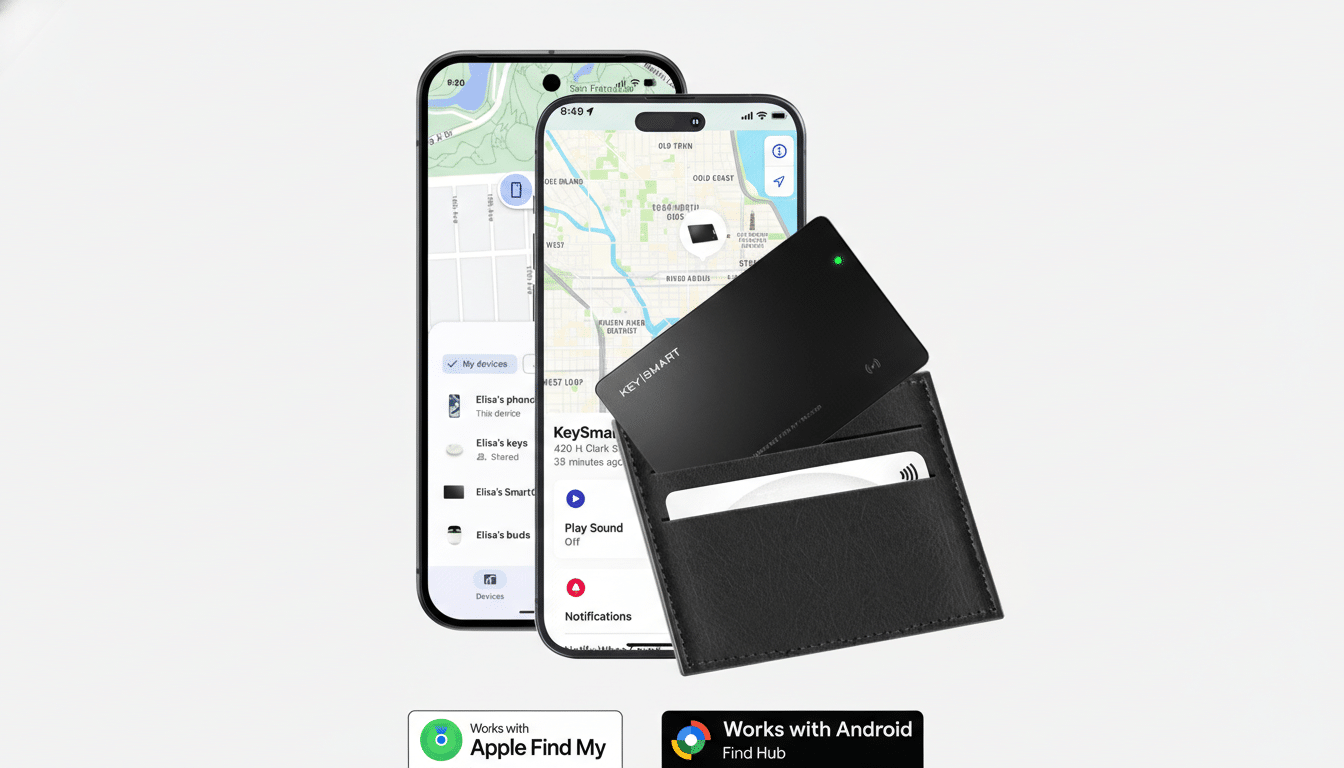
A single physical button handles pairing and resets. Aside from subtle labeling, the device looks like a standard black card, so it blends in and doesn’t advertise that there’s a tracker in your wallet.
Price and the Real Cost of Wallet Tracking
The SmartCard is priced at $39.99, with bundles at $89.99 for three and $129.99 for five. On paper, that’s higher than an AirTag’s $29 sticker, but a wallet-ready setup often requires a $20–$30 AirTag card holder, and you still end up with a thicker sandwich than a purpose-built card. Against alternatives, Chipolo Card Spot is similarly thin but locked to Apple’s network, while Tile Slim supports both major phone platforms but relies on Tile’s app-based network, which is smaller than Apple’s and Google’s crowdsourced meshes.
Factor in the SmartCard’s cross-platform flexibility and wireless charging, and the value proposition becomes clearer—especially for families split between iPhone and Android or anyone who switches devices.
AirTag Versus a Wallet-Native Tracker Comparison
AirTag’s ace is Precision Finding with Ultra Wideband on newer iPhones, which guides you within inches. In a wallet, though, the bulk penalty is real, and many holders partially muffle the speaker. The SmartCard doesn’t offer UWB, but in its native habitat—a slim billfold—it’s easier to carry every day, loud enough to hear in a coat pocket, and easier to recharge than a sealed card.
If you’re deep in Apple’s ecosystem and want the most surgical close-range guidance, AirTag still wins on that specific metric. If you prioritize a seamless wallet fit, cross-platform freedom, and simple charging, the SmartCard takes the lead where it counts.
Bottom Line: Choosing the Right Wallet Tracker Today
For keys and backpacks, AirTags remain excellent. For wallets, a purpose-built card is the smarter tool—and the KeySmart SmartCard Gen 3 adds the versatility of iOS and Android support without compromising on size, durability, or battery life. It’s the rare tracker that respects both your pocket and your platform choices.
