


For the last few weeks I was after a traveler from deep space, hunting it with gear that upgrades to something that can fit in a backpack. The interstellar comet 3I ATLAS is slipping out of our local space for good, and I’ve been observing it from a light-polluted city with through-the-app smart telescopes. If you have one — or if you can borrow one — there is still a narrow window of opportunity to observe and photograph this rare visitor before it fades out of view entirely.
Why this comet is a once-in-a-lifetime target for observers
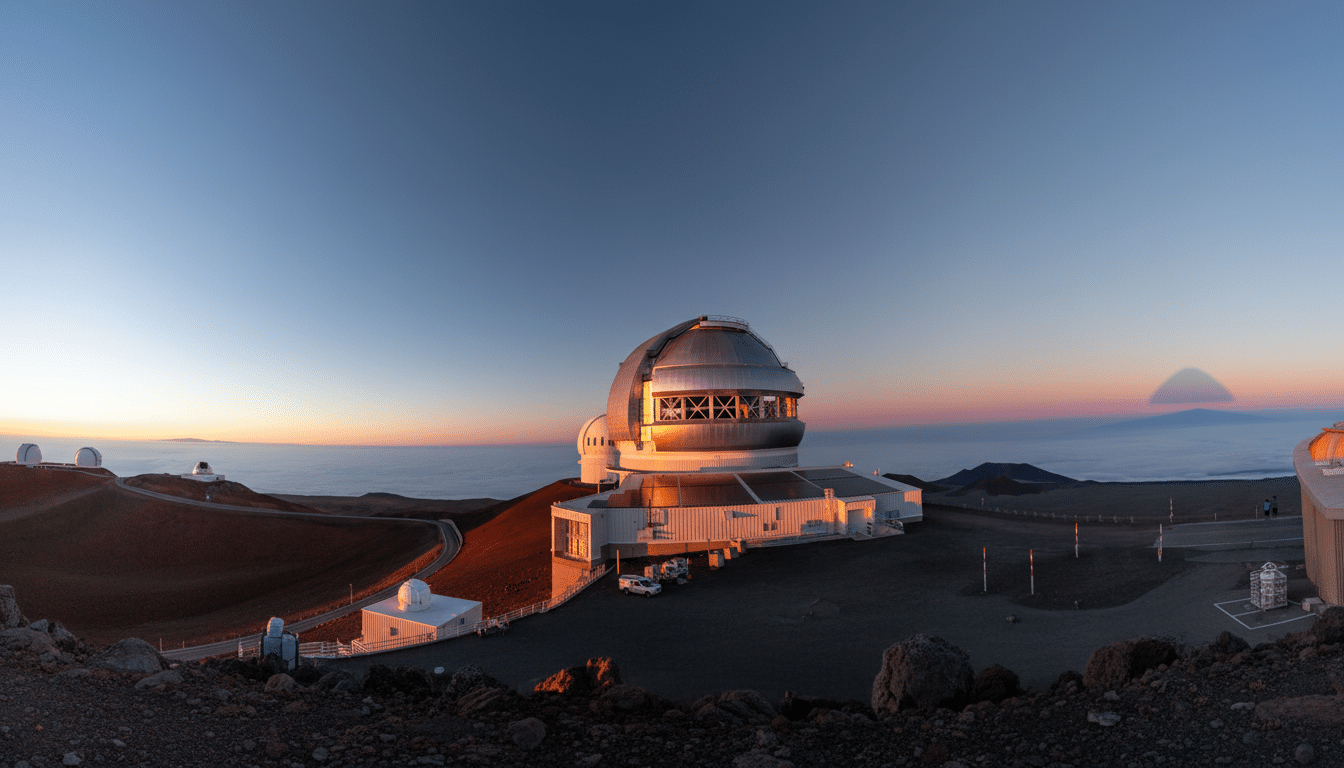
Found by the Asteroid Terrestrial-impact Last Alert System (ATLAS) in Hawai‘i and observed by the Gemini North and Keck II telescopes on Maunakea, 3I ATLAS is just the third interstellar object observed in our solar system; the first was ‘Oumuamua, discovered by the Pan-STARRS survey, also in Hawai‘i.
- Why this comet is a once-in-a-lifetime target for observers
- The smart-telescope advantage for urban comet imaging
- Prologue: How I discovered and framed comet 3I ATLAS
- Imaging settings that deliver reliable results on 3I ATLAS
- Where to find 3I ATLAS in the predawn sky over Leo and Cancer
- What scientists hope to learn from 3I ATLAS dust and gas
- Last practical tips before 3I ATLAS slips from easy view
The Minor Planet Center lists its orbit as unequivocally hyperbolic — an eccentricity greater than 1 — so there’s no return. It is bright by interstellar standards, although it never comes particularly close to Earth or the Sun, speeding past at about twice the distance between Earth and the Sun.
ATLAS has discovered over 100 potentially hazardous asteroids, as well as about that same number of comets so far, but 3I is a standout among them for what it is: a pristine sample of another star system’s leftovers.
Teams backed by NASA and international observatories are comparing the comet’s dust and gas output with that of homegrown comets using spectroscopy and photometry, following the playbook developed during 2I Borisov’s pass in 2019.
The smart-telescope advantage for urban comet imaging
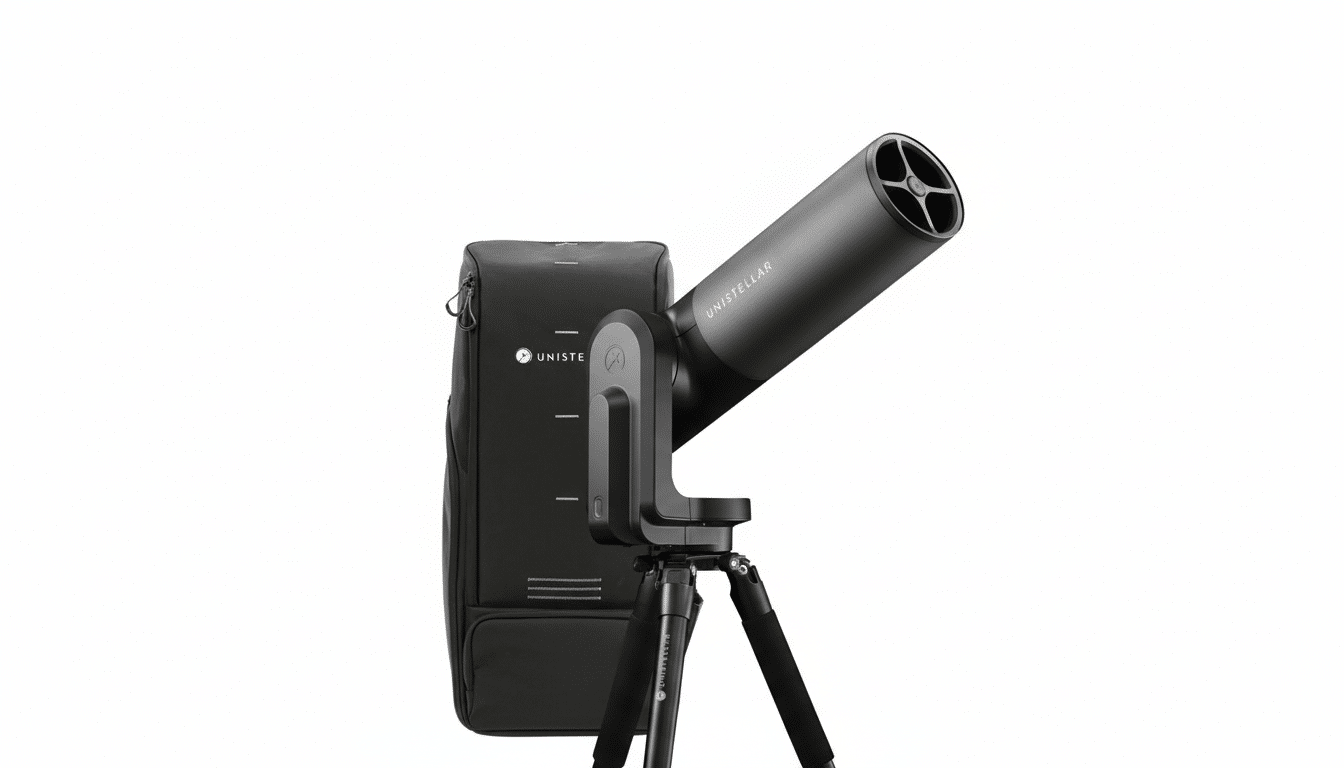
Smart telescopes, based on integrated go-to pointing software and plate solving, pack all of this (and live stacking) into a single app that makes a faint, fast-moving target go from scary to possible. For me, the difference between a Bortle 8 sky and my balcony was acceptable. It’s a matter of letting the scope take many short exposures and stack them on the fly. The live view begins with a barely cotton ball and condenses into a small coma with hints of tail — even when there’s urban skyglow.
Prologue: How I discovered and framed comet 3I ATLAS
Recent systems have cataloged 3I ATLAS in most cases. I dug it out of the comets list in Unistellar’s app; a quick search in DwarfLab’s Dwarf 3 found it; Celestron Origin gave me a comet page and one-tap slew. The Seestar app occasionally suppresses comets that aren’t going to meet its predicted brightness threshold, but Designation searching in the Sky Atlas still does what you need, and coordinates can be entered from the good old Minor Planet Center ephemerides.
After framing the comet with a little extra room along the direction of motion, I think I captured any potential tail structure. If the mount is alt-az, don’t worry about field rotation for short sessions; the software will take it in stride. Just watch out for those annoying streetlights and reflective windows to keep gradients at bay.
Imaging settings that deliver reliable results on 3I ATLAS
Roughly speaking: short exposures and steady stacking are your friends. I’ve had good luck with 12–15 second subs, low gain (usually about 60 on my machines), and total integrations of 8–12 minutes. You’ll see the comet pop in the first minute, and by 10 minutes its motion begins to stretch out the core. Use “comet” or “moving target” tracking if your app supports it; otherwise, keep stack heights relatively short to maintain a round nucleus.
Let the scope do its darks and flats if it asks, and stretch gently. A mild curve accentuates the coma and doesn’t overcook the center. By saving both the stacked image and the set of raw subs, you can always go back to reprocess in desktop software for best results.
Where to find 3I ATLAS in the predawn sky over Leo and Cancer
3I ATLAS has moved up into the morning sky, through Leo and toward Cancer. It is located far from Earth — about 2 astronomical units — so not much of a showpiece tail to be seen. Call it magnitude 9–10 level, well within the range of smart-scope sensors but impossible to see with your own sweet little eyes. A clear horizon helps, and calmer pre-dawn air can lead to steadier stacks. Track the stars, and you can keep your sessions shorter; track the comet, and you can push longer.
What scientists hope to learn from 3I ATLAS dust and gas
Scientists are also putting 3I’s outgassing and dust-to-gas ratio up against that of solar-system comets in order to test how various stellar nurseries can seed planetary systems at different distances from their host star.
Initial reports suggest typical comet behavior — nothing alien happening here — but with chemistry that might not fit as well into boxes that we know. On Earth, observers have also made use of resources around Mars to get views that would be impossible from home, as mission teams in both the US and Europe have commented on.
Last practical tips before 3I ATLAS slips from easy view
Be prepared for a 30–45 minute capture window: five minutes to slew and calibrate, 10–15 minutes of stacking, and several more minutes of fine-tuning your framing. Don’t over-engage with aggressive dithering, keep dew heaters low, and watch the histogram so you don’t clip off faint outer coma. If your application allows for target comments, tag 3I ATLAS; it’s on the move nightly. And take a plate-solve snapshot — you, the future telescope user, will want a record that you cornered an interstellar visitor.
It’s not the most dramatic comet I’ve managed to photograph, but it might be the one that I talk about longest. In a year when smart telescopes are at last becoming mass-market, the universe gave us a perfect assignment: a short, tough, and deeply satisfying catch from outside the Sun’s family. Don’t blink.
