


Skana Robotics says it has solved one of the toughest problems in ocean tech: connecting autonomous underwater vehicles without forcing them to come up for air. The Tel Aviv startup’s SeaSphere software allows fleets of robots to share ultra-agile, low-latency command and control information using long-distance underwater networks and adjust their missions on the fly without human assistance, offering safer defense operations and speedier infrastructure inspections.
Why underwater networks are difficult for autonomous fleets
Water is unfriendly to radio signals, so underwater robots commonly depend on acoustics for communication. That choice has trade-offs: low bandwidth, high latency and the Doppler shifts that distort timing, as well as the multipath echoes that make a mess of messages. Research organizations, like Woods Hole Oceanographic Institution and NATO’s Centre for Maritime Research and Experimentation, report standard acoustic links in the tens of bits per second to tens of kilobits per second over distances of kilometers, with delays on the order of seconds and frequent connectivity losses.
- Why underwater networks are difficult for autonomous fleets
- Inside SeaSphere, a distributed brain for underwater fleets
- Defense and infrastructure on the docket for early users
- Standards, interoperability and reality checks
- Measuring what matters underwater during real operations
- Competitive landscape and what to watch in maritime autonomy
Optical links can knock the lights out in terms of data rates, but only over meters of clear water. Popping up to draw from satellite or terrestrial radio is quicker, although risky in contested areas. In brief, any answer worth its salt for robots that are constantly underwater and coordinating at scale has to squeeze meaning from ΣN^O (i.e., not much signal), and be robust to disruption by construction.
Inside SeaSphere, a distributed brain for underwater fleets
SeaSphere serves as a fleet brain and communications layer. Instead of shunting raw sensor feeds, Skana’s system takes compact, intent-level messages: what the robot thinks it detected, where its uncertainty remains, and what actions the robot proposes next. That “semantic compression” reduces payloads to fit slimline acoustic channels but maintains the decisions that count.
On top of that, SeaSphere operates with distributed planning so vehicles can handle tasking on the fly — passing a track to a better-positioned peer, forming ad hoc search lines, or diverting members into inspecting a suspicious signature, for example — instead of relying on humans to retask the squad. As links degrade, the software gradually reverts to delay-tolerant networking methods that cache such updates and relay them over multi-hop paths when connectivity is restored.
Skana stresses that its AI is designed for reliability rather than spectacle. Rather than depend on large language models, the company mixes model-based signal processing with machine-learning components that are simpler to verify. Predictability and traceability are not “nice-to-haves” in high-stakes maritime missions, but requirements for certification and user trust.
Defense and infrastructure on the docket for early users
There is a growing interest in autonomous underwater fleets as maritime security threats increase. Mine countermeasures, persistent surveillance, and protection of seabed infrastructure are getting their due in European navies. Most of the data and energy that flow between continents travel through subsea pipelines or cables, and recent events have shown just how hard they are to monitor at scale with human crews alone.
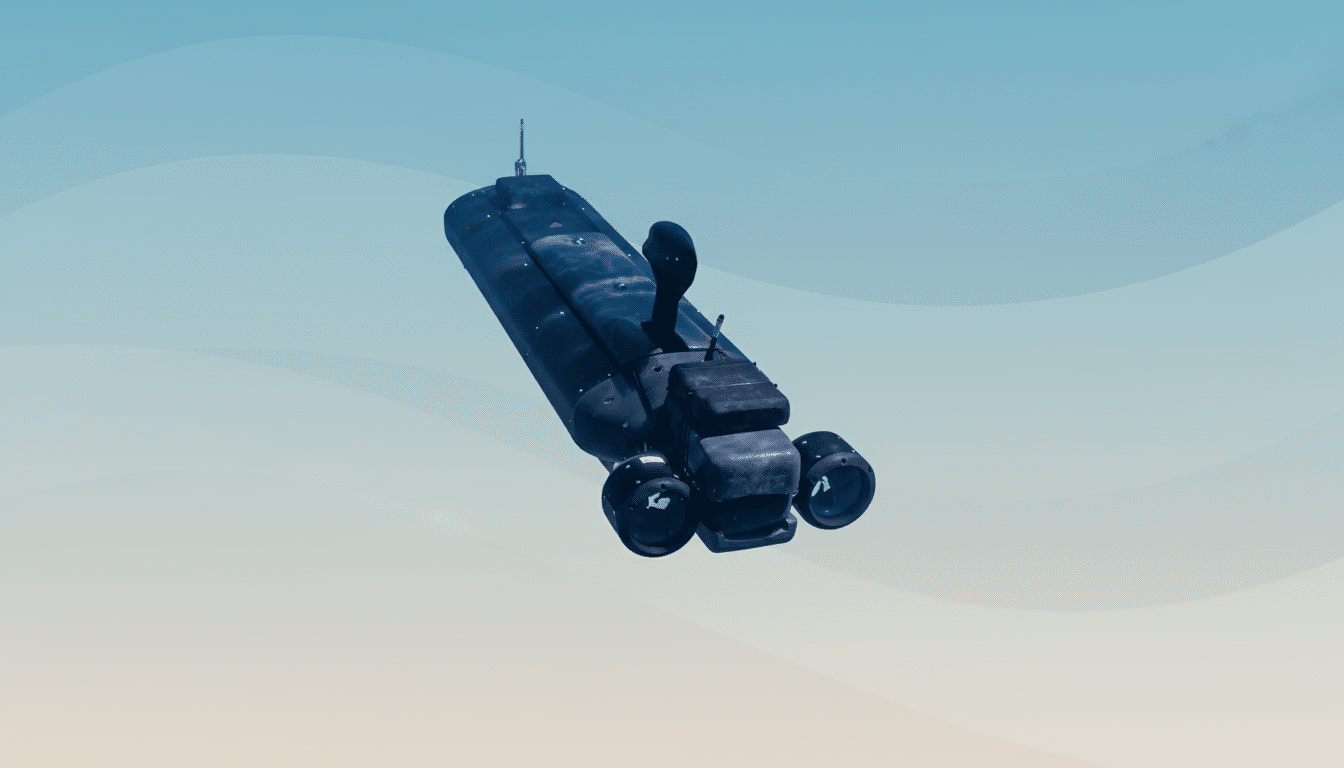
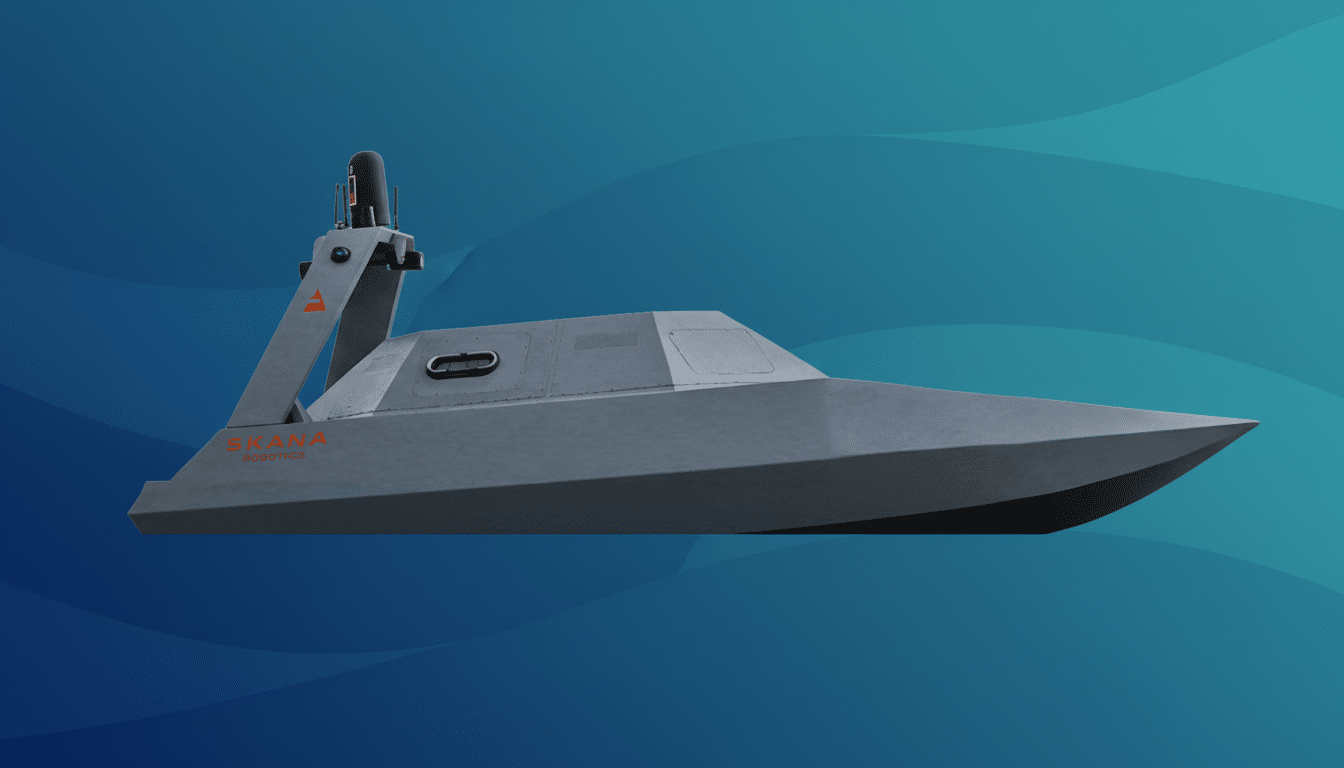
A silent swarm that can silently patrol choke points, confirm contacts, and pass on detections without ever emerging is a potent concept. Skana is focused first on government users and critical-infrastructure operators, with SeaSphere positioned as something that can turn mixed fleets — legacy AUVs, gliders, new long-endurance designs — into a unified, taskable force.
Standards, interoperability and reality checks
The depths of the ocean are an otherworldly place, a world filled with incalculable odds and beauty, where strange creatures seem more alien than earthly. Operators typically work with acoustic modems from vendors including Sonardyne, Teledyne, and Kongsberg; research fleets have often looked to WHOI for Micro-Modems while NATO has supported JANUS as an open baseline for device discovery and simple messaging. Any fleet software that aspires to grow must surf this diversity rather than erase it.
Skana says SeaSphere has been built to work alongside priced commercial information systems, such as an MH370 search command custom comms stack, and play nicely with emerging standards. The ultimate test will be third-party validation — sea trials with naval labs and oceanographic institutes — demonstrating that the system can maintain mission coherence when channels vary, vehicles drift off plan, and environmental noise levels spike.
Measuring what matters underwater during real operations
It won’t be about lab demos. Operators will seek to identify, under varying sea conditions, the message delivery rates and the time-to-retask in response to new detections, or the energy cost per bit when propulsion-limited platforms are deployed, on a fleet level such as probability of detection and area coverage. Battery budgets are tight on AUVs, and so every control loop and packet must pull its weight.
And if SeaSphere can continue to compress intent, route updates over sparse links, and keep commanders in the loop without distracting them, it could shave hours off search operations and help reduce how much a vehicle needs to surface — both improving survivability and the operational tempo.
Competitive landscape and what to watch in maritime autonomy
It is a field crowded with maritime veterans and defense-tech upstarts. Prime contractors construct the vehicles; sensor experts expand the frontiers of sonar and optics; communications suppliers concentrate on modems and beacons. Skana is building the fleet-automation and AI coordination layer that lives atop, a realm where software execution and integration smarts are at least as important as hardware lineage.
Look out for multi-vehicle demos in contested waters, published results with players such as NATO CMRE or the UK’s National Oceanography Centre, and that mixed fleets from different manufacturers can interoperate under SeaSphere. If those benchmarks are met, coordinating underwater robots as quietly and smoothly as their airborne cousins could go from pie-in-the-sky to standard procedure.
