


The next big bet in Silicon Valley is nothing fancy or complicated: just vast space for living and working, with grease monkeys as glorified ants scurrying around below. To train A.I. agents that can reliably click, type, browse, and transact like capable digital workers, leading labs and startups are pouring resources into simulated “environments,” where software-savvy agents can learn by doing — not just predicting text.
Why simulated environments matter for agents now
Reinforcement learning (RL) environments are interactive sandboxes that simulate real software workflows — something like a virtual browser session where an agent must price-compare, fill a form, or file some expense reports. Success is measured and rewarded; mistakes are recorded. Compared to static datasets, environments require agents to deal with long, messy sequences: dropdowns get updated, buttons move, pop-ups appear, and one must know how to call spreadsheets/APIs properly.
The idea isn’t new. Learning in simulations was popularized by OpenAI’s early “Gym” and DeepMind’s AlphaGo. What is different now is ambition: Labs want more general-purpose, computer-using agents that are able to navigate the modern software and open web. That ratchets up the realism, the coverage of edge cases, and the instrumentation to figure out why an agent failed on step 17 of a 23-step workflow.
The startups that are building the sandbox
A wave of companies is rushing to become the “Scale AI for environments,” providing the training grounds that might define the next frontier. Specialist startups such as Mechanize focuses on a handful of highly robust, deeply instrumented environments rather than a ‘sprawling catalogue’. ‘There’s been some rumor on the street about environment engineers entering the high six figures in salary, and I think this just proves how hard it is to build simulations that don’t collapse under real agent behavior.’
Prime Intellect, supported by prominent AI and venture investors, is betting on breadth and accessibility. It has introduced an open hub for RL environments, similar to a model or dataset registry, where smaller teams can train and evaluate their agents on the same tasks as top labs. The company’s model is pragmatic: Offer the environments, then sell the compute cycles necessary to run them at that scale.
Incumbents in data operations aren’t idle, either. Data-labeling innovators like Scale AI, Surge, and Mercor are moving into environments in order to cater to labs shifting their method of working from passive annotation to the active training of tool-using agents. Scale AI, which was previously associated with labeled data and priced in the tens of billions, is now selling environment expertise alongside its standard offerings — a move that sounds quite similar to previous pivots from autonomous vehicles to generative AI data pipelines.
Big checks may follow. As reported in The Information, Anthropic leaders have explored the possibility of investing over $1M into RL environments — illustrating just how foundational this capability may be for next-gen agent training.
Open source and the looming compute squeeze
Training general agents within rich environments tends to be compute-hungry. Anything they do is an episode, and every episode becomes a long sequence of tool invocations, UI actions, feedback signals. That makes environments a demand driver for GPUs and optimized orchestration — and sets up cloud providers and chipmakers to offer bundle “environment-as-a-service” with inference and fine-tuning.
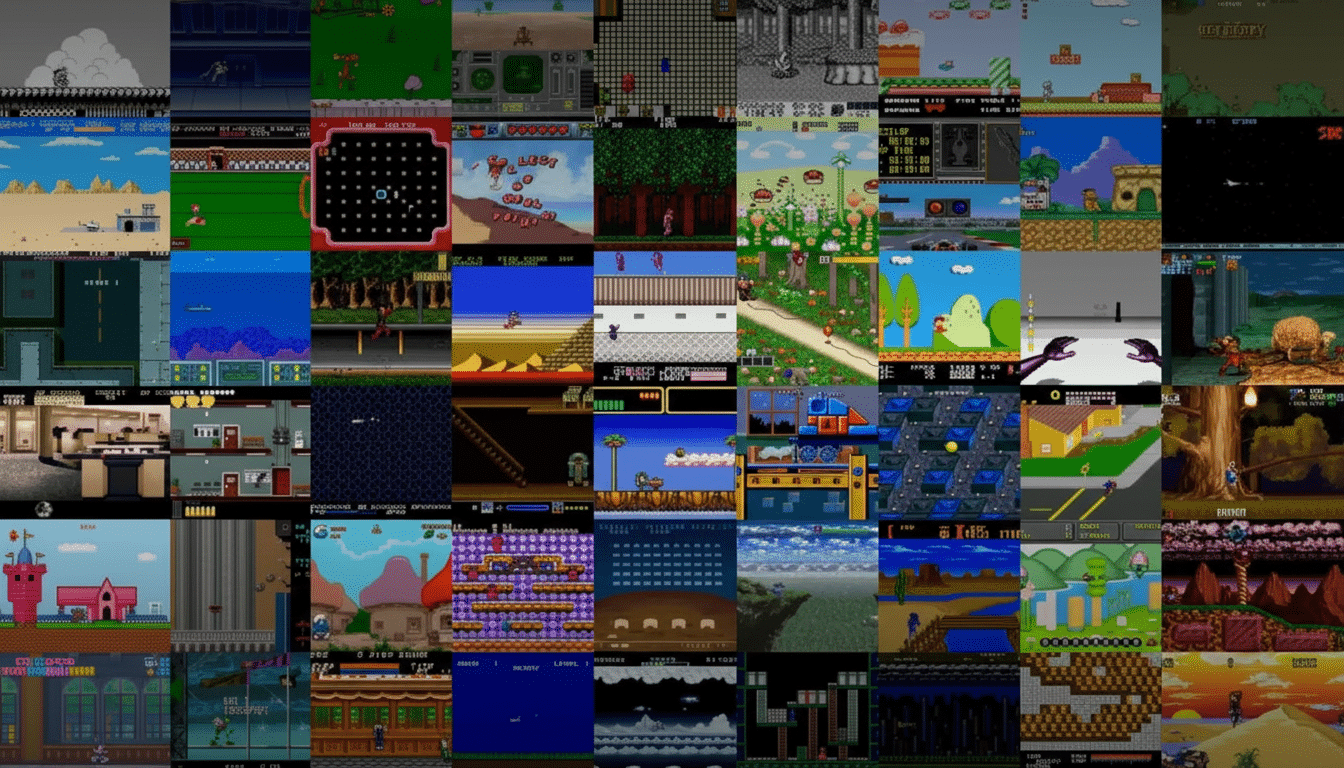
Open hubs from players like Prime Intellect are designed to bring in smaller teams by way of standardized tasks, baselines, and leaderboards, while monetizing the heavy lifting: running large-scale rollouts whose outcome gets logged for evaluation. Should we see the development of a shared corpus of environment benchmarks (similar to ImageNet for perception or MMLU for reasoning), it may help promote best practice and avoid duplicate effort across labs.
The tough problems that no one can sidestep
Environments are not simply “dull video games.” They need to track state faithfully, expose fine-grained telemetry, and emit reward signals that do not encourage shortcuts. Crucially, the credit assignment through tens of steps is still challenging: an agent may have correctly resolved nine sub-tasks and failed because a confirmation email didn’t arrive or there was an off-nominal response from a third-party API.
Generalization is the other wall. Agents must outlast minor UI changes, rate limits, and flaky networks — without overfitting to a single canned workflow. Safety is a strong motivator, too: agents need guardrails so that testing our tools doesn’t risk escalating their privileges or leaking sensitive information. This is why even experienced researchers warn about the difficulty of scaling environments and that not every skill in a particular agent needs to be learned using RL.
Skeptics inside big labs have also asked whether startups can keep up with rapidly changing research priorities. The others, including leading voices bullish on agentic interaction, that remain more sanguine even about reinforcement learning as such, argue for better supervision, curriculum design, and heuristics for tool-use to bring faster returns than pure RL scaling.
What success will look like for environment-trained agents
The near-term scoreboard will not be flashy demos, but the system’s reliability.
Keep an eye out for environment-trained agents that reach high success rates on repeated, revenue-impacting workflows: closing support tickets within CRMs, reconciling invoices in ERPs, updating product data between e-commerce backends, and triaging security alarms. And metrics matter, such as cost per successful episode, time-to-completion, and robustness to UI drift — all in addition to safety and auditability.
If (when?) environments mature into a standardized substrate — replete with shared benchmarks, realistic tool emulation, and compute-scalable pipelines — they have the potential to do for agent training what large curated datasets did for the last AI era. That’s the wager being made in Silicon Valley: not just bigger brains, but better worlds for those brains to learn in.
