


After reports of an FBI investigation involving communications on Signal, social media lit up with jokes about where to flee neXt. The punchline was not about abandoning encryption but about running to the least probable places: users quipped they were migrating to AIM, Netscape, GameFAQs, Dymo label makers, and even skywriting. It was equal parts nostalgia, gallows humor, and a gut check on trust in private messaging.
The meme wave, especially visible on Bluesky and echoed on X and Reddit, mocked the idea that there is a plug-and-play “alternative” to a mature encrypted service by suggesting the opposite—absurdly impractical or ancient tools. The effect underscored a core reality in 2026 internet life: when privacy news breaks, the jokes move faster than the facts.

A Meme-Ready Panic Over Private Chats Online
Posts riffed on the same structure—“Deleting Signal now that it’s compromised. Find me on…”—and then landed somewhere wonderfully unhelpful. AIM, a platform discontinued years ago, became a comedic refuge. Others claimed they would coordinate by migrating to Netscape, meeting at dawn on a faraway ridge, or carving messages with a label maker.
The humor works because it captures two truths. First, people instinctively react to law enforcement headlines about encrypted apps with a flight response. Second, there is no obvious one-click replacement that matches Signal’s mix of end-to-end encryption, minimal data retention, cross-platform support, and public accountability.
What Signal Collects And What It Does Not
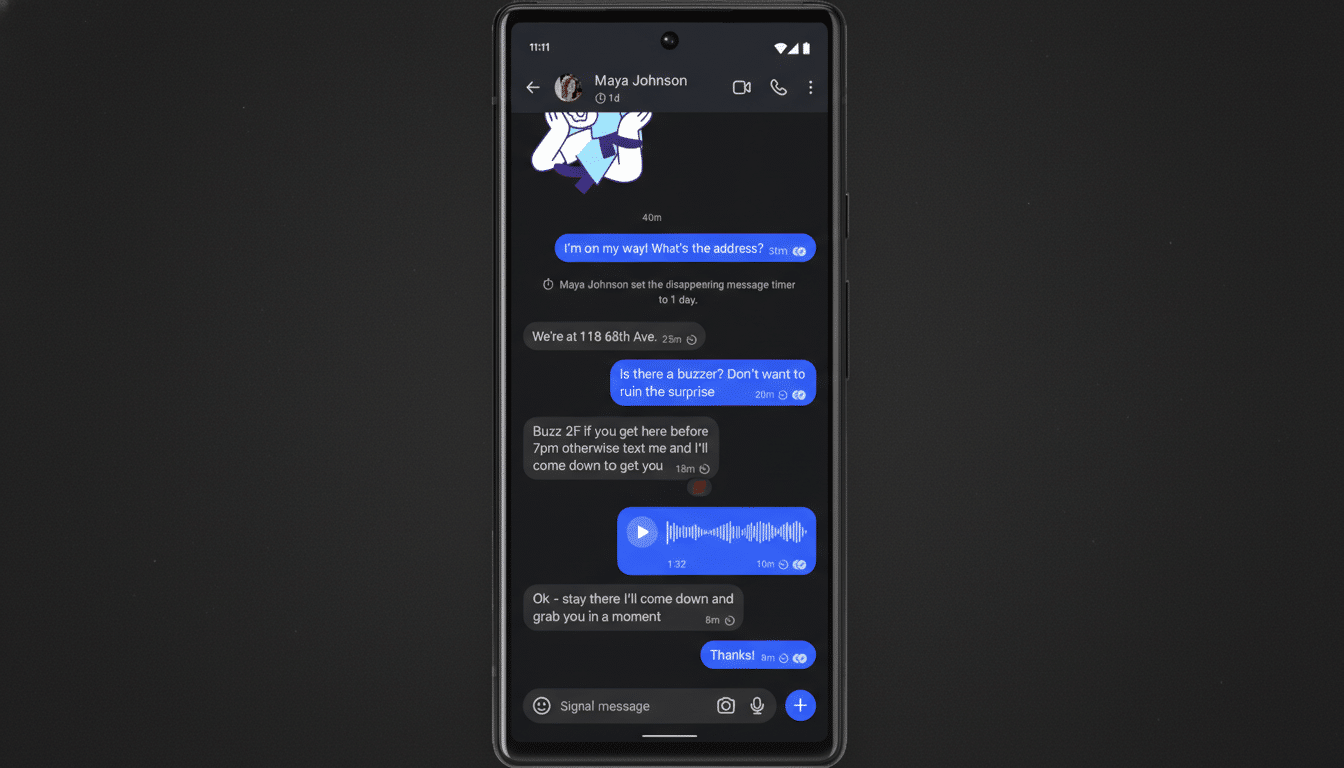
Signal’s encryption means the service cannot read message contents or attachments; keys live on user devices. Just as important is metadata minimization. In prior U.S. legal proceedings disclosed by the company, Signal said it could provide only two pieces of account information in response to a subpoena: the date an account was created and the date it last connected. No contact lists, group memberships, or message logs were available.
That design choice—paired with an open-source protocol, audited code, and a nonprofit governance model—explains why technologists and civil society groups like the Electronic Frontier Foundation often cite Signal as a best-in-class private messenger. It also explains why jokes that redirect people to legacy platforms sting a little: most alternatives either lack default end-to-end encryption, retain more metadata, or are closed systems with fewer guarantees.
The Long-Running Clash Over Encryption Policy
Law enforcement’s “going dark” concern is not new. U.S. agencies have repeatedly argued for “lawful access” to encrypted data, while technologists warn that any backdoor is a universal weakness exploitable by criminals and hostile states. In recent years, the United Kingdom’s Online Safety Act sparked a standoff over potential client-side scanning, and Apple shelved its own scanning proposal after security researchers warned of systemic risks.
There are cautionary tales in the opposite direction, too. International stings like the ANOM operation—where authorities ran a fake encrypted phone ecosystem—illustrate that investigators can succeed with targeted, court-approved methods without undermining widely used secure apps. That nuance often gets lost in viral reaction cycles, which helps explain why users turn to satire to process the headlines.
Why the Jokes Land When Privacy Fears Go Viral
Memes create instant community during uncertainty. They also act as a pressure valve for real anxieties about data exposure and surveillance. Pew Research Center has found that roughly 79% of Americans are concerned about how companies use their data, a sentiment that tends to spill over into skepticism of any institution with access to personal information.
By proposing obviously bad replacements—AIM, Netscape, carrier pigeons—posters are saying the quiet part out loud: there is no like-for-like substitute for a mature encrypted service with a strong track record. The joke both acknowledges panic and gently pushes back on it, reinforcing that knee-jerk migrations to random platforms can be counterproductive.
What Matters for Users Now in Private Messaging
For all the memes, the fundamentals have not changed. If your threat model requires private messaging, seek end-to-end encryption by default, minimal data retention, open documentation of security practices, and regular transparency reports. Keep devices updated, enable screen locks, and use disappearing messages and registration locks where available.
As the investigation story evolves, expect more legal and policy debate about encrypted services rather than instant technical revelations. In the meantime, the internet will keep making jokes. They are a reminder that trust in private communication is not just a security feature—it is a social one, built as much by community understanding as by cryptographic math.
