


Microsoft’s chief executive is pushing a clear message to Wall Street: Copilot isn’t a curiosity, it’s being used at scale. Following a robust quarter, Satya Nadella emphasized accelerating adoption across consumer and enterprise experiences, arguing the company’s heavy AI buildout is meeting real demand.
The financial backdrop helps explain the urgency. Microsoft reported $81.3 billion in quarterly revenue, up 17%, with net income rising 21% to $38.3 billion and cloud revenue topping $50 billion. Yet investor anxiety centered on capital expenditures—$88.2 billion last year and $72.4 billion already in the current fiscal year’s first half—much of it aimed at AI infrastructure.
- Nadella Pushes Back on Doubts About Copilot Usage
- Usage Metrics Paint a Mixed Picture for Copilot Adoption
- GitHub and Microsoft 365 Show Traction in Paid Copilot Seats
- Healthcare Agent Gains Momentum with Dragon Copilot Adoption
- Capacity Bets and Supply Constraints Shape Microsoft’s AI Buildout
- What Will Prove Copilot’s Stickiness and Enterprise Value
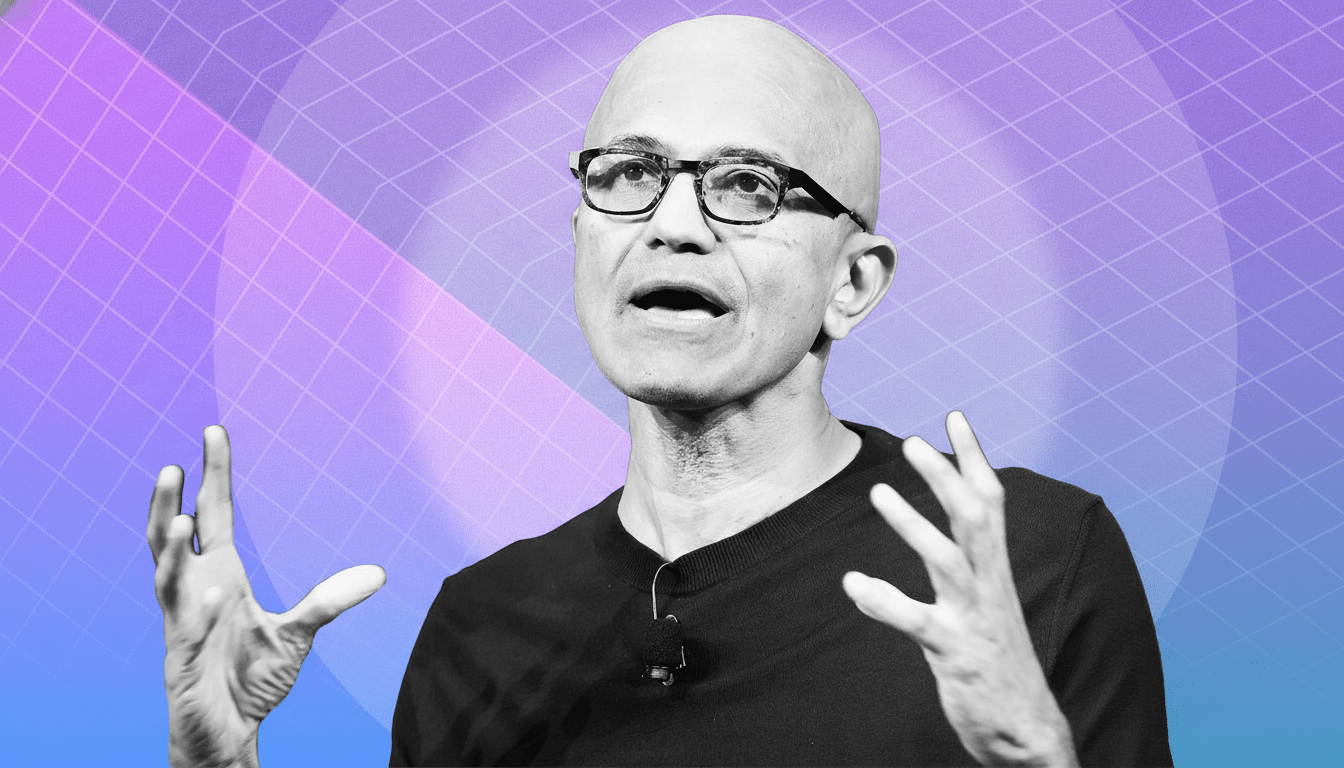
Nadella Pushes Back on Doubts About Copilot Usage
On the earnings call, Nadella leaned into usage claims. He said daily users of Microsoft’s consumer Copilot experiences—spanning chat, search, browsing, shopping, and operating system integrations—are up nearly 3x year over year. He did not disclose a specific daily active user figure.
Context matters: last year, Microsoft reported surpassing 100 million monthly active Copilot users across consumer and commercial products. That high-level number was broad by design, leaving investors pressing for more granularity on who is using what, and how often.
Usage Metrics Paint a Mixed Picture for Copilot Adoption
Tripling growth sounds impressive, but top-line stats can hide engagement quality. The undisclosed variables—time-on-task, repeat usage, and feature-level retention—will determine whether Copilot behavior reflects experimentation or durable habit formation across search, productivity, and system-level prompts.
Skepticism has roots in the core business. Several analysts noted that Azure and Microsoft 365 growth landed slightly below some expectations, prompting questions about whether AI upsell is catalyzing, rather than just accompanying, cloud expansion. UBS captured that investor tension while remaining constructive on the long-term thesis.
GitHub and Microsoft 365 Show Traction in Paid Copilot Seats
Microsoft’s clearest usage signal came from developers. GitHub Copilot now has 4.7 million paid subscribers, up 75% year over year, alongside a larger free tier previously cited at 20 million users. For coding assist, the value proposition—faster boilerplate, fewer context switches—has become concrete.
In the productivity suite, Microsoft 365 Copilot has reached 15 million paid seats. Against roughly 450 million paid Microsoft 365 seats, that implies about a 3.3% attach rate. The curve to watch is expansion from early adopters and pilot teams to broad, enterprise-wide deployment.

Enterprises will expect proof of return: measurable cuts in time spent on email and document drafting, higher meeting-efficiency metrics, and improved knowledge retrieval. If those outcomes hold, the Copilot premium can look modest relative to labor savings, particularly in compliance-heavy sectors.
Healthcare Agent Gains Momentum with Dragon Copilot Adoption
Healthcare is emerging as a showcase for agentic AI. Microsoft’s Dragon Copilot is now available to about 100,000 medical providers and was used to document approximately 21 million patient encounters in the quarter, roughly tripling year over year. Automating clinical notes is a tangible, repeatable workflow win.
Capacity Bets and Supply Constraints Shape Microsoft’s AI Buildout
The spending surge is about capacity for training and inference workloads—including those from partners like OpenAI and Anthropic. Microsoft maintains that demand for AI services exceeds current data center supply and that new clusters are effectively booked for their lifespan.
If that holds, near-term margins may compress as new regions spin up, but utilization and pricing power could drive payback over time. The playbook resembles earlier cloud buildouts, with the caveat that GPU-heavy inference economics are still settling as models and runtimes become more efficient.
What Will Prove Copilot’s Stickiness and Enterprise Value
The decisive evidence will be sharper KPIs: product-specific daily and monthly active users, engagement depth, cohort retention, and rising attach rates inside Microsoft 365. Revenue disclosure explicitly tied to Copilot lines would also help investors weigh lifetime value against capital spend.
Competitive context cannot be ignored. Google is distributing Gemini across Workspace, and Amazon is pushing Q to developers and enterprises. If Microsoft can lead in sustained usage rather than trials, its Copilot push—and the billions behind it—looks less like a risky wager and more like a defensible moat.
Nadella’s bottom line is unwavering: people are using Copilot, and Microsoft is building to meet that demand. The reported gains in development, office productivity, and healthcare are meaningful; now the company must convert momentum into verifiable, durable usage at enterprise scale.
