


Samsung is reportedly readying a new foldable dubbed “Wide Fold” for a summer debut, positioning it as a direct answer to Apple’s long-rumored iPhone Fold. Korean outlet ET News reports the device could launch alongside the next Galaxy Z Fold and Z Flip models, expanding Samsung’s lineup with a book-style phone that opens to a larger, more tablet-like canvas.
The rumored centerpiece is a wider inner display with a 4:3 aspect ratio, a notable shift from the taller, more rectangular screens typical of today’s book-style foldables. If Samsung hits a mid-year window, it would likely land months before Apple’s traditional fall hardware cycle, giving Samsung first-mover advantage in the year’s most closely watched category.
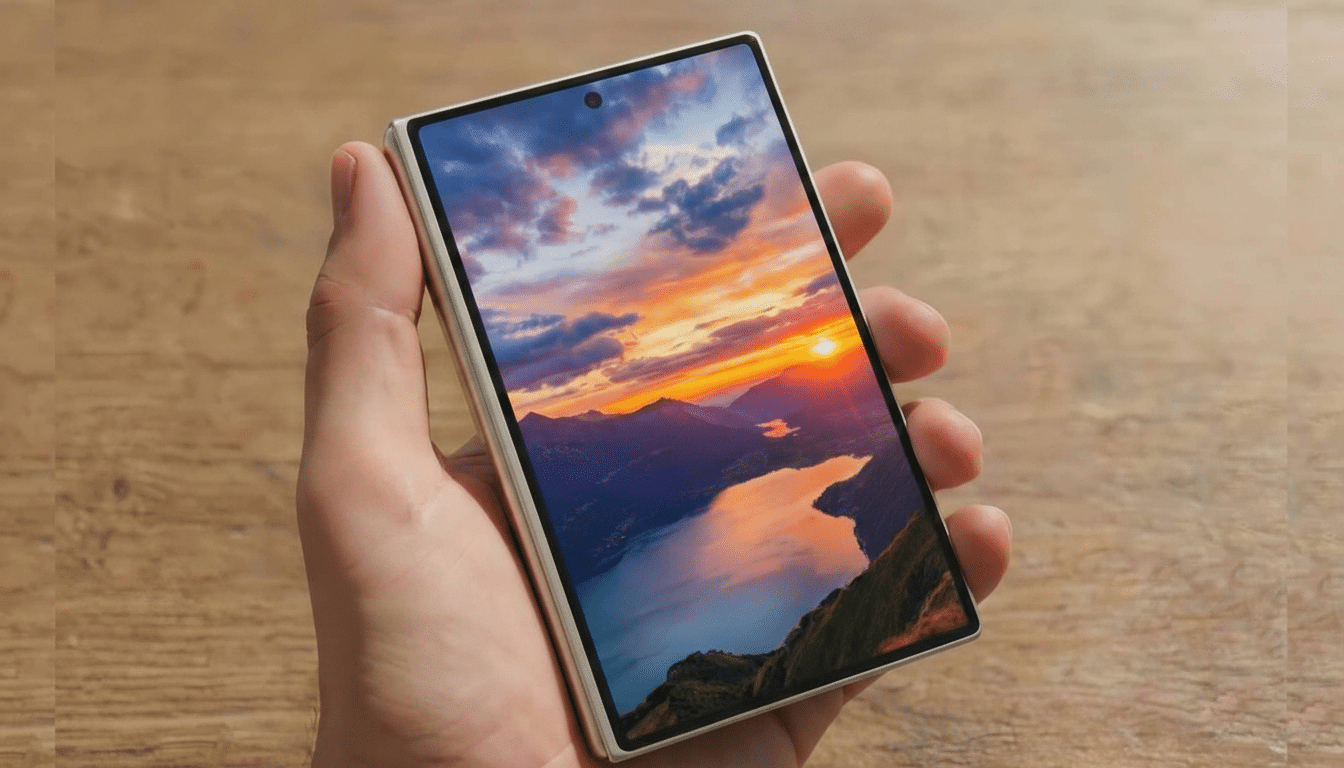
What A Wide Fold Means For Design And Apps
A 4:3 inner screen fundamentally changes how a foldable feels. Instead of stretching apps into narrow columns, a near-square canvas favors productivity layouts, reading, and creative work. Two-pane email, side-by-side documents, and full-width spreadsheets simply breathe more on a 4:3 panel than on a taller 10:9-ish display.
Samsung’s One UI already leans into large-screen tools like a persistent taskbar, Multi-Active Window, and improved drag-and-drop. On the Android side, Google’s work on large-screen support through Android 12L and 13/14, plus frameworks like Jetpack WindowManager, has nudged developers to optimize for split views and adaptive layouts. A wider Fold would benefit directly from those efforts, reducing letterboxing and awkward UI scaling that plagued early foldables.
Reading The Competitive Playbook For Foldable Phones
Apple has not announced a foldable iPhone, but analysts such as Ming-Chi Kuo and Ross Young have repeatedly pointed to Apple testing prototypes in the 7–8-inch range with a near 4:3 aspect ratio. Reporting from industry trackers has framed Apple’s priorities around hinge durability, crease reduction, and display uniformity—the same pain points Samsung has iterated on since the first Galaxy Fold.
For Samsung, beating Apple to market is only part of the calculus; framing the conversation matters. The company has a track record of timing Galaxy Unpacked events to shape flagship narratives well ahead of the fall phone season. A wider Fold would also counter Chinese rivals, many of which—Huawei, Honor, and Oppo—have moved toward more square inner displays that favor reading and multitasking.
The broader market backdrop supports a multi-device strategy. IDC and Counterpoint Research have charted steady foldable growth from the low teens of millions of units just a few years ago toward the 20–25 million range recently, with projections climbing into the 40+ million band within a few years. At the same time, Counterpoint estimated Samsung’s foldable share slipped below 60% as competition intensified, creating pressure to differentiate with new form factors and screen ratios.
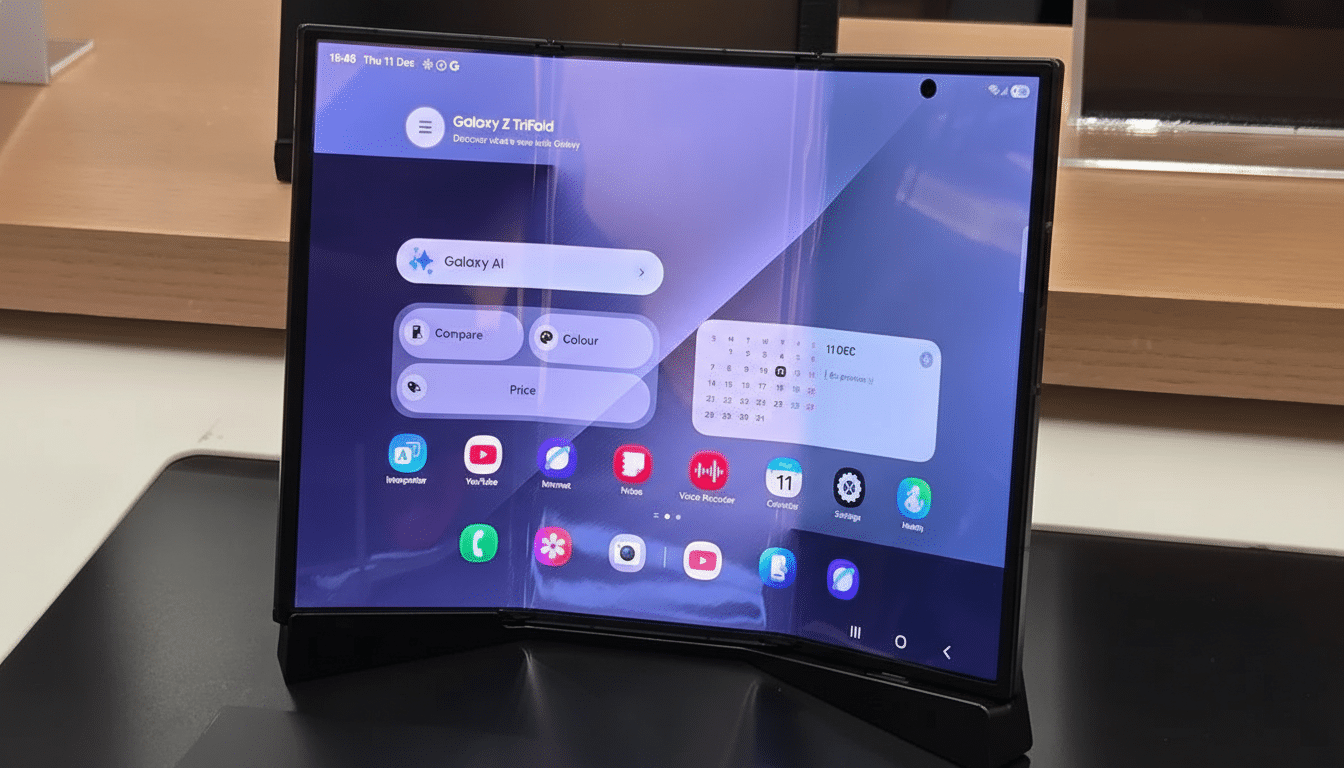
Where A Wide Fold Fits In Samsung’s Lineup
If the report holds, Samsung’s foldable family would span four distinct roles: the compact Z Flip for style-first buyers, the familiar Z Fold for power users, a tri-fold concept targeting tablet replacement territory, and the Wide Fold anchoring productivity with a 4:3 canvas. That last option could be the most “laptop adjacent” of the bunch, especially if paired with S Pen support, a reinforced hinge, and enhanced taskbar multitasking.
Pricing remains the big swing factor. Component costs for foldable OLEDs and hinges have trended down, according to Display Supply Chain Consultants, but premiums persist. A wider panel, stronger cover glass, and larger batteries can quickly push bill of materials higher. The business case likely hinges on whether Samsung can position the Wide Fold as a clear upgrade path for Galaxy Ultra and Note loyalists without cannibalizing the mainstream Z Fold.
Specs To Watch And Early Signals For A Wider Fold
Look for telltale signs in certification databases and supply chain chatter: hinge ratings above 200,000 folds, a thinner frame with improved crease management, and an external screen that complements the 4:3 inner panel for one-handed use. If Samsung follows recent trends, expect continued Ultra Thin Glass refinements, robust IP protection, and performance headroom tuned for multi-window workloads.
Also watch developer guidance and beta builds of One UI for clues—layout presets, split-screen defaults, and S Pen features tailored for a wider aspect can telegraph Samsung’s priorities. Leaks from established tipsters often surface case dimensions and bezel layouts weeks before launch, and those details will confirm whether the device truly targets a 4:3 experience.
The Bottom Line On Samsung’s Rumored Wide Fold Strategy
A summer launch for a Wide Fold would let Samsung define the year’s foldable narrative and set a benchmark before Apple’s expected fall announcements. None of this is official, but the strategy tracks: greater variety, clearer use cases, and a form factor that plays to software progress on large screens. If Samsung executes, the Wide Fold could be the company’s most productivity-focused phone yet—and a timely preemptive strike ahead of Apple’s entry.
