


Samsung has taken the wraps off a new pixel-level privacy layer for Galaxy displays, a hardware-and-software system designed to make shoulder surfing far harder without dimming or distorting what the actual user sees. It’s a clever twist on privacy screens: rather than a blunt, always-on filter, this approach adapts in real time and can be tuned to the way you use your phone.
What Samsung Announced About Its Galaxy Privacy Layer
In a company briefing, Samsung described a “Galaxy privacy layer” that selectively controls visibility at the pixel level. The goal is straightforward: keep your content readable to you while reducing what nearby onlookers can glean on buses, in cafes, or in queues. The feature has reportedly been in development for more than five years, a sign that it’s not just a software overlay but a deeper integration with the display stack.
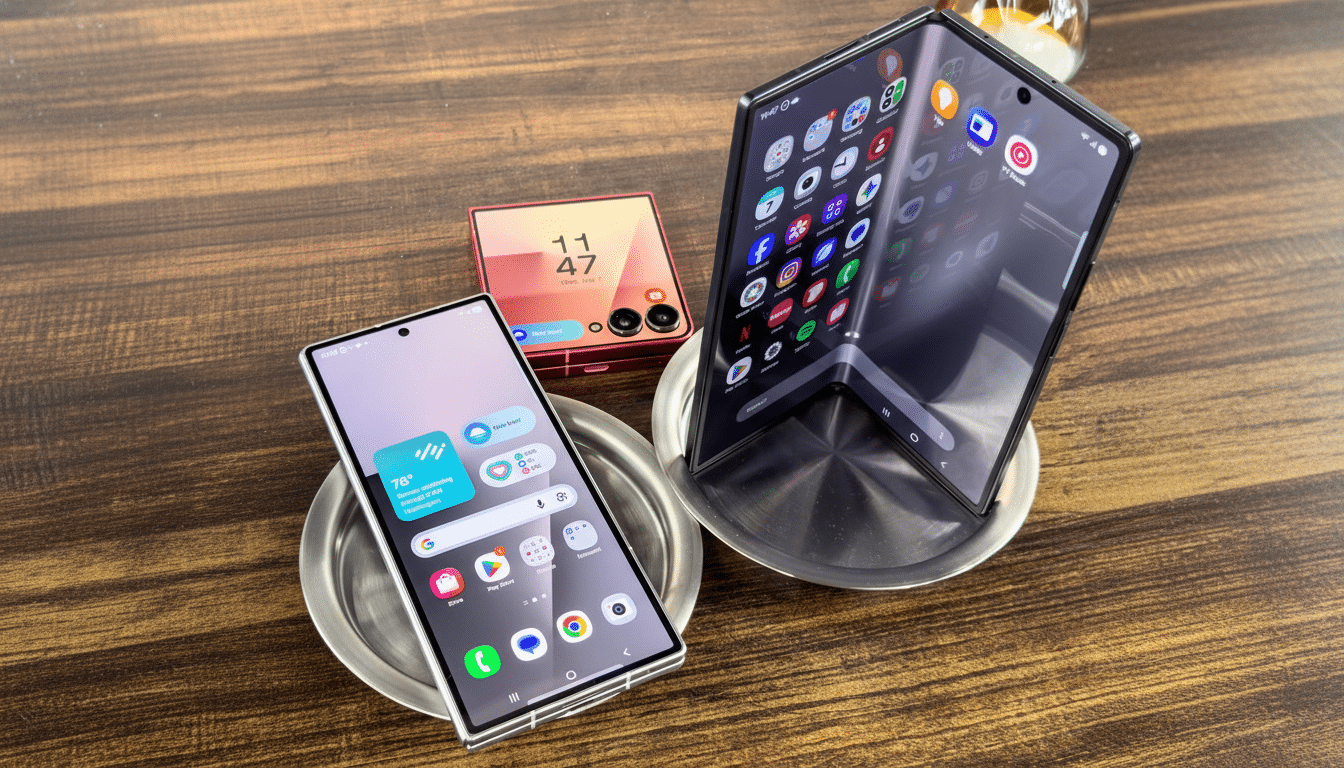
Samsung hasn’t attached a final brand name yet, but the system aligns with previously leaked references to a Privacy Display mode appearing in One UI builds. The company emphasized granularity and user choice over a one-size-fits-all privacy filter.
How the Pixel-Level Galaxy Privacy Protection Works
Unlike static privacy films, Samsung’s layer combines display-level controls with software intelligence. You’ll be able to apply protection only to selected apps—say, your banking app or email—while keeping everything else unchanged. Sensitive inputs such as PINs and passwords can be automatically shielded, and notification previews can be limited so lock screens don’t spill details to prying eyes.
Crucially, visibility is adjustable. Users can tune how aggressively the display narrows its effective viewing window, and they can toggle the feature on demand via a Quick Settings tile. That means you’re not stuck with a dim, narrow-angle screen when you don’t need it, and you don’t have to remember to apply a filter each time you open a private app.
Samsung hasn’t detailed the exact optics, but a pixel-level approach typically involves directional light control and display driver coordination so the front-facing viewer retains clarity while off-axis contrast or luminance falls off. It’s a more surgical method than simply slapping a louvered film over the panel.
Why It Beats Traditional Privacy Screens
Conventional privacy protectors, like 3M’s Light Control Film, physically restrict the viewing angle—often to roughly 30° on either side—at the cost of brightness, color accuracy, and permanent inconvenience. They’re either on or off, and they apply to everything on the screen.
Samsung’s solution promises three advantages: it’s dynamic, app-aware, and reversible. That means no constant brightness penalty, no always-narrow viewing field, and no compromises when you’re watching a video with friends or showing a photo. In practice, you could set strict privacy for finance and messaging apps, moderate protection for email, and full openness for media and maps.
Real-World Impact of Samsung’s Galaxy Privacy Layer
Shoulder surfing is not hypothetical. Security researchers have repeatedly shown that casual observers can capture PINs and message content in crowded environments, and enterprises routinely mandate privacy filters for frontline staff. A built-in, intelligent layer should resonate with professionals handling sensitive work data, as well as anyone using mobile payments, digital IDs, or health records on the go.
This approach also fits a broader privacy trend. Laptop makers such as HP have offered integrated privacy screens, and display vendors have demoed privacy OLEDs, but phone implementations have lagged due to the tight power and clarity budgets of small, high-PPI panels. Bringing a tunable, display-native system to mainstream phones could set a new baseline for mobile privacy UX.
Availability and Device Support for Galaxy Phones
Samsung has not confirmed the first devices to ship with the feature. The timing and recent One UI references suggest it could debut alongside a future Galaxy flagship generation with One UI 8.5. Backporting to older models may be limited by hardware dependencies, particularly if the panel and driver must support directional emission controls or specialized pixel driving.
If it lands on the next Galaxy S lineup first, expect rapid adoption across premium and enterprise-focused models. Given Samsung’s Knox ecosystem and relationships with global carriers and IT admins, an OS-level, policy-ready privacy layer could quickly become a standard checkbox for corporate provisioning.
What to Watch Next for Samsung’s Privacy Display Plans
Key details to look for include the exact range of visibility adjustments, any trade-offs in brightness or HDR performance, and whether third-party developers can request or trigger the privacy mode via APIs. Also pivotal: will the feature protect content during screen sharing or casting, and how will it play with accessibility settings?
Samsung’s pitch is simple yet compelling: privacy that’s precise, flexible, and invisible until you need it. If the execution lives up to the promise, this could be the most practical display upgrade we see on Galaxy phones in years.
