


I’ve tested every Samsung foldable to date, from the earliest Galaxy Fold to the two-hinged TriFold, and the device that genuinely has me buzzing is the rumored wide-screen “Wide Fold.” It promises the portability of a Flip-style phone, the productivity of a book-style Fold, and a screen shape that finally makes video and reading feel natural.
A report from ET News points to Samsung building around a million units of this model, signaling a mainstream play rather than a niche experiment. Internally nicknamed “Wide Fold,” it’s described as shorter and wider than the current Galaxy Z Fold 7—closer in stance to Oppo’s Find N and Google’s first Pixel Fold.
- Why a Wider Foldable Aspect Ratio Truly Matters for Media
- How It Compares to Galaxy Z Fold 7 and the TriFold Experience
- Rumored Specs and Design Priorities for Samsung’s Wide Fold
- Software Fit and Multitasking on a 4×3 Foldable Display
- Competition and Market Signals for a Wider Foldable Trend
- The Foldable I’m Most Excited to Use in Everyday Life
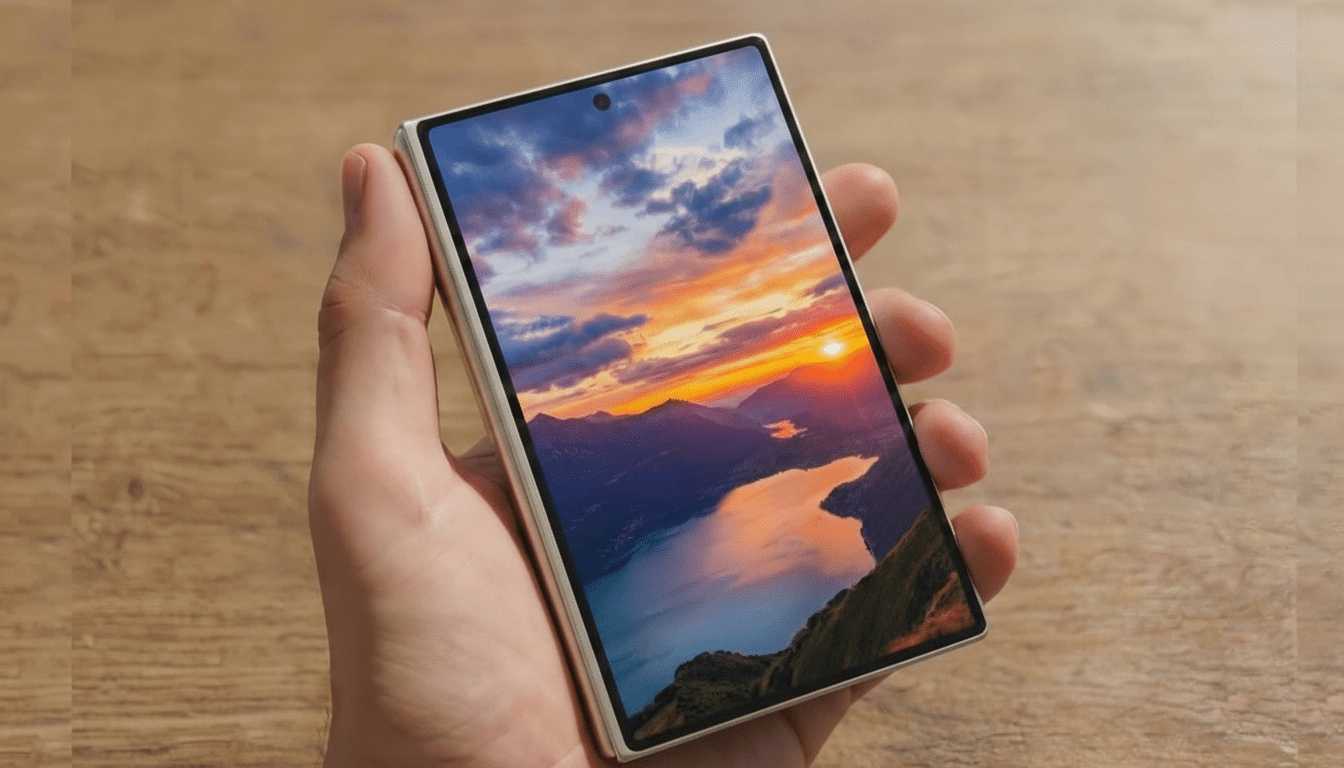
Why a Wider Foldable Aspect Ratio Truly Matters for Media
The biggest win is aspect ratio. Today’s near-square inner displays are terrific for browsing, but they force heavy letterboxing with 16:9 video. My long-term workaround has been propping the Fold half-open like a mini-laptop: functional, yes, but the actual video window isn’t much larger than a regular slab phone.
A 4×3 foldable changes the calculus. On a panel in the 7.6-inch range, movies and shows occupy a meaningfully larger portion of the screen, with less wasted space. It also mimics a magazine page for reading, fits two-column web layouts gracefully, and gives on-screen keyboards room without crowding UI elements.
Crucially, that wider canvas should still fold down into a compact shape. If the closed device uses a roughly 5.4-inch cover screen, you get a normal one-handed phone when closed and a comfortable mini-tablet when open—no awkwardly tall candy bar to wrestle with.
How It Compares to Galaxy Z Fold 7 and the TriFold Experience
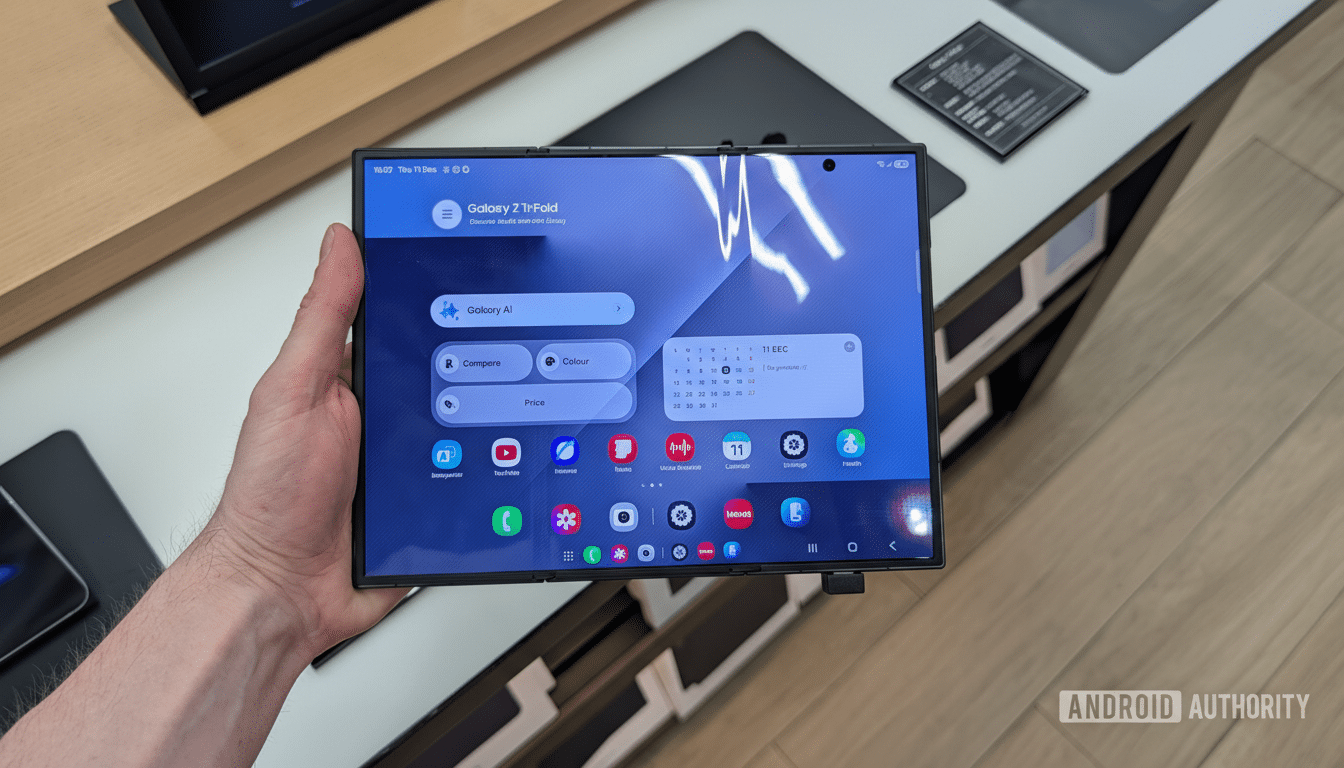
The Galaxy Z Fold 7 set the bar for lighter, thinner book-style foldables, but its tall cover screen and near-square inner panel remain compromises for video. The TriFold, on the other hand, is a pocketable 10-inch productivity beast—great for timelines, spreadsheets, and multitasking—but its thickness and dual hinges make it a specialist’s tool more than an everyday phone.
The Wide Fold aims for the sweet spot: a single hinge for slimmer pockets, a friendlier inner ratio for media, and enough real estate for work. Having lived with the TriFold and multiple Folds, I suspect fewer moving parts will also pay dividends in durability, weight distribution, and day-long comfort.
Rumored Specs and Design Priorities for Samsung’s Wide Fold
Sources describe a 7.6-inch OLED inner display with a 4×3 layout, a 5.4-inch cover screen, and support for faster 25W wireless charging—the latter reportedly aligning with what’s expected on Samsung’s next Ultra-class flagship. If paired with silicon-carbon battery tech and a refined hinge, we could see better longevity, quicker top-ups, and a subtler crease.
Two asks from years of testing: camera parity with Samsung’s premium slabs and thoughtful pen support. Adding an active digitizer layer can add thickness, so a smart case with a slim pen—rather than baking it into the chassis—would preserve the Wide Fold’s portability while keeping creators happy.
Software Fit and Multitasking on a 4×3 Foldable Display
One UI has matured into a genuine foldable OS with a persistent taskbar, drag-and-drop multiwindow, and Flex Mode controls. A 4×3 canvas would let apps like Office, Google Docs, Samsung Notes, and Kindle feel closer to their tablet counterparts, while social and camera apps can split panes without cramped UI. Per-app aspect controls—something Samsung already does well—will be essential to keep odd layouts in check.
Competition and Market Signals for a Wider Foldable Trend
Oppo’s Find N proved short-and-wide is incredibly pocketable, and the first Pixel Fold showed how comfortable 4×3 can be for reading and media. On the horizon, industry chatter from well-known analysts suggests Apple is exploring a similar 4×3 foldable in the ~7.7-inch class. If Samsung ships a million Wide Folds early, it sets the tone—and the app incentives—for the entire category.
Analysts at Counterpoint Research and DSCC have tracked strong double-digit growth for foldables, with annual shipments climbing into the mid-teen millions and setting record quarters recently. A wider, more media-friendly Fold is exactly the kind of mainstream-friendly pivot that could push the segment to its next growth phase.
The Foldable I’m Most Excited to Use in Everyday Life
After years of living with every Samsung foldable—including the impressive yet niche TriFold—the Wide Fold looks like the best balance of entertainment, productivity, and pocketability. Nail the weight, crease, cameras, and charging, and this could be the first foldable I recommend without caveats to people who mainly watch, read, and browse on their phones. That’s the foldable many of us have been waiting for.
