


Samsung just threw what seems like its first pair of smart glasses into a consider-this-closing-remark space at its most recent Galaxy shopping spree — and it was easy to miss. Amid the headlines about phones and tablets, an executive’s sign-off on “a device that understands context and actively supports you in a hands-free way,” arrived like code for eyewear. Not a headset, not another phone — something ambient, wearable, always-on.
A tease in plain sight
It’s already confirmed that it is in the process of building an Android XR ecosystem, in collaboration with Google and Qualcomm, which is strongly rumored to be tied to a mixed-reality premium headset project. But this tease hints at a second, separate product, lightweight Galaxy Glasses designed for daily assistance instead of VR immersion. The language around context, background support, and collaboration with partners is also very much how contemporary AI-infused glasses are framed — near, far, and always invisible until you reach for it.
There have been breadcrumbs. Samsung has already submitted its trademarks for “Galaxy Glasses” in both patent fields, so this shows intention not just for R&D. Meanwhile, Qualcomm has already announced dedicated silicon for glasses-class devices (its AR1 platform), as well as XR chips designed for headsets and Google’s multimodal Gemini models are now optimized for on-device and near-device use cases. That is to say: Finally, the hardware, the software and A.I. are all in sync to deliver a credible pair of assistant-grade spectacles.
Why glasses, not a headset
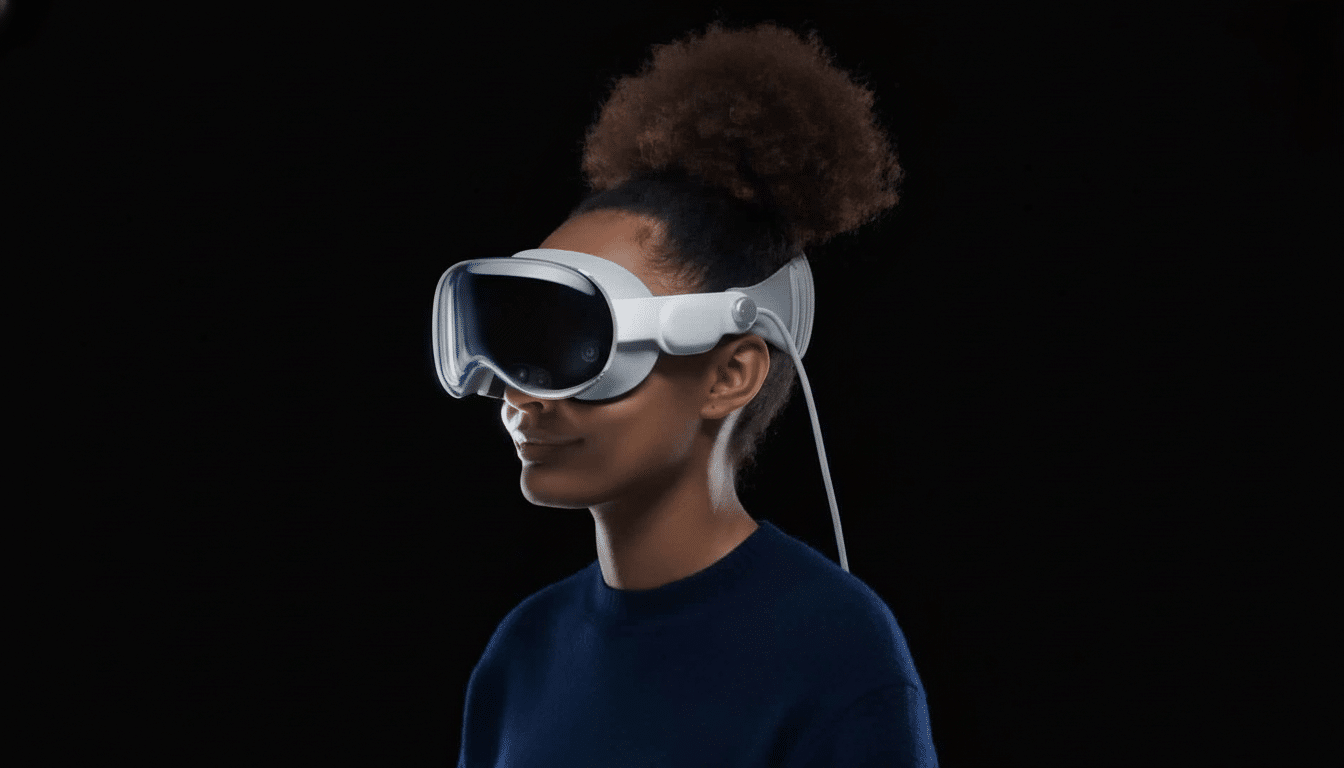
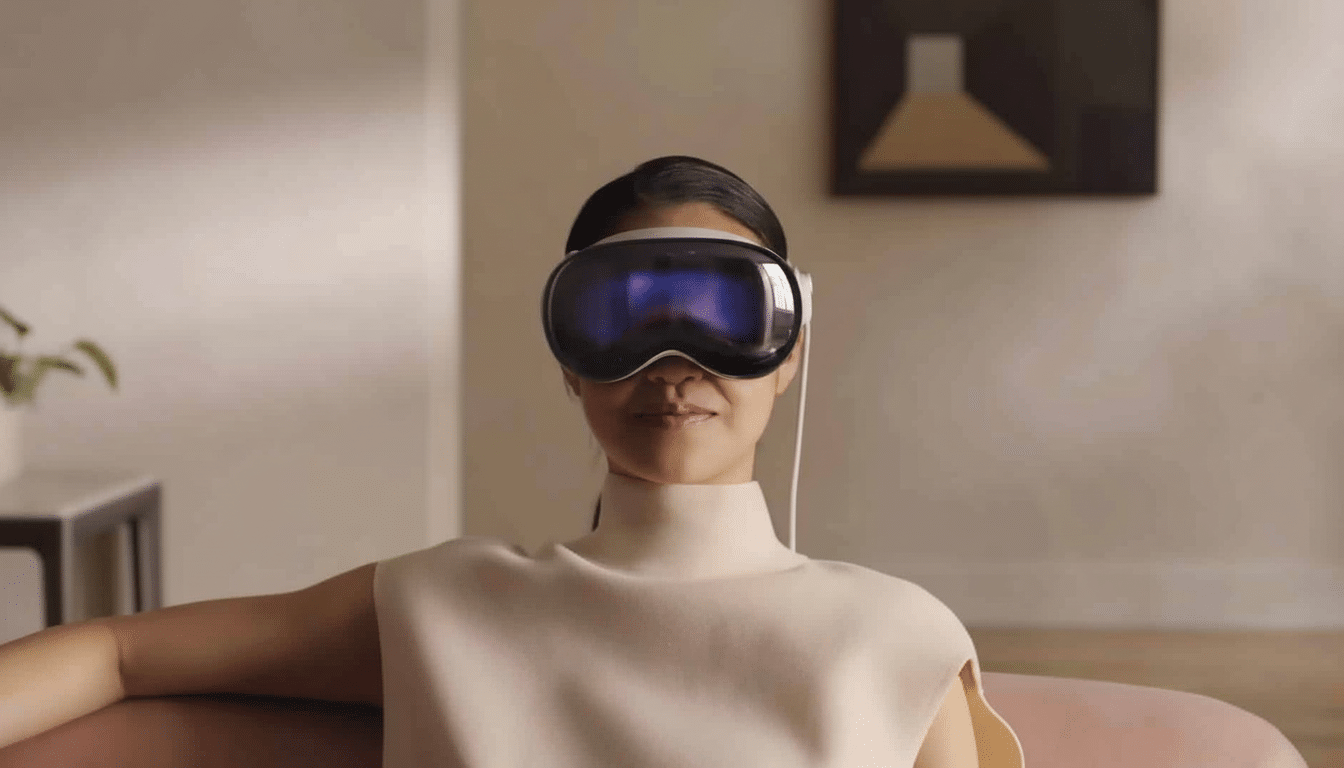
Headsets like Apple Vision Pro can fundamentally change the way you work, but they still occupy the “special session” portion of your day. There’s a difference with glasses, of course — they can run all day, come in when you squint and shock, and they never ask you to hang out behind your visor until you disappear. That’s also where the momentum in the market is. Meta’s newest Ray-Ban glasses are showing that there’s an appetite for camera-first, AI-augmented eyewear that look, well, normal. Analysts from firms including Counterpoint Research and CCS Insight have singled out this subcategory as the fastest-moving corner of consumer AR for exactly the reason Mikamovic mentioned: It’s solving practical problems with little friction.
It is here that Samsung has a specific advantage. It already has a huge mobile AI footprint — the company claims its Galaxy’s AI features now reach hundreds of millions of users — providing it data, distribution and a preexisting customer base for a new form factor. Throw in something like Google Gemini for multimodal reasoning and Qualcomm’s low-power vision and audio pipelines and Galaxy Glasses could be looking at a much more powerful assistant than the camera glasses that have come before.
The Real Impact of Galaxy Glasses
Anticipate a “heads-up helper” rather than a hologram machine. Keep your ears open with an open-ear design featuring always-on voice; Put away the earbuds and enjoy your audio and video anywhere with a thinnest-in-category profile on the temple, Photo/Video capture discreetly from your glasses; Stream live, caption translations in real time and have your notifications appear in your line of sight only when you want them; Ask your questions and get answers; Your voice assistant is just a glance away throughout the day. With Gemini-style multimodality, you might be able to gaze at a product label and call for comparisons, receive step-by-step cooking prompts while your hands are dirty, or take notes while the glasses summarize a conversation as it unfolds — with no need to pull out a phone.
The wildcard is display options. Samsung could ship a camera-and-audio-first device, as Ray-Ban has with its glasses, or add a small, subtle microdisplay for glanceable overlays such as directions or captions. The latter poses challenges in involving weight, battery, and optics but Samsung’s depth in OLED, microdisplays, and miniaturization makes it realistic to expect to see at least to see some variant with a minimal, glanceable HUD. Tethering to a Galaxy phone would allow heavy compute to be offloaded, saving battery, while secure on device processing would take care of any sensitive operations.
Privacy guardrails will be pivotal. Look for bold capture cues, fine-grained permissions for microphones and cameras, and lots of on-device AI practices around sensitive data. Regulators and consumer advocates, who learned lessons from the first wave of smart glasses, will be examining the transparency and bystander consent features. If Samsung gets this right, it could do more to mainstream the category more quickly than previous efforts.
The competitive calculus
Positioning matters. A higher-end XR headset from Samsung, Google, and Qualcomm would square off against Apple Vision Pro in terms of immersion and enterprise use. Galaxy Glasses would instead take on Meta’s Ray-Ban line in design, price and assistant quality. Meta’s hardware is cool and whimsical, but its AI is held back by model size and context constraints. A Samsung-Google combo might go long on richer multimodal understanding, tighter integration of Android and SmartThings, and handoff with Galaxy phones, tablets and watches.
Market timing also looks favorable. IDC and other trackers forecast the broader AR/VR market will bounce back once additional platforms land and developers have more tools to work with. Should Samsung release glasses with an Android XR SDK and/or a One UI flavor for wearables, developers could create once and have products that work with phones, headsets, and glasses — a multiplying-factor the category has long lacked.
What to watch next
Watch for regulatory breadcrumbs — Bluetooth SIG and FCC filings can appear before a launch — and for developer doc mentions of Android XR. Look for clues about display vs. non-display options, and how much of the assistant is on-device. Most of all, search for how Samsung connects Galaxy Glasses to everyday uses: Navigation, travel, working out, cooking, communication, camera-first creation. That’s where glasses put a W in a win column or an L in a lose column.
Samsung didn’t say “Galaxy Glasses” out loud, but the meaning was unmistakeable: the era of mobile AI won’t exist solely on a screen you hold. It will hang out in plain view on your face, chill when it needs to and it’ll pipe up only when the moment calls for it. If the teaser is what it looks like, the smart-glasses wars are about to begin.
