


Samsung’s most ambitious foldable yet is hitting the US market, and it’s not shy about the price tag. The Galaxy Z TriFold, the first commercially available triple-fold smartphone in the US, launches at $2,899 with 512GB of storage in a single Crafted Black finish. Early demand looks fierce—Samsung’s debut run in South Korea sold out in minutes—so expect limited inventory at launch.
What Makes the TriFold Form Factor Different
The TriFold doesn’t just bend; it orchestrates three hinged sections into a 10-inch canvas when fully extended, essentially turning a phone into a tablet on demand. The inner panel runs at 120Hz with a pixel density of 269ppi, while the outer cover screen measures 6.5 inches at Full HD resolution, matching the 120Hz refresh and peaking at a claimed 2,600 nits for glare-busting brightness outdoors.
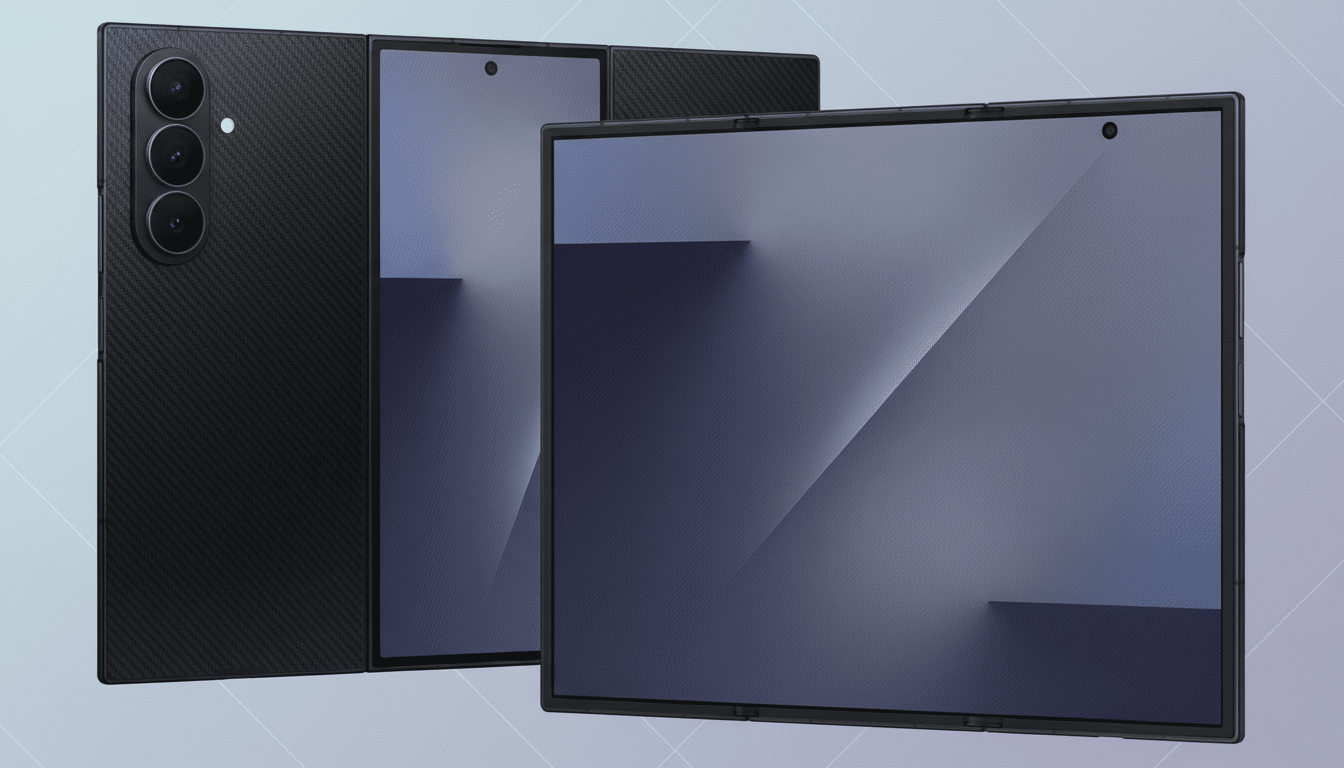
Two 10MP selfie cameras handle video calls and face capture no matter how you’re holding the device—one for the cover screen and another inside when the TriFold is open. On the back, a trio of cameras covers most shooting scenarios: 12MP ultra-wide, a massive 200MP wide-angle sensor, and a 10MP 3x optical telephoto with up to 30x digital zoom. Expect Samsung’s usual computational photography wizardry to fuse images from multiple lenses for sharper shots and steadier video.
The form factor is about more than spectacle. Triple-fold hardware enables multi-window layouts that feel less cramped than on single-fold devices. With Android 16 and One UI 8, you can fan out apps across panels, pin a persistent taskbar, and drag content between windows in a way that begins to mimic a compact laptop workflow. That’s where this device aims to justify its size and cost—by turning screen real estate into real productivity.
Price and availability for Samsung Galaxy Z TriFold
At $2,899, the TriFold sits in halo territory even by foldable standards. For context, most premium foldables still hover around the $1,200–$1,900 range, depending on configuration. Samsung is selling the TriFold through its website and a small network of US Experience Stores—locations currently include select spots in California, Minnesota, New York, and Texas. There are no preorders, and quantities appear limited, so early buyers may need to move quickly.
The lone configuration includes 512GB of storage and 16GB of RAM, suggesting a focus on heavy multitasking and media creation. While carrier partnerships haven’t been highlighted, the direct-to-consumer approach mirrors how other experimental form factors have rolled out, letting Samsung control supply and support while gauging demand.
Hardware and performance on the Galaxy Z TriFold
Under the hood, Samsung pairs Qualcomm’s Snapdragon 8 Elite with 16GB of memory, a combination aimed at keeping multi-window sessions fluid and GPU-intensive tasks manageable across three panels. A 5,600mAh battery backs the expansive display, and 45W wired charging should ease anxiety when you inevitably push the big screen hard. The package ships with Android 16 and One UI 8, which bring refined large-screen gestures, better windowing behavior, and improved continuity when transitioning from folded to unfolded states.
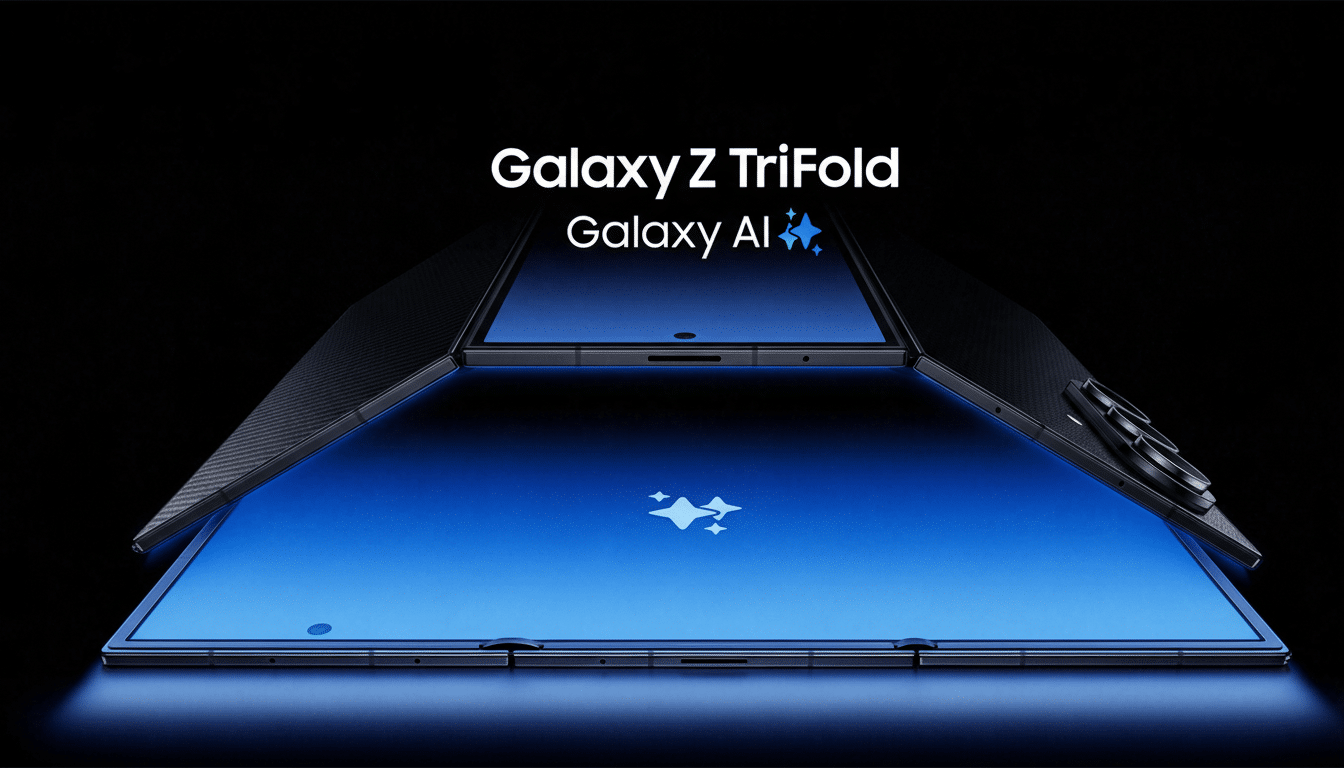
Samsung hasn’t turned the TriFold into a spec-chasing camera phone—the 200MP main sensor does the heavy lifting—yet the flexibility of triple-angle media capture and on-screen controls across panels could unlock clever use cases, from director’s view monitoring to top-down product shots with a makeshift tripod stance. It’s the kind of device where software updates can materially expand what the hardware can do.
Where it fits in the market and who it’s for
Industry watchers have waited years for a tri-fold to move from concept to commerce. TCL and others showed prototypes, and Huawei teased designs, but availability has been limited or regional. By shipping a tri-fold at scale in the US, Samsung is effectively testing whether ultra-ambitious foldables can escape the demo booth and become a viable category.
Analysts at IDC estimate global foldable shipments hit roughly 16 million units in 2023, up about 30% year over year, with average selling prices still well above mainstream flagships. Display Supply Chain Consultants has noted steady gains in panel durability, brightness, and yields—factors that make complex formats like the TriFold possible. But at nearly $3,000, this device is more a showcase than a volume driver, aimed at early adopters, creators, and mobile pros who would otherwise juggle a phone and a tablet.
Early considerations for buyers of the Galaxy Z TriFold
Triple hinges mean triple the mechanical complexity. While Samsung’s recent foldables are rated for heavy-duty cycling, real-world longevity, crease visibility, and dust resistance will be the questions serious buyers ask first. App optimization also matters: productivity suites from Google and Microsoft, as well as creative tools, need to play nicely with multi-window layouts to capture the TriFold’s promise.
If you can visit a Samsung Experience Store to handle the device, do it. Weight, balance, and how the folds lock into place are as important as specs on a sheet. For everyone else, the TriFold stands as a milestone in mobile design—the boldest attempt yet to fuse phone portability with tablet utility—wrapped in a price that signals this is bleeding edge in every sense.
