


The TriFold is the most aggressive concept for a foldable phone yet, taking the Z Fold playbook and going full three-panels on it, unfolded to reveal an expansive 10.9-inch canvas. And so after some time with it, one question comes into stark focus if you’re trying to understand this category-bender: Who is this phone really for?
What the TriFold Is and How the New Design Feels
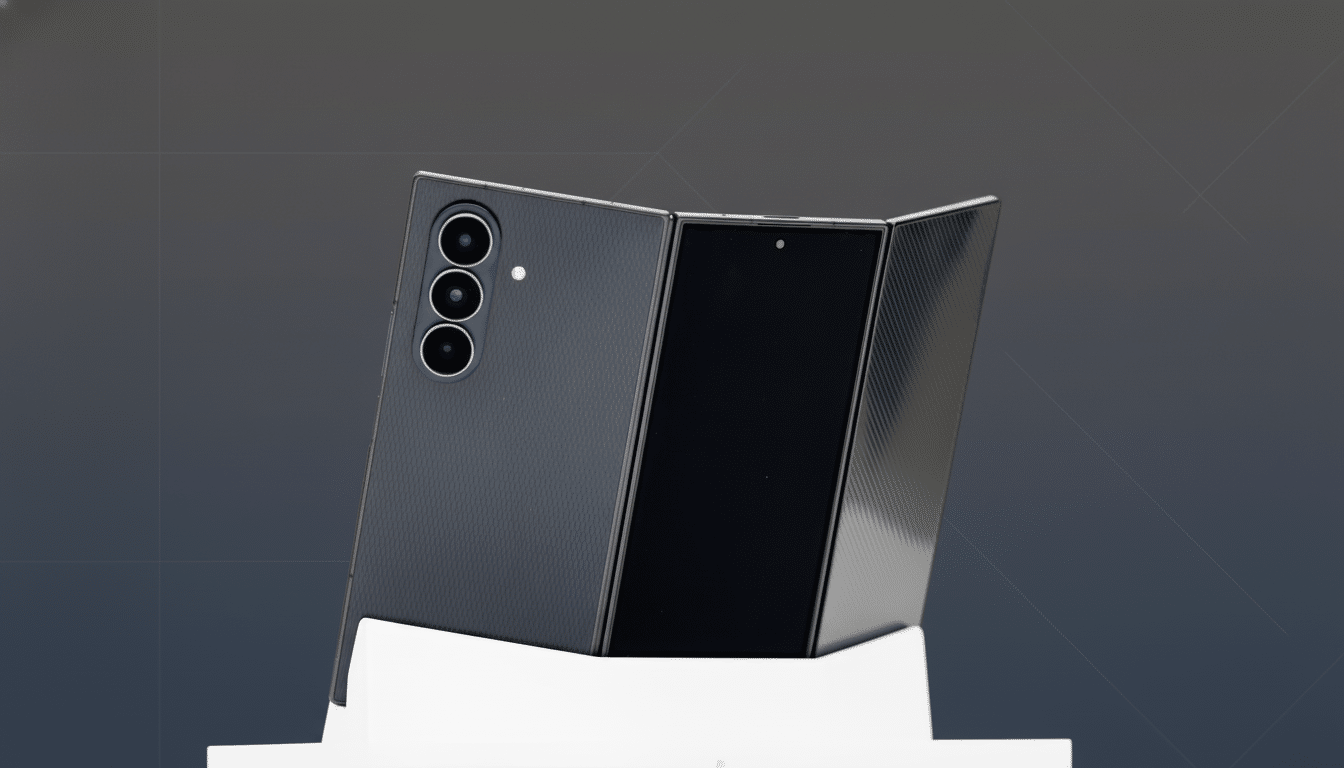
Literally adding a third section to a familiar book fold, the TriFold clocks in at an eye-catching 3.9mm when unfolded and 12.9mm when closed. The unfolded chassis in the hand feels oddly thin, certainly not what you expect from that stack you carry in your pocket.
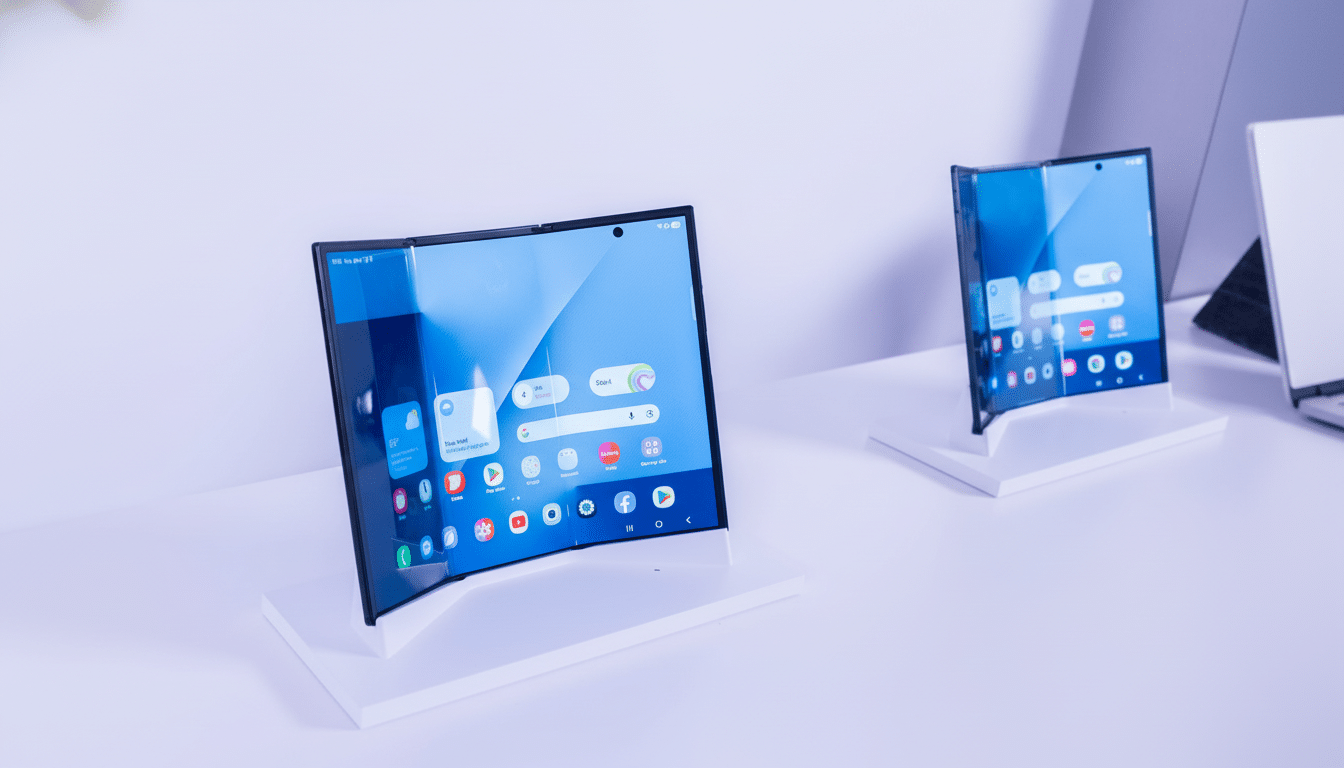
Hinge mechanics are reassuringly precise. You unlock it by flipping open the back panel, then the inner panel; you lock it in reverse. If you start off on the wrong foot, subtle vibrations help guide you back where you need to be, an example of the sort of tiny but necessary guardrails Samsung has learned to place around complicated pieces of hardware.
The screen itself is bright, punchy and expansive, but you can see the two fold lines unless you’re head-on. Samsung has reduced wrinkles on its recent book-style folds, but there’s just more seam to deal with on a tri-panel format. It’s a trade-off for having an almost-tablet in your pocket.
A Pocketable Tablet Experience on the Samsung TriFold
The appeal is obvious the moment you open it: this is work-on-a-flight-tray-table real estate. Samsung DeX, which morphs the interface into a desktop-like environment, makes the big screen count with windowed apps, a persistent taskbar, and keyboard shortcuts. Think spreadsheets beside email while a chat client floats over the edge—no external monitor required.
Under the hood, it mirrors Samsung’s top-tier phones with flagship-class silicon, ample RAM, and high-speed storage. Camera hardware and One UI features, including Galaxy AI enhancements, are familiar, so you don’t sacrifice baseline phone competency to get the expanded screen.
Durability is rated at IP48, which means it’s mostly protected from the ingress of dust and sprays of water—use it at the beach or over your sink, not on the ocean floor. The biggest difference from the Z Fold experience is posture. The TriFold locks at 0 or 180 degrees; it doesn’t hover at intermediate angles. That means no mini-laptop typing angle on a coffee shop table, no impromptu tripod for creative selfies. If you rely on “Flex mode” behavior, note this limitation up front.
The Trade-Offs You Need to Accept
Beyond the visible creases and lack of angle locking, the folded thickness demands two-handed use more often than a standard phone. Weight isn’t detailed, but the feel suggests serious materials and a reinforced hinge system. As with most foldables, accessories and app optimization will matter; the best experiences come from software that respects multi-window layouts and large-screen UI patterns.
Price will also serve as a gatekeeper. Given Samsung’s book-style foldables have historically floated in the $2000 range, a tri-hinge flagship is almost guaranteed to be at the expensive end of the market. Analysts at research firms like IDC and Counterpoint Research point out foldables still account for a low-single-digit % of the smartphone market, but they are growing steadily as hardware matures and prices come down. The TriFold, however, is on the cutting edge—not on the value end.
Who Should Buy the Galaxy Z TriFold and Why
Mobile professionals who are productivity app-lifers and frequently dock keyboards in tablets will get the most out of this design. If you’re writing proposals at 30,000 feet, redlining PDFs in taxis, or whipping between Slack, Sheets and a browser from AM to PM, the TriFold can take the place of your mini tablet and streamline your travel kit. DeX transforms a hotel TV into a workstation; the phone is the CPU and trackpad.
Producers who storyboard, annotate timelines or review footage on the go will also appreciate the additional canvas and work area, especially when working together in real time. Field teams—imagine real estate, construction, healthcare and retail—will appreciate that forms and dashboards finally have the space to stretch out without having to carry around a separate slab.
On the other hand, if you’re a fan of one-handed operation, regularly take Flex-mode selfies or prioritize pocket-light minimalism, those falling into these categories should probably consider Samsung’s clamshell foldables or just bite the bullet and live with a traditional slab plus a thin tablet. Both gamers and media fans will like the screen, but is the trade-off versus a more traditional flagship phone and 11-inch tablet worth it?
Early Verdict on the Samsung Galaxy Z TriFold
The Galaxy Z TriFold isn’t just larger—it’s a different animal. It does best if you look at it as a pocketable tablet that can be a phone, rather than as a phone that periodically becomes a tablet. It’s a bold and practical answer to carrying around two devices if your day is defined by multitasking and document work. If not, one of Samsung’s more typical foldables (or a regular flagship plus a light tablet) will better serve you at significantly less total cost.
Samsung’s execution shows just how far foldables have come: sturdy hinges, sensible protections and software that takes advantage of screen real estate. Now the market is left to determine if a tri-fold design represents the next mass-market leap forward—or a specialized power tool for those who really do demand something this big on the go.
