


Samsung’s forthcoming low-end flagship should be the phone that the rest of the year follows. Rather, judging by credible leaks and what we’ve heard from supply chains et al, the Galaxy S26 looks to be the epitome of playing it safe — a modest refresh at a time when almost everything calls for bold action. Relative to its 2026 competitors, that makes it the worst phone of the year.
Where the base Galaxy S26 model falls short in 2026
Reliable tipsters in Korea’s supply chain and popular leakers on X, including Ice Universe, point at a rehash of the same recipe: the same primary camera hardware, a new design around the camera island, slightly larger screen real estate, a modest battery upgrade, and the newest Snapdragon 8–series silicon. Wireless charging is also expected to move up, but only by a bit. None of this fundamentally alters how the phone shoots, charges, or lasts.
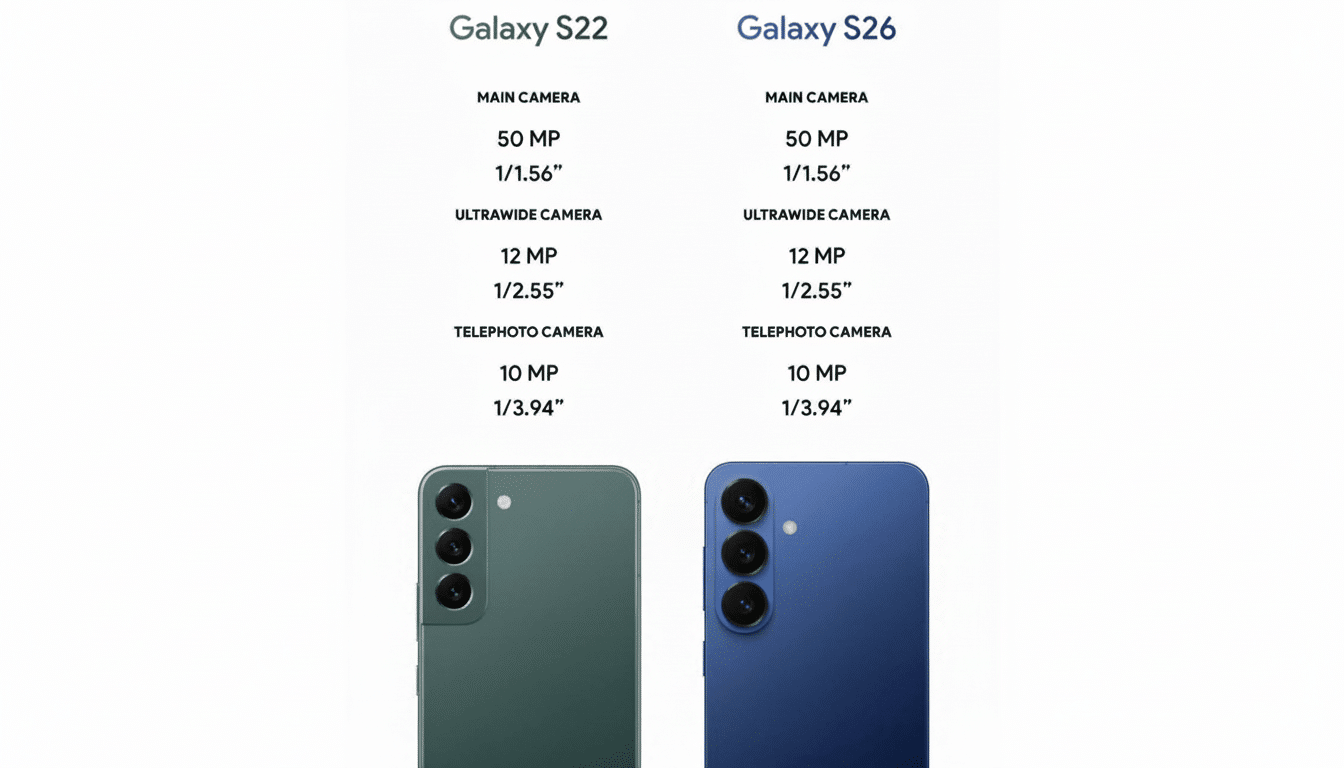
That’s a problem, because the S device is what sets the franchise for most buyers. And it’s the phone you’d see on carriers’ shelves, the one posters promote. But when that model plateaus, the brand’s innovation tale can fall flat as well. Research from Counterpoint Research has shown upgrade cycles that are three years and rising in mature markets; by the time some people come to trade in, they want something more obvious than a rerelease with another nameplate.
Specs that fall behind the pack of 2026 Android rivals
On Android, the “floor” has been lifted. They’ve made 80W (and beyond) wired charging and 30W–50W wireless a part of the mainstream flagship conversation. Brightness ceilings of 3,000 nits or more are typical for spec sheets, and triple 50MP camera arrays don’t remain in the realm of ultra-tier phones. S26, by contrast, is going to stay near wired 25W–45W and a modest wireless bump with a conservative camera arrangement which doesn’t include a true optical reach lens.
Meanwhile, Apple continues to nudge up its base models into “Pro” territory with faster displays and better power efficiency, according to analysts at Display Supply Chain Consultants. If Samsung’s budget S series avoids a telephoto, does nothing about its incremental charging, and continues to use software to make up for aging camera hardware that rivals can’t come close to matching without it showing in head-to-head comparisons and lab scores from outlets like DxOMark and independent reviewers?
Innovation has moved elsewhere beyond the base S26
The irony is that Samsung can still innovate when it wants to: its foldables have introduced substantial durability and thinness improvements, while its Ultra models consistently premiere cutting-edge display and battery tech. Yet progress ring-fencing inside the Ultra tier leaves the mass-market S stranded. That’s because, as IDC has observed, premium smartphone buyers are spending more per device; to ensure they get them where they want that spend to be made, brands are spreading halo features down the stack. Samsung seems to be reversing that here.
And even on charging standards, the Galaxy line might lag behind. That efficiency-boosting magnetic alignment has helped the Wireless Power Consortium’s Qi2 platform take off with rivals. If the S26 drops the ball by failing to go all-in on a Qi2 magnetic commitment across its entire lineup, it gives up that convenience edge — something shoppers are going to notice the first time they try to slap a device down on a third-party charger and nothing happens.
Value math that just doesn’t add up for Samsung’s S26
If the pricing lands near where the most recent S series was priced, the S26 will have to go up against discounted last-gen Ultras and some aggressively priced rivals that deliver faster charging, brighter panels, and more versatile cameras. A transition to 256GB of base storage is welcome news, but storage in and of itself rarely closes the value gap when battery life and camera versatility are the buying triggers cited most often in surveys conducted by firms like YouGov and Ipsos.
There’s also a sustainability angle. Producing almost identical hardware every year isn’t exactly the most eco-friendly direction to take. Extending the lives of genuinely differentiated models, or spacing out significant hardware changes as a function of customer-perceived benefits, would do more for both the environment and consumer confidence than a marginal rehash that guarantees instant buyer’s remorse.
What would fix the S26 story and win back attention
Samsung could still make the headlines with a few substantive upgrades: optical telephoto on the base model, full Qi2 magnetic support, stepping up to 60W wired charging while maintaining thermal safety, and a fairly bright LTPO display that doesn’t bleed so many milliamp hours away just because you wanted maybe one less selfie. Coupled with its best-in-the-business update guarantee, those would immediately return the S line to its status as the go-to Android pick.
But if the leaks are correct and the S26 ships as a lightly revised S25 shortly, it will hit with a thud in a year when the rest of the industry is sprinting. The worst phone of 2026 will be the one that doesn’t try. Currently, that’s uncomfortably similar to the Galaxy S26.
