


Samsung officially dropped the curtain on the high-profile Galaxy Ring battery scare on Thursday, wrapping up a months-long look into an episode that sent one well-known tech creator to the hospital. The company says the culprit was a fissure in molding within the ring, not a bad or inflating battery, and that it sees no signs of a more widespread safety threat to owners.
What Samsung found in the Galaxy Ring battery probe
The case harks back to an incident involving creator Daniel, also known as @ZONEofTECH, who claimed that his Galaxy Ring swelled while he was about to board a flight and had “inflicted painful finger pressure” — resulting in an emergency hospital visit to extract the device. Images released at the time showed that the inner liner split away from the ring’s shell, leading to immediate fears over a damaged lithium-ion cell.
- What Samsung found in the Galaxy Ring battery probe
- How The Times Put Together the Investigation
- Why a crack in molding can look like battery swelling
- What Galaxy Ring owners can do now to stay safe
- Industry context and safety standards for smart rings
- The bottom line on Samsung’s Galaxy Ring battery scare
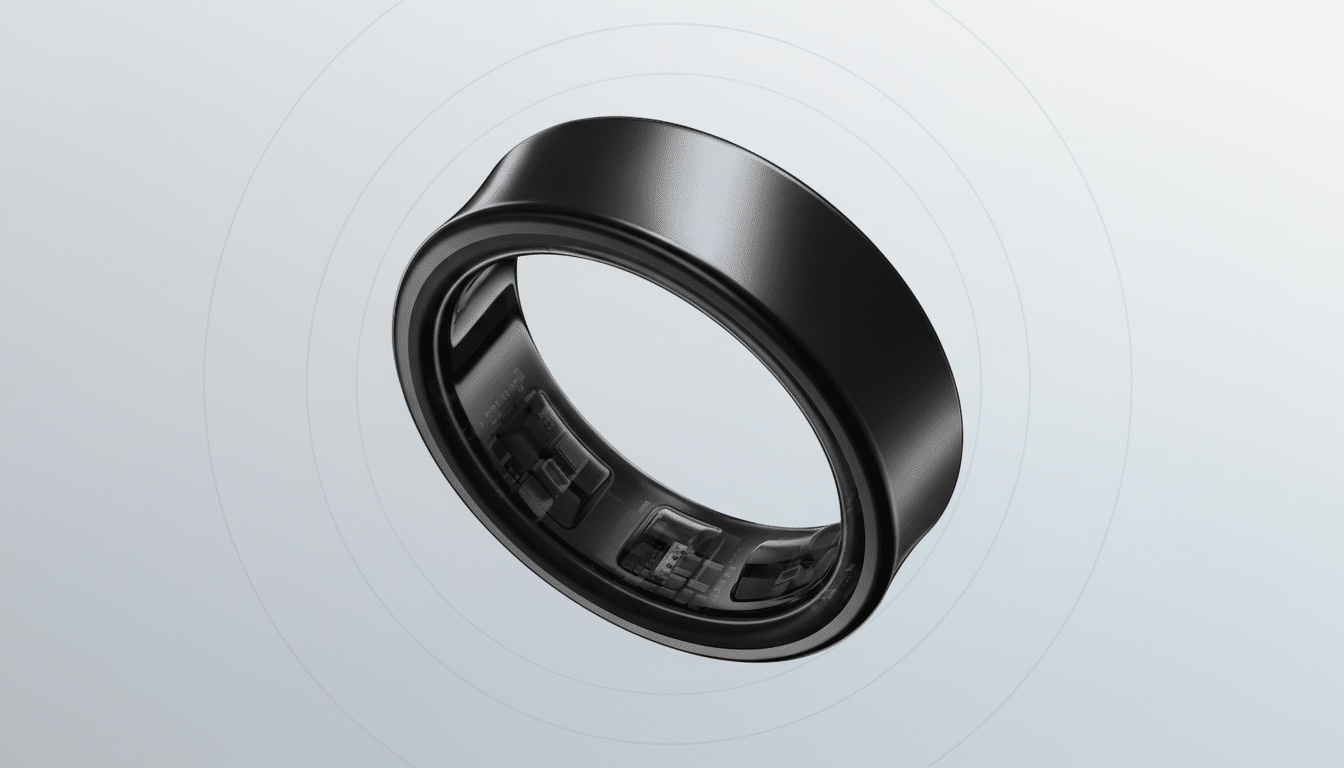
Based on a review completed by Samsung — and confirmed by an independent group of experts — the incident resulted from a fracture in molding inside the ring. That structural breakdown enabled the inner casing to release and then exert pressure, yielding signs of battery ballooning. Samsung says the cell and protection circuitry were tested within specifications, which it believes rules out a systemic battery flaw.
How The Times Put Together the Investigation
Although Samsung did not release a full technical teardown, individuals knowledgeable about failure analysis for typical consumer electronics devices say such investigations typically involve non-destructive imaging (like X-ray or CT), impedance and capacity testing on the cell, and visual inspection for signs of enclosure stress marks or adhesive failures. Samsung’s own lab as well as an independent third-party team have both arrived at the same finding on the molding crack.
One remaining question is why the inner molding snapped in the first place. The company said in a statement that it could not “identify one single factor” as the cause, including hard impact, manufacturing deviation, or long-term stress. As an important aside, Samsung says there’s no evidence of a design-wide or battery-related safety issue inherent to the Galaxy Ring range, and there was no recall or service campaign instituted.
Why a crack in molding can look like battery swelling
Large enough to protect and support a collection of minute lithium-ion polymer cells — usually ranging between 14.5–21.5 mAh depending on ring size — smart rings cover tiny batteries with a hard case.
The shell can shift if an inner molding breaks, potentially revealing edges or clamping the finger. That “swelling” can feel sudden to a wearer, even if the cell itself hasn’t actually expanded.
Real battery swelling typically results from gas production within a cell, which is usually associated with overcharge, thermal stress, or mechanical damage. Today’s wearables utilize a variety of protections, ranging from battery management ICs to temperature sensors and enclosures that meet or are designed according to standards such as UL 1642 and IEC 62133. (Here the tests Samsung mentions show that the cell and protection circuitry did act as intended.)
What Galaxy Ring owners can do now to stay safe
For those who already own the Galaxy Ring, the results will be comforting: Samsung has ruled that this is an isolated structural failure and that it wasn’t a faulty battery. All of which is to say, best practices do not change for any wearable. If you observe any of the following, discontinue use immediately and contact support:
- Any splitting in the inner casing
- Abnormal heat dissipation
- Shape deformation
- Sudden acute pain during use or while it is charging
Advice from consumer safety groups such as the US Consumer Product Safety Commission is always to stop using wearables that exhibit any kind of damage or overheating.
It’s best to stay away from subjecting the rings to hard impacts, solvents, or extreme temperatures — and to follow the manufacturer’s cleaning and charging instructions.
Rings depend on their internal molding for both comfort and structure, so even small cracks can become big holes when they are subjected to the daily stress of grip strength, gym equipment, or repetitive motion.
Industry context and safety standards for smart rings
Smart rings are a fast-growing category, with products out from companies including Oura and Ultrahuman finally going mainstream. In the whole sector, manufacturers cram small batteries, antennas, and sensors in a hard frame that must endure constant skin contact and mechanical load. It’s a trade-off that makes the integrity of the enclosure just as crucial to overall battery performance as that of the cell itself.
Independent certification labs and standards bodies have worked to beef up testing for small-format lithium cells, such as those used in wearables, including electrical, thermal, and mechanical validation. Although companies generally don’t share full lab reports, most top-quality devices are subjected to a battery of tests that look at items such as charge protection, resistance against short circuits, and stress on the enclosure. Samsung’s dual-track investigation — internal and third-party — corresponds with those expectations, and it is likely to influence further assessments in future production runs.
The bottom line on Samsung’s Galaxy Ring battery scare
Samsung’s final word is clear: what happened to the widely publicized Galaxy Ring attached to @ZONEofTECH was not a battery issue but separation and discomfort created by internal molding that caused the cracking. With a parallel independent review also supporting that conclusion, the company is expressing confidence in the product’s battery safety. Users should still be vigilant — treat any visible damage or heat as signs to stop using a device — but at this time there is no indication of systemic risk or the need for widespread corrective action.
