


Samsung Display is exhibiting a foldable OLED that appears to eliminate what has been the most stubborn fault in folding phones: they all have this visible crease. Shown off to the public at CES, the prototype panel appears flat across its hinge line, hinting that it would represent a meaningful jump from today’s best foldables.
Restoring Confidence in the Fold: How Samsung’s Design Works
Whereas previous iterations depended heavily on hinge geometry, Samsung’s advance is happening beneath the screen. Industry reports indicate that this will utilise a laser-drilled metal display plate to spread stress through the substrate as it flexes, avoiding strain building up at a tight fold line. The result is a softer arc at the micro level, where creases tend to occur.
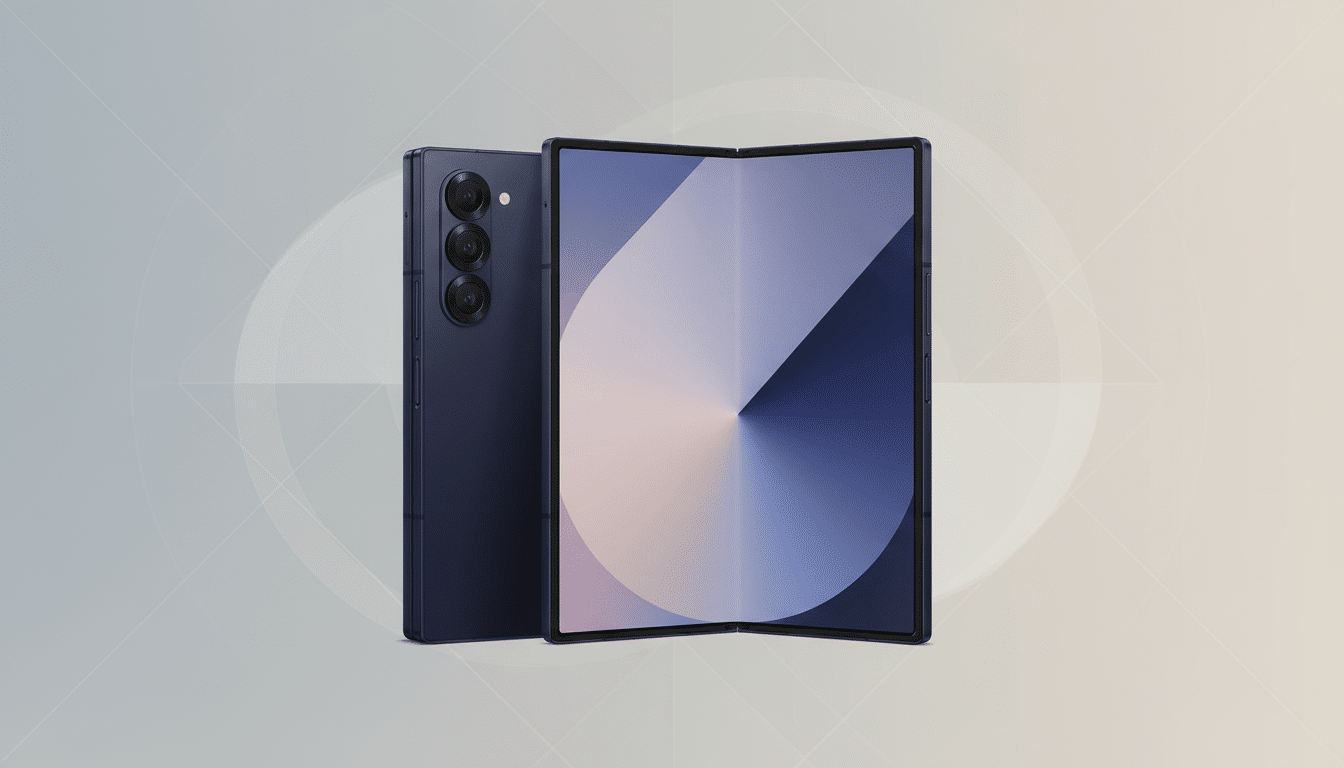
In a side-by-side “crease test” next to a current Galaxy Z Fold generation panel, the new OLED appeared noticeably cleaner, according to hands-on impressions from SamMobile and pictures posted by the reliable tipster Ice Universe. Samsung Display is promising “seamless text across the fold,” and early visuals seemed to support that boast: letters and UI widgets span the hinge without a hint of shadow or indentation.
That really dovetails with how foldable stacks are designed, technically. These days, for the sake of an IMM, protective films/adhesive layers, antenna coverage or wireless charging technology, along with a UTG, sit on top of a bunch of OLED junk that needs to be curved at a safe radius. With the help of a metal plate, which is believed to be patterned with laser micro-holes, Samsung has been able to stabilise the neutral plane of bending and minimise permanent deformation in the form of a crease by controlling stress.
What It Means for Future Devices and Product Lines
Samsung has not said which products will carry the panel, though the next Galaxy Z Fold seems like an obvious pick. And if this is production-ready, it would represent the most visible display upgrade in the line’s history, including the introduction of a gapless hinge.
The fallout goes beyond Samsung’s own product line. This metal plate design is reportedly in the running for Apple’s first foldable project, according to supply chain rumors. Apple has trodden more carefully entering the category, with analysts widely citing panel quality — specifically crease visibility and long-term reliability — as gating factors. A foldable iPhone with an almost invisible line down the middle would certainly raise the bar for the whole industry.
How It Compares With Rivals Using Different Hinge Designs
Competitors have pushed at the crease with “waterdrop” or “teardrop” hinges that increase the bending radius, as seen in devices from Oppo and Honor, among others. Those designs round the fold off, but most still exhibit a shadow or tactile ridge under some lighting. Samsung’s solution, meanwhile, goes after not only hinge mechanics but the substrate itself in order to possibly seal that one last gap in visual uniformity.
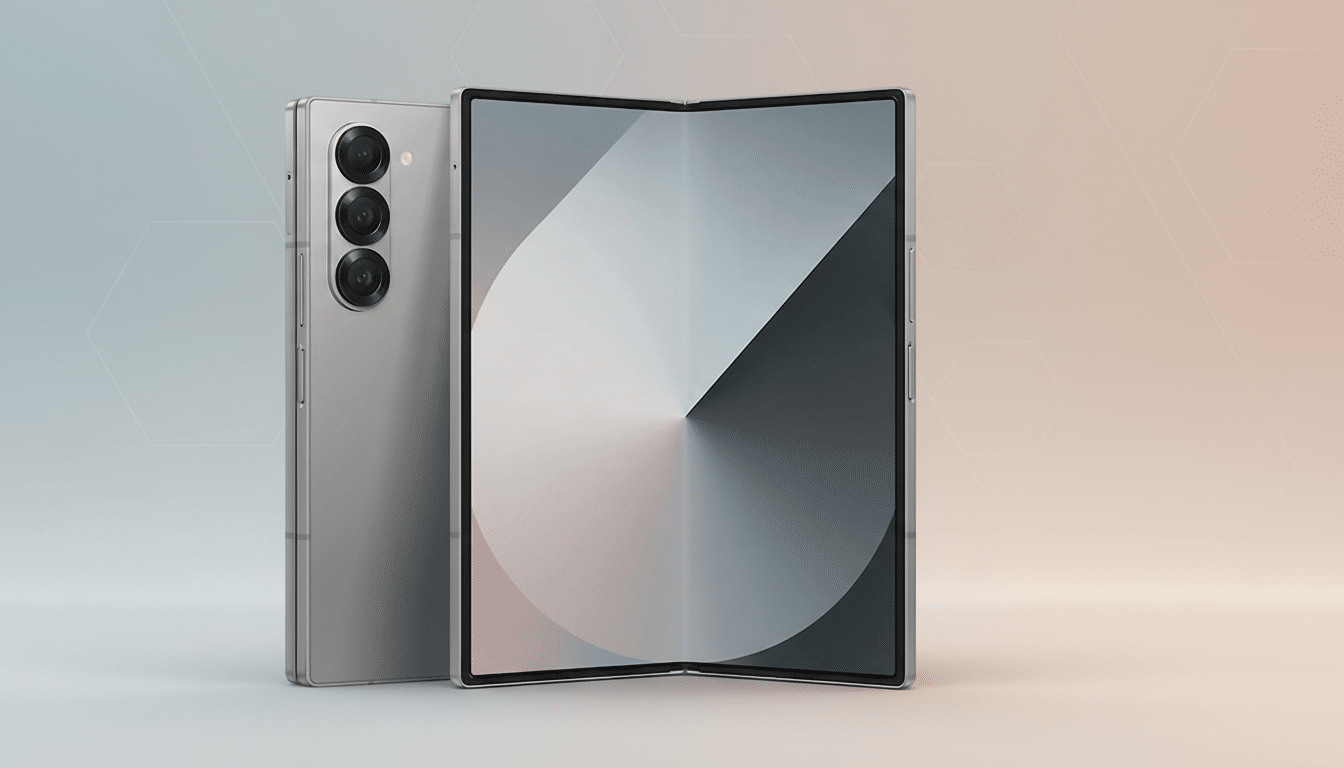
Claims around durability in the sector are already lofty. The OnePlus Open, for instance, received a TÜV Rheinland certificate on 1,000,000 folds and the implication of mechanical reliability it carries. The new Samsung Display panel will have to boast similar fold-cycle credentials without reintroducing any of those crease artifacts — no easy task when tweaking the stress profile on something you’re complicating from top to bottom.
Durability and Engineering Questions the Panel Must Answer
The other can of worms will be defeating the crease. Engineers will be poring over how bright the screen is consistently across the fold, possible “mura” patterns over time and scratch resistance of all those top layers. UTG would give a very glass-like feeling (at these thicknesses, it can also be softer than that), and including a fresh metal plate could alter the perceived hardness, weight, and overall thickness.
Thermal behavior is another variable. A metal plate may wick heat differently than polymer-based supports and affect OLED throttling and peak brightness at the hinge. None of these things are deal-breakers, but they will decide whether the wrinkle-free look translates to consistent, day-to-day performance.
Why the Crease Matters for Everyday Foldable Use
Analysts from firms like Display Supply Chain Consultants and Counterpoint Research have reported consistent growth in foldables overall, but also stress consumer worries around durability, display uniformity and price. The crease is where perception and performance meet — a daily reminder of the screen that folds. Getting rid of it would visibly help user satisfaction on reading, sketching, photo editing, and working in split-screen.
If this panel, in mass production, proves to be sturdy and reliable, it could be a tipping point. Foldables would be perceived as less of a trade-off and more as the way for phones to follow, and that change might lead to widespread adoption across both high-end Android devices and any potential foldable iPhone.
For now, the demo indicates that Samsung Display has cleared at least its most obvious obstacle in the industry. The next is getting it into consumers’ hands — and proving that a vanishing crease remains a vanishing crease in the long run of ownership.
