


Samsung has confirmed that the Galaxy S26 series will debut a “pixel-level” privacy feature designed to shield on-screen content in public, signaling a notable pivot toward visual security at the display level rather than relying solely on software redaction or add-on screen protectors.
In a company blog post, Samsung previewed granular controls that can obscure passwords, dim or mask sensitive portions of the display, and limit what prying eyes can see—potentially on an app-by-app basis or for notifications. While full details are still under wraps, the feature is expected to headline the Galaxy S26 reveal at the next Unpacked.
- What Samsung Actually Confirmed About Pixel-Level Privacy
- How Pixel-Level Privacy Could Work on Galaxy S26
- Why This Matters for Everyday Smartphone Privacy
- How It Stacks Up Against Rivals from Apple and Google
- Trade-offs and Open Questions About Privacy Display
- What to Watch Next Ahead of Galaxy S26 Unpacked
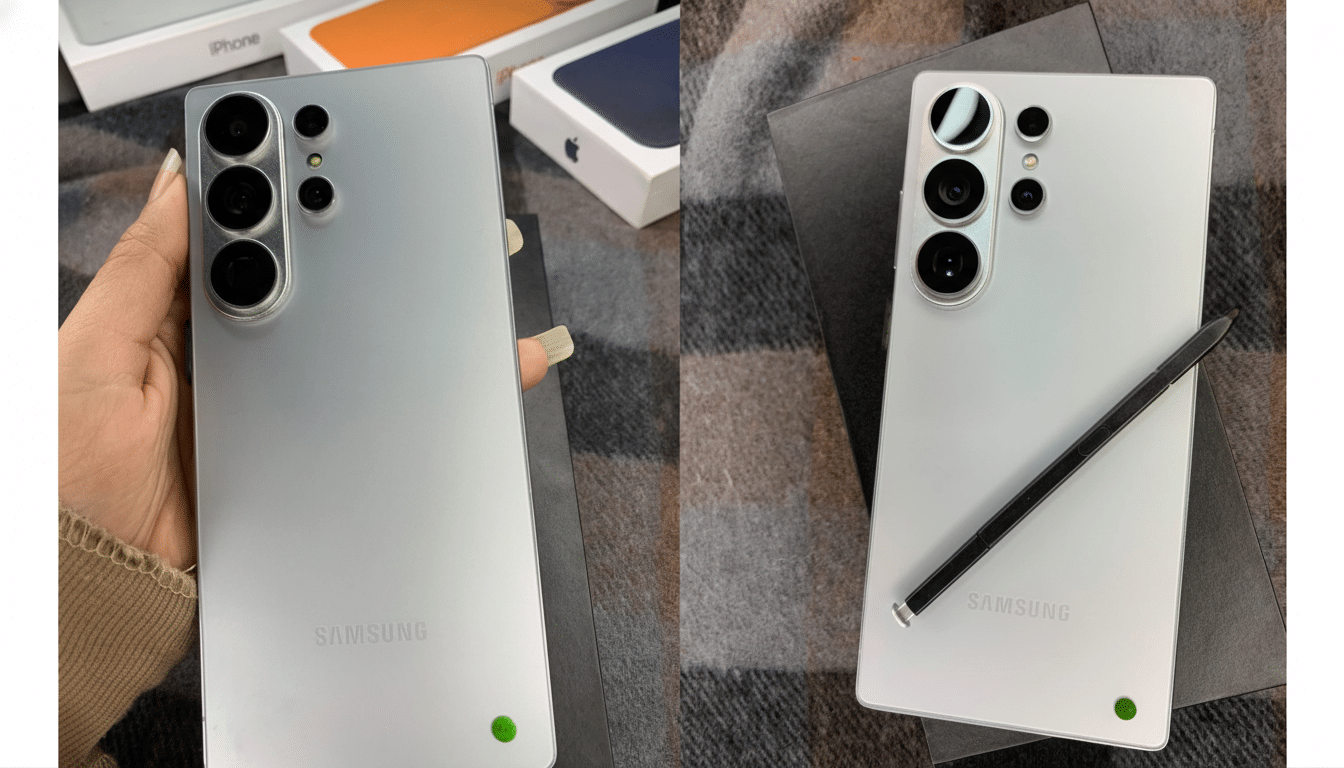
What Samsung Actually Confirmed About Pixel-Level Privacy
Samsung’s description centers on display behavior “at a pixel level,” which suggests the device can selectively alter how individual pixels render to protect content when you’re entering credentials or viewing private messages in crowded places. The company hinted at granular toggles—think per-app privacy zones and notification blurring—rather than a single, blunt on/off switch.
This aligns with recent industry chatter about a “Privacy Display” capability coming to the S26 lineup. If they are one and the same, Samsung’s emphasis on per-pixel control implies tighter integration with the display pipeline than traditional software masks, potentially making the protection harder to bypass and more seamless in use.
How Pixel-Level Privacy Could Work on Galaxy S26
There are two likely approaches. The first is angular privacy: dynamically narrowing viewing angles by manipulating the panel’s optics or polarization so text remains legible head-on but fades for off-axis viewers—similar in spirit to enterprise laptop tech like HP’s Sure View, but tuned for OLED smartphone panels. The second is spatial privacy: selectively dimming, blurring, or desaturating sensitive UI regions at the subpixel level, using the GPU and display driver to render decoy or obscured output unless you’re the primary viewer.
Either path would benefit from a hardware-backed trust chain. Samsung’s Knox platform—already validated by certifications such as NIAP Common Criteria and FIPS for cryptographic modules—could enforce policy, while the display engine executes the per-pixel rendering. Done right, it becomes more than a cosmetic mask; it’s a security control anchored to the device’s secure environment.
Why This Matters for Everyday Smartphone Privacy
“Visual hacking” is a real and underappreciated threat. A Ponemon Institute study on visual hacking found that observers were successful in extracting sensitive information in 91% of test attempts within office settings. Phones are even more exposed, because we use them everywhere—on trains, in cafés, at events—often to access banking apps, multifactor codes, and work files.
With Android powering the majority of smartphones globally, according to StatCounter, any large-scale deployment of visual privacy tech can materially reduce casual data leakage. It also dovetails with guidance from digital rights groups like the Electronic Frontier Foundation, which consistently recommends mitigation for shoulder surfing alongside PIN hygiene and notification redaction.
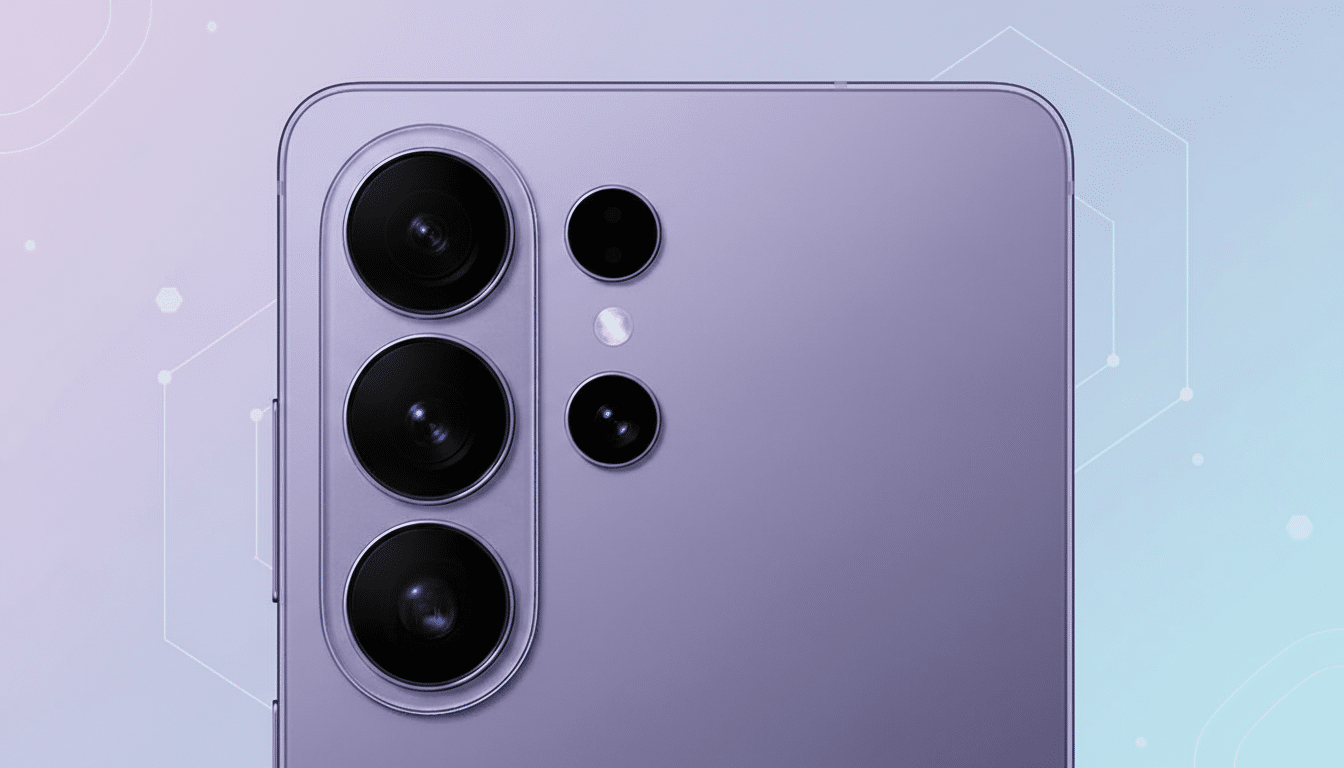
How It Stacks Up Against Rivals from Apple and Google
Apple and Google have prioritized on-device privacy and notifications control, but neither has broadly shipped a built-in electronic privacy display on phones. iOS and Android can hide previews, require Face ID or fingerprint to expand alerts, and lock down sensitive areas, yet the screen itself remains fully readable to anyone in your periphery without a physical privacy filter.
If Samsung’s approach truly modulates visibility at the pixel level, the Galaxy S26 could become one of the first mainstream phones to embed electronic visual privacy as a core display feature—moving a capability common in enterprise laptops into the smartphone era.
Trade-offs and Open Questions About Privacy Display
Any angular or spatial filtering typically impacts brightness, color accuracy, or battery life. OLED privacy modes might require extra power to render masks or compensate for luminance losses, and narrow viewing angles could affect content sharing when you actually want others to see the screen. Accessibility is another factor: users sensitive to PWM flicker or reliant on higher contrast modes will expect careful tuning.
Policy scope matters, too. Will pixel-level privacy be configurable per app, per screen, and per context (for example, only when you’re in public transit)? Will it integrate with biometrics to disable protection instantly when the owner looks away or someone else peers in, using attention detection? And will any of it reach older Galaxy models via software, or is special display hardware required, making it exclusive to the S26 generation?
What to Watch Next Ahead of Galaxy S26 Unpacked
Expect Samsung to showcase live demos that illustrate viewing-angle control and region-based masking, along with enterprise tie-ins via Knox and mobile device management policies. Pricing and lineup coverage will be telling: if all S26 variants get the feature, it signals a new baseline for smartphone privacy; if it’s limited to premium models, adoption may be slower.
The bottom line is clear: by bringing pixel-level control to privacy, Samsung is attempting to make shoulder surfing a solvable problem at the display itself. If the execution matches the promise, Galaxy S26 owners could gain a powerful, always-available layer of on-screen protection without the hassle of physical filters or clumsy software workarounds.
