


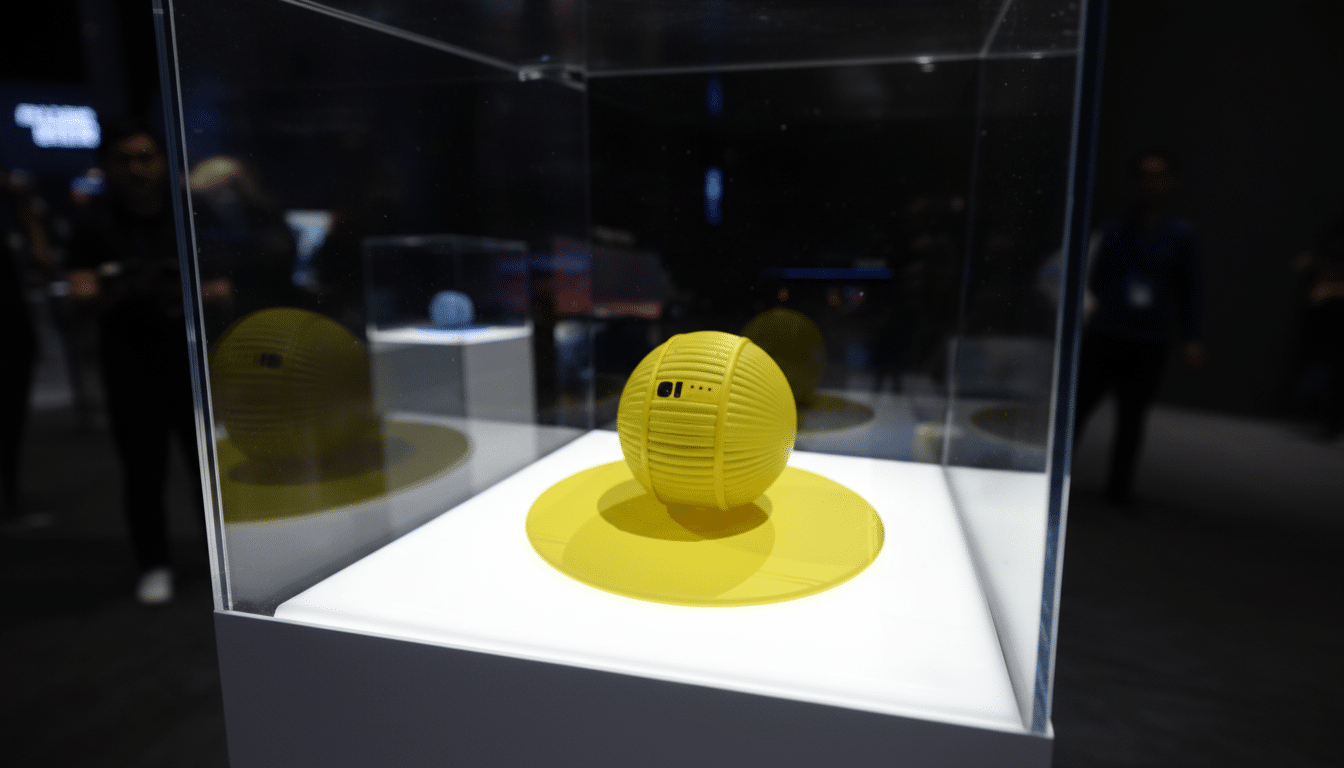
Samsung’s rollable companion robot Ballie is still alive; however, shoppers will have to wait a little longer. The company has contacted TechRadar to confirm that Ballie is not canceled, and the team behind it “continues to refine and perfect the technology,” meaning another setback with no new release window. Samsung’s US site still tantalizes with sign-ups and a “see you soon” message, but there’s no timeline yet for when the bot will actually roll into people’s homes.
The new pause comes on the heels of a previously missed window and is the latest chapter in the stop-start saga that has been Samsung’s most ambitious home robot to date. The repeated message screams through: Ballie is near but not ready.

Why Ballie Keeps Slipping Amid Development Delays
Samsung said its news release is a product of continued engineering and experience refinement — classic challenges for consumer robots that seek to balance autonomy, safety, and reliability. A rolling robot has to know how to cope with rugs, thresholds, pets, toys on the floor, and a swiftly changing light situation — while also being as unobtrusive, safe, and helpful as possible. Tack on a built-in projector, voice commands, and smart home orchestration, and the integration load grows heavier.
There also seems to be a tactical component. Samsung is reportedly re-evaluating Ballie’s market positioning just one month after its debut, according to The Korea Times, following concerns about the price. That fits the larger category: full-featured home robots have been expensive, and any product priced above mainstream smart speakers or robot vacuum cleaners would face a challenging road to mass adoption. Even Amazon’s Astro took the cautious road and is leaning toward business use before a broad consumer rollout.
In other words, Samsung probably doesn’t want Ballie’s launch to be seen as a proving moment for the category — not an expensive public beta test. That means fine-tuning performance, reliability, and value before it even ships.
What Ballie Promises as a Mobile Home Companion
Ballie is conceptualized as a mobile AI companion that roams your home, obeys commands, and bridges connected devices. Samsung said that it would employ Google’s Gemini for conversational intelligence, which presumably will allow natural prompts, like “dim the living room lights,” “start the robot vacuum,” or “what’s on my schedule.”
Its killer feature is a small projector that can cast information or entertainment on the wall or floor — say, quick recipe steps in the kitchen, yoga poses in the living room, or even bedtime stories across a bedroom ceiling. The travel-friendly format of Ballie also transforms it into a potential mobile sentry: in case you’re away, it might sweep through rooms, nudge smart sensors, and send a heads-up if things look askew.
These promises depend on strong on-device vision and privacy safeguards. Buyers will be looking for clear choices about local processing, camera and mic muting, and transparent data handling — places where established smart home brands have grown used to being upfront.
A Challenging Market for Home Robots and Adoption
Consumer robotics has momentum, but mainly in single-task products such as vacuums and mops. General-purpose home robots still have not found the breakout use case that would justify premium pricing. Households have shown that they will take up robots the fastest when those robots deliver obvious time savings on a daily basis; anything that feels too much like a novelty has a harder time taking hold.
Ballie’s best chance of doing so would be as a helpful, omnipresent assistant — more akin to the mobile smart display that intelligently responds to context. And if it’s really just duplicating capabilities that phones, smart speakers, and stationary hubs are providing already, buyers will wonder why they should pay extra for mobility.
Competitively, Samsung isn’t alone. LG has demonstrated a similar AI home agent, while startups keep experimenting with rolling or bipedal helpers. But the companies capturing share now are those addressing narrow jobs with clear ROI. That’s the bar Ballie will need to leap at launch.
What to Watch Next as Ballie Moves Toward Launch
So far, there are no preorders — just a waiting list. If you are, watch for three things when the news lands:
- Price (and whether it cuts early expectations)
- Battery life and charging behavior (can it roam for hours and reliably dock itself again?)
- Smart home breadth (how well does it work outside Samsung’s ecosystem?)
Also look for privacy promises and demonstration of real-life autonomy on screen in messy, pet-filled homes — not just staged rooms. Objective testing by trusted labs and tech reviewers will matter more than slick videos.
With the hardware, AI partnerships, and distribution of a company like Samsung, Ballie could be more than just a concept. The extra time indicates the company realizes the first impression must strike home. Ballie isn’t canceled — it’s marinating. Whether the waiting is worth it will depend on day-one execution.
