


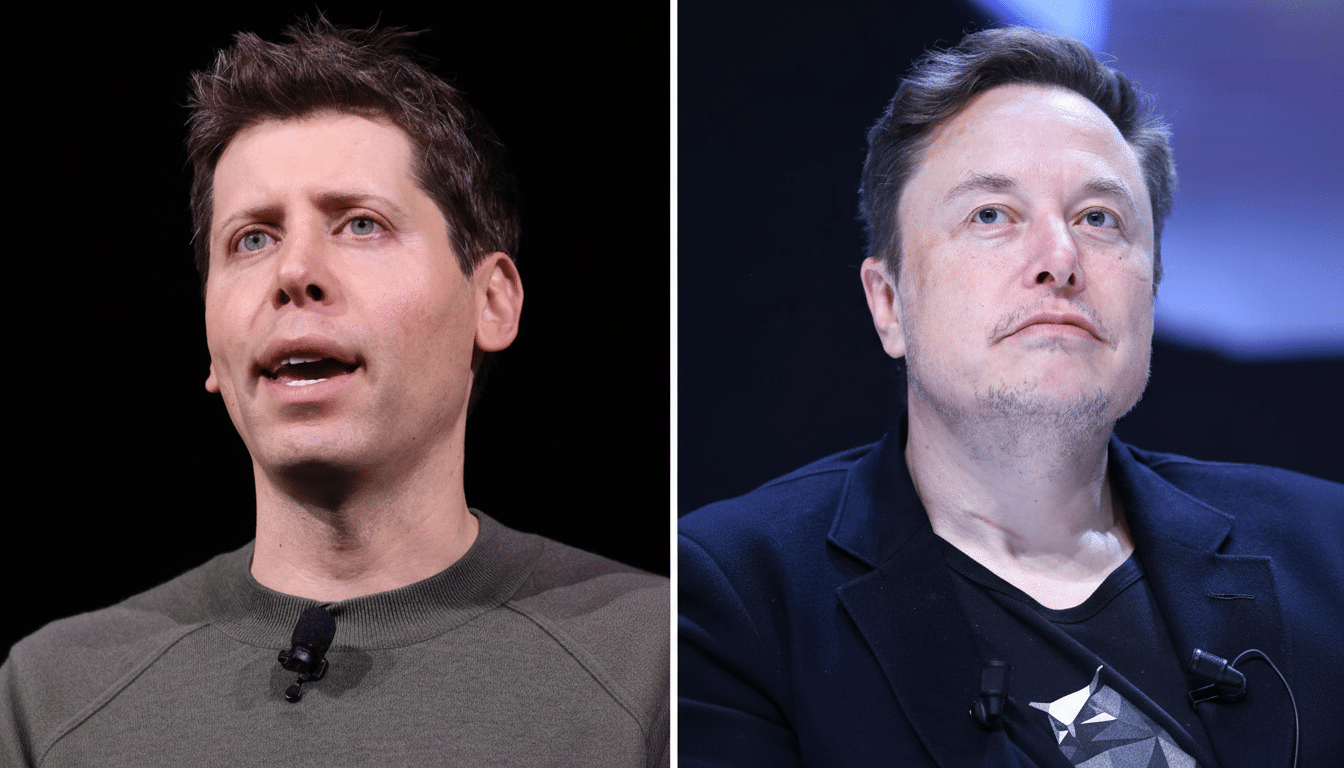
OpenAI chief eXecutive Sam Altman intensified his feud with Elon Musk with a fresh volley of posts on X, seizing on newly public court filings to question Musk’s litigation tactics and hint at a heated deposition to come. The exchange underscores a rivalry that blends ideology, control over the future of artificial intelligence, and the raw politics of Silicon Valley power.
Altman Amplifies Discovery Dispute in Musk Legal Fight
The latest flare-up followed filings in lawsuits tied to Musk’s grievances with OpenAI and a separate action involving Apple. OpenAI’s chief strategy officer, Jason Kwon, asserted in materials shared publicly that Musk and his AI startup xAI turned over scant internal documentation during discovery, relying heavily on communications that auto-delete. Altman amplified those claims on X, echoing the now-viral “Concerning!” refrain that has trailed Musk’s own posts.
While courts will ultimately decide whether anything was improperly withheld, the allegation cuts to a sensitive legal norm: companies are expected to preserve relevant records when litigation is reasonably anticipated. Spoliation—destroying or failing to retain evidence—can trigger sanctions. Corporate litigators note that even encrypted or ephemeral messaging apps must be managed with robust retention policies once a legal hold is in place.
Altman then raised the temperature further, signaling he looks forward to questioning Musk under oath in the coming months—casting the prospect as a personal highlight. The taunt suggests OpenAI’s team believes a deposition could surface unflattering details about xAI’s strategy, funding, or communications practices.
A Clash Over Mission and Control in AI Leadership
Behind the sniping is a structural split. Musk has attacked OpenAI’s move from a pure nonprofit to a capped-profit model, arguing it strayed from its original public-interest mission. OpenAI counters that the restructuring enables the capital intensity needed to build frontier models safely, and has dismissed Musk’s suits as meritless. The dispute is freighted with history: Musk co-founded OpenAI, stepped away from the board years later, and has since launched xAI to compete directly.
The stakes are not theoretical. OpenAI’s systems power a vast developer ecosystem, and the company has cited well over 100 million weekly users across its products and partners. xAI, for its part, has moved quickly—releasing Grok, integrating with X, and raising multibillion-dollar financing rounds backed by prominent investors. Apple’s collaboration with AI model providers has further complicated the competitive map, drawing regulatory, developer, and consumer scrutiny to how Big Tech selects and governs foundational models.
Adding intrigue, industry chatter last year centered on a multibillion-dollar bid linked to Musk’s camp for control of OpenAI—an overture that never materialized. Even without a deal, the episode signaled how ferociously valuable and strategically consequential leading AI assets have become, with valuations, compute access, and talent pipelines moving in lockstep.
Public Barbs with Real-World Echoes Across Tech
Altman’s latest posts build on weeks of sparring. After Musk claimed ChatGPT could harm users’ mental health, Altman pushed back, calling out inconsistency and pointing to the difficulty of balancing safety with access at scale. As a counterexample, he noted how Tesla’s Autopilot has faced its own scrutiny—an allusion to federal probes and safety analyses that have examined dozens of incidents over multiple years. The point was less about tallying fault than underscoring that complex technologies invite complex oversight, regardless of who builds them.
For OpenAI, public messaging doubles as risk management. The company’s boardroom shock a while back—when Altman was briefly ousted before returning—reshaped its governance, investor relations, and communications posture. The current legal battles, and the prospect of depositions, will test whether that recalibration holds under pressure.
Why the Posts Matter for AI Lawsuits and Strategy
Social media theatrics aside, the discovery fight could influence how AI startups handle internal comms, and whether courts set clearer expectations for preserving chats, DMs, and collaborative tool logs. For companies building frontier models, the cost of inadequate controls is rising fast: potential legal penalties, reputational harm, and the risk of losing narrative control to rivals.
More immediately, a Musk deposition—if it proceeds—would be a high-stakes moment. It could illuminate xAI’s product roadmap, its ties to X, and the business rationale behind its data and safety practices. Conversely, OpenAI could face tough questions about governance changes, revenue motives, and how it allocates compute across research and commercial needs.
The next milestones to watch:
- Any court orders around evidence preservation
- Scheduling of depositions
- Further public filings from both sides
Until then, expect the feud to keep playing out where both leaders are most comfortable—online, in real time, with the broader AI industry watching closely.
