


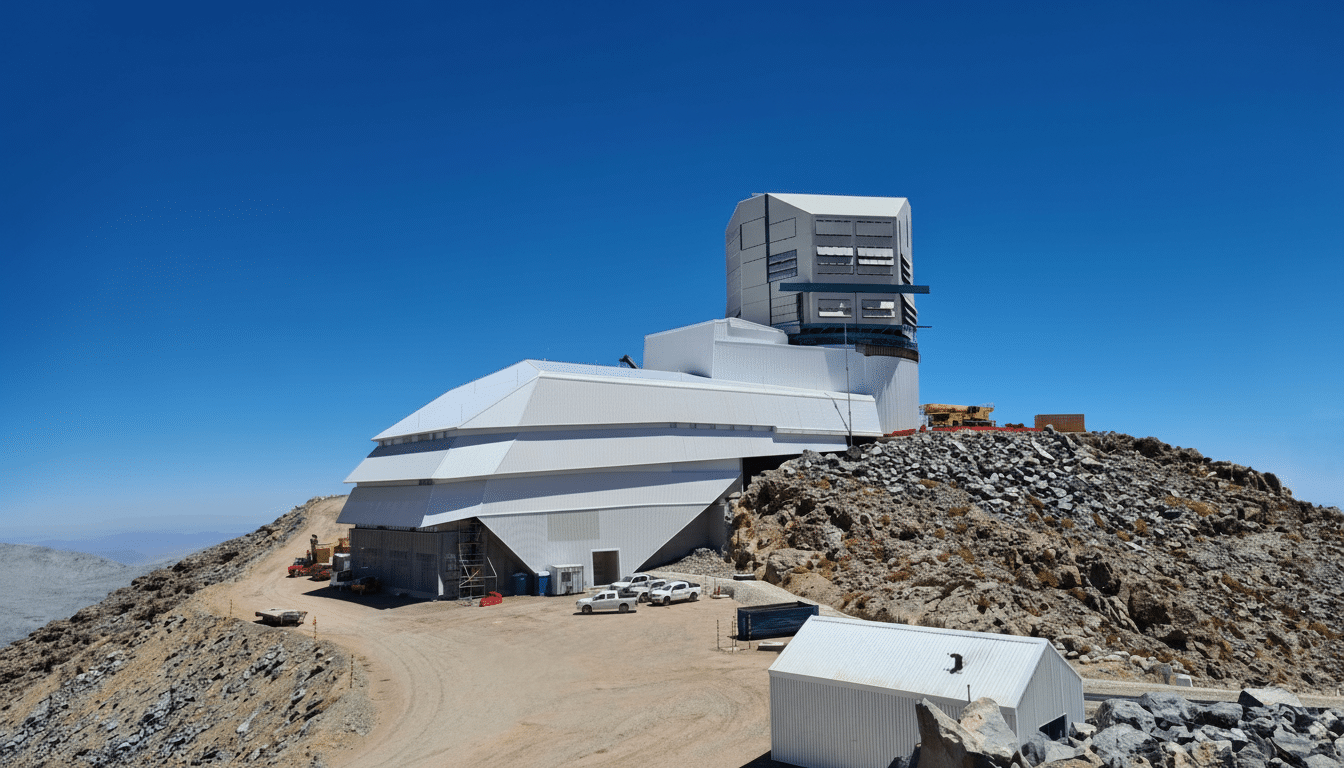
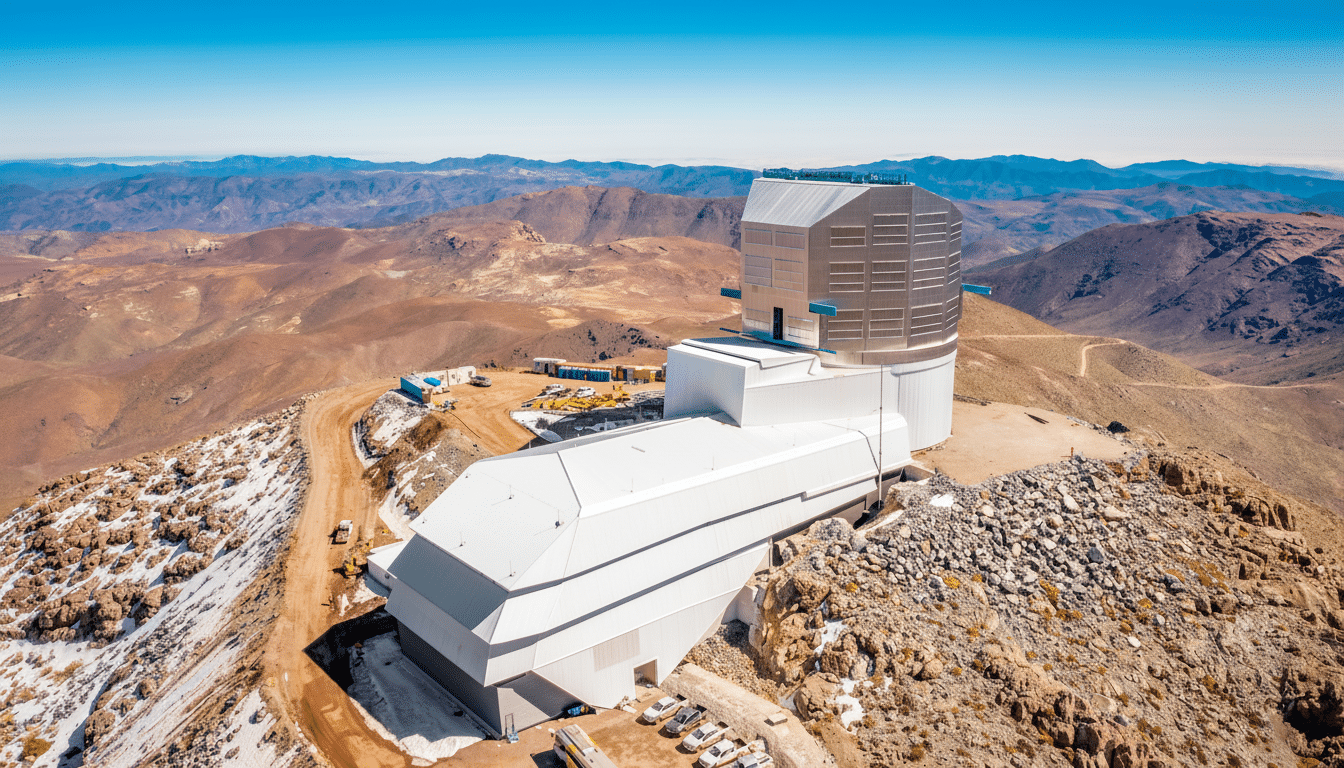
A newly discovered space rock is rotating at an incredible rate that has set a record among known large asteroids and completes its full rotation in less than two minutes. The object, known as 2025 MN45 and about 710 meters wide — or the equivalent of about eight football fields across — was discovered in early test observations by the Vera C. Rubin Observatory in Chile, and it has scientists reconsidering the limits of how big an asteroid can grow while still holding together as it spins rapidly.
A Spin That Takes Minutes, Not Hours, Defies Limits
Such an asteroid of that size had been thought to get stuck at a kind of cosmic speed limit. The decades-old “spin barrier” held that anything above a few hundred meters composed of loose rubble would tear itself apart if it rotated in less than about two hours. But 2025 MN45 is rotating at a rate of over 60 times that threshold, which suggests that it’s not a loosely bound pile of rubble but an intact rock with substantial internal coherence, probably monolithic in nature.
At the equator of this world, surface material is whipping around at tens of miles per hour — quick enough that a person standing there would feel the ground racing beneath his feet. For a body of this size to hold together while spinning so fast, scientists suspect it must be a compact chunk broken off from the core of what was once an even larger asteroid that lost a piece in some long-ago collision.
Discovery From Rubin’s Early Test Run Reveals Record Spin
What’s more remarkable is that Rubin hasn’t even begun its full survey yet. In the course of a brief commissioning campaign, the observatory’s 3.2‑gigapixel camera imaged hundreds of thousands of objects in the southern sky. By following small shifts in brightness — or light curves — between snapshots, astronomers derived rotation periods and surface hints for clouds of dim objects.
In only seven nights of data, the team was able to uncover more than 2,100 asteroids that were previously unknown and measured accurate spin rates for 76 of them. Nineteen others had orbits that lasted longer than the classical cut-off of two hours, among them three, including 2025 MN45, which spun in under five minutes. The findings, which are published in The Astrophysical Journal Letters and led by the members of the Rubin Observatory science collaboration, demonstrate the observatory’s ability to uncover populations that had been inaccessible by previous surveys.
Challenging the Spin Barrier and Asteroid Cohesion
Breaking the barrier is more than just a novelty: It raises difficult questions about asteroid physics. If so many large bodies are spinning that fast, then gravity can’t possibly be all there is. Cohesion in the regolith, interlocking of fractured boulders like rebar, or even metal content may be keeping these objects from being shattered by centrifugal force. The YORP effect — a slight torque from absorbed and re-emitted sunlight — can gradually ramp up spin over millions of years, but to be spinning that fast, with periods under five minutes at this size, would require exceptionally sturdy material or else an event in the recent past that effectively reset the object’s structure and rotation.
The Rubin early sample suggests that fast rotators are overrepresented in the main system, too. And that could in turn transform models of collisional evolution, internal make-up, and the pathways through which primordial building blocks of the solar system are transformed into the myriad asteroids seen today.
Why This Matters Beyond the Record for Asteroids
Fast-spinning asteroids are perfect natural laboratories for the study of how rocks and dust behave in low gravity. Unmoored material and equatorial ridges, or even where small moons are born — the kind of behavior exhibited by smaller objects like asteroid 2001 CC21, and that NASA’s OSIRIS-REx and JAXA’s Hayabusa2 missions have estimated from their readings. Knowing such dynamics also informs planetary defense strategies; depending on an asteroid’s internal cohesion and spin state, says Michel, it could respond to a kinetic impact either like a solid billiard ball or a “spinning top” — a distinction highlighted by NASA’s recent DART test on the Dimorphos system.
For planetary gurus, the payoffs are even more wide-ranging. To the above heritage of new knowledge we should now add spin rates, shapes, and surface texturation, as these too will record a history of heating and collisions and the effects of radiation forces over billions of years. With 2025 MN45, and its ultra-fast friends, astronomers have a new point of view on the transition between fragile rubble piles to solid rock — a crucial divide for re-creating how the early solar system came together.
What Rubin Will Unveil Next in the LSST Era
Rubin’s Legacy Survey of Space and Time (LSST) is intended to scan the sky repeatedly, generating a moving archive of objects that change over time. During its survey, the project should catalog millions of asteroids, including many in a large though previously not fully represented population in the far outer main belt. With that statistical power, scientists can take stock of just how common the ultraspeedy rotators actually are, look for even speedier twirlers, and flag anomalies like tumblers that rock and wobble instead of swooping in smooth circles.
Overseen by international partners, including NOIRLab, and with support from agencies that include the National Science Foundation and the Department of Energy, Rubin is only now beginning to reveal what it can do. The record that 2025 MN45 is poised to break probably will not last long — and that’s just the way astronomers like it. Each new fast rotator dug up by that telescope will help refine the physics of small worlds and illuminate how the solar system built itself from dust.
