


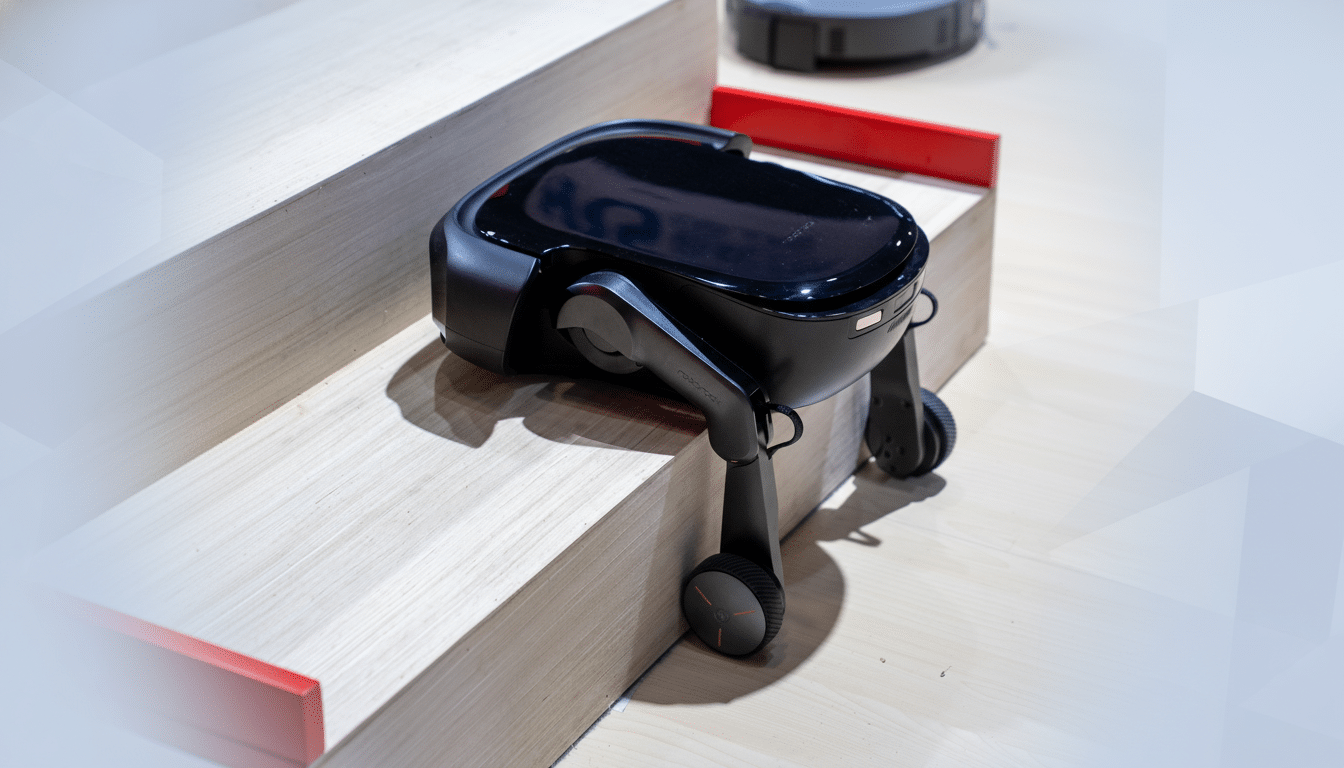
At CES, a robot vacuum finally did the one job every other bot avoids. The cleaner design went with a legged system, with Roborock’s Saros Rover demonstrating climbing a set of stairs and continuing to clean; these things are really coming along now, turning that old “someday” demo into something you could actually implement. The company has not yet disclosed price or timing, but on the show floor the prototype felt like a product, not a lab experiment.
How the Saros Rover climbs stairs and cleans each step
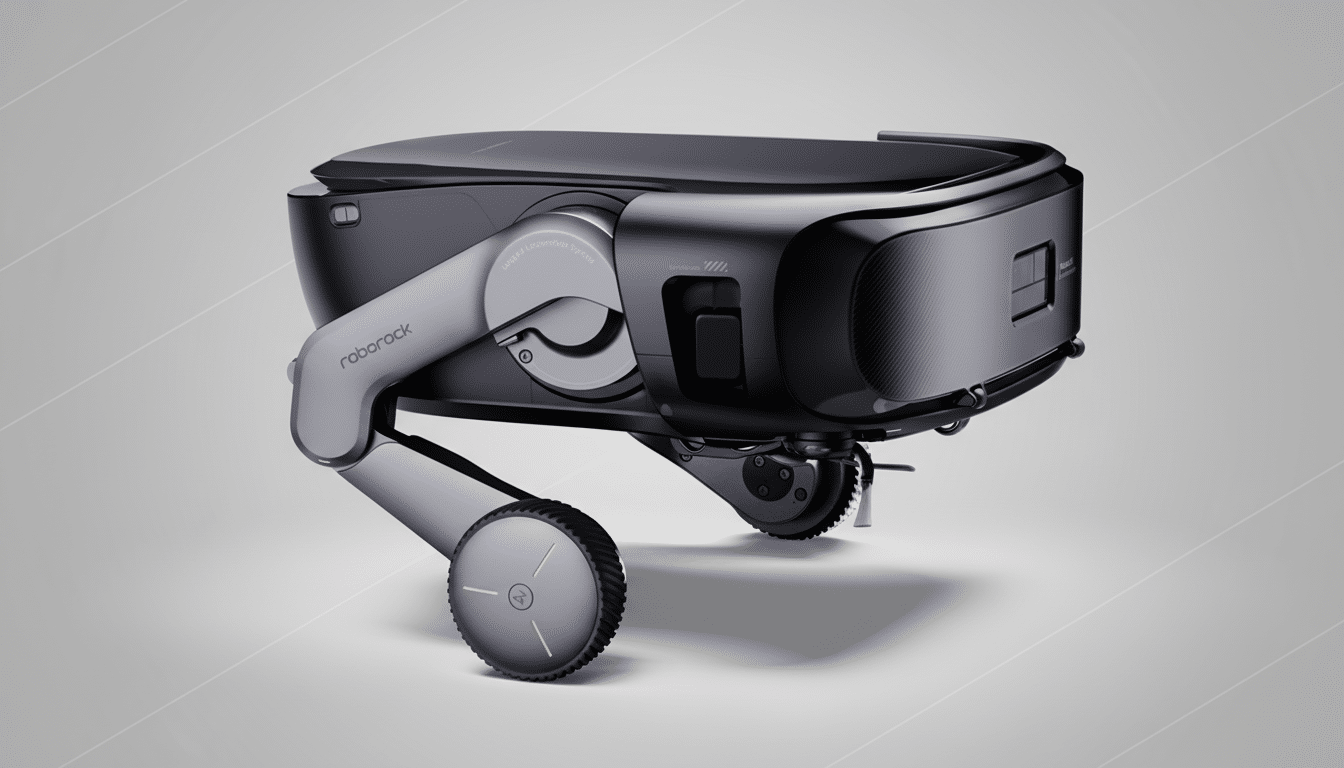
Instead of conventional wheels, the Saros Rover has articulated wheel-legs that lift, bend, and brace. On steps, the bot plants a lower leg for stability, shifts its center of gravity, and slides its cleaning head along the run — and repeats this procedure. The movement resembles that of a cautious hiker using walking sticks, though the cleaner continues to keep suction and debris-pickup strength as it does so.
- How the Saros Rover climbs stairs and cleans each step
- Why true stair-cleaning matters for home robot vacuums
- The technology and sensing that make stair cleaning work
- Early caveats and safety concerns for real-world homes
- How a stair-climbing robot vacuum could reshape the market
- What reviewers will test next on the Saros Rover prototype
In a controlled CES demo, the Rover turned at landings, traversed a steep ramp, stopped partway down to demonstrate its balance-control skills, and even hopped over a small threshold. That’s all well and good if a robot can’t clean while it’s moving — an unfortunate restriction — but the braced approach kept the brush and intake path firmly planted on the stair rather than hanging out over an edge.
Why true stair-cleaning matters for home robot vacuums
Robot vacuums are primitive on one level. The height that standard consumer (in-home) models handle is a maximum of 15–20 mm, and they have cliff sensors that prevent them from going over the edge at the top of stairs. (That leaves one of the grimiest hot spots — stairs — squarely in the manual category.)
There is definitely a market for a true stair-capable cleaner. Roughly half of all new single-family homes in the United States are two stories, and many feature carpeted or irregular stairs, according to an analysis by the National Association of Home Builders using Census data. Typical residential risers measure 7 to 8 inches in height, according to the International Residential Code — setting the physical hurdle for any stair-climbing vacuum to repeatedly navigate safely.
Other efforts have sidestepped the issue. At recent trade shows, Eufy’s Marswalker and a Dreame concept relied on stand-alone vacuum-carrying rovers or lifts to transport a vacuum up and down steps. None of those rigs clean during the climb, though. What users really wanted was for the Saros Rover to be able to vacuum and scrub every step it makes as it climbs.
The technology and sensing that make stair cleaning work
Roborock says the Rover employs motion sensors combined with AI-powered 3D spatial perception to recognize edges, overhangs, and complex geometry. That, in practical terms, means real-time mapping (think SLAM), obstacle classification (cords vs. risers vs. landings), and gait planning that keeps the cleaning head level while the chassis contorts beneath it.
On flat ground, legged locomotion is inherently less energy-efficient than wheels — that trade-off has been shown for years by robotics work at places such as Carnegie Mellon — so battery management will be critical. An effective design will conserve power for climbing, reduce the amount of time it “balances” at idle, and maintain the brushroll in use without taxing the unit. Debris containment is important, too: Dustbins should be baffled so that debris doesn’t slosh around or backflow when the chassis tilts on a curb.
Early caveats and safety concerns for real-world homes
And look: controlled demos are not your house. Real homes add tight winders, nosings of varying depths, high-pile stair runners, and loose cords to the equation. That visiting ailing astronaut is always whacking the Rover’s bracing into things — and doing so without leaving a paint strip to go scrape off or chewing away chunks from carpet edges, let alone slipping on polished wood.
Safety isn’t just the absence of a fall. A consumer-ready version will require sturdy edge detection, pinch-point protection for curious pets and small fingers, and fail-safes that stop movement if one leg loses grip. Both scenarios will be subject to review by independent testing bodies and standards groups before any broad release.
How a stair-climbing robot vacuum could reshape the market
Legged mobility might be the biggest departure in floor care since the advent of auto-empty docks. It cuts the need to buy several robots for multiple floors and covers an area most bots never reach. The International Federation of Robotics has noted continued explosive growth in service robots, and home cleaning is one of the top categories — stair-capable designs broaden that addressable audience even more.
The company displayed conventional and developmental models next to the Rover, such as high-suction systems and adjustable chassis systems for deep carpet — a sign that it knows wheel-based bots actually have the best run times and simplicity on flat floors. Watch the stair-climbing tech add a premium at first, just like auto-empty docks did before their prices dropped.
What reviewers will test next on the Saros Rover prototype
And when this lands in labs and real homes, the must-pass list is obvious:
- Uniform step-to-step cleaning on wood, tile, and carpeted stairs
- Safe descents without scuffing risers
- Accurate mapping of a spiral or curved staircase
- Reliable cord recognition
- Not too noisy
- Predictable battery life
Maintenance will be a factor as well — more joints and actuators lead to more parts to clean and potentially replace.
For the moment, the Saros Rover is that odd CES favorite that solves a painfully obvious problem with an equally obvious payoff. If the production model is like the demo — climb, clean, repeat — it could drive a stake through the heart of that single-floor destiny and finally get your staircase on the robot’s to-do list.
