


Rivian is now plunging fully into the autonomous driving competition, announcing a homegrown compute platform, a lidar-forward sensor suite, and roadmaps that range from hands-free assistance to the possibility of running its own robotaxi network. The plan is a strategic pivot from incremental driver aids to layering autonomy on top, intertwined with scaling across personal vehicles, not to commercial ride-hailing.
A Bigger Bet on Assisted Driving Across North America
The company is rolling out the hands-free capabilities over more than 3.5 million miles of mapped roads in the United States and Canada, beginning with highways and a gradual expansion to marked surface streets. Dubbed Universal Hands-Free, the system can be bought once for $2,500 or subscribed to for $49.99 a month — putting Rivian’s pricing on par with what the market has demonstrated mainstream customers will pay for advanced driver assistance.
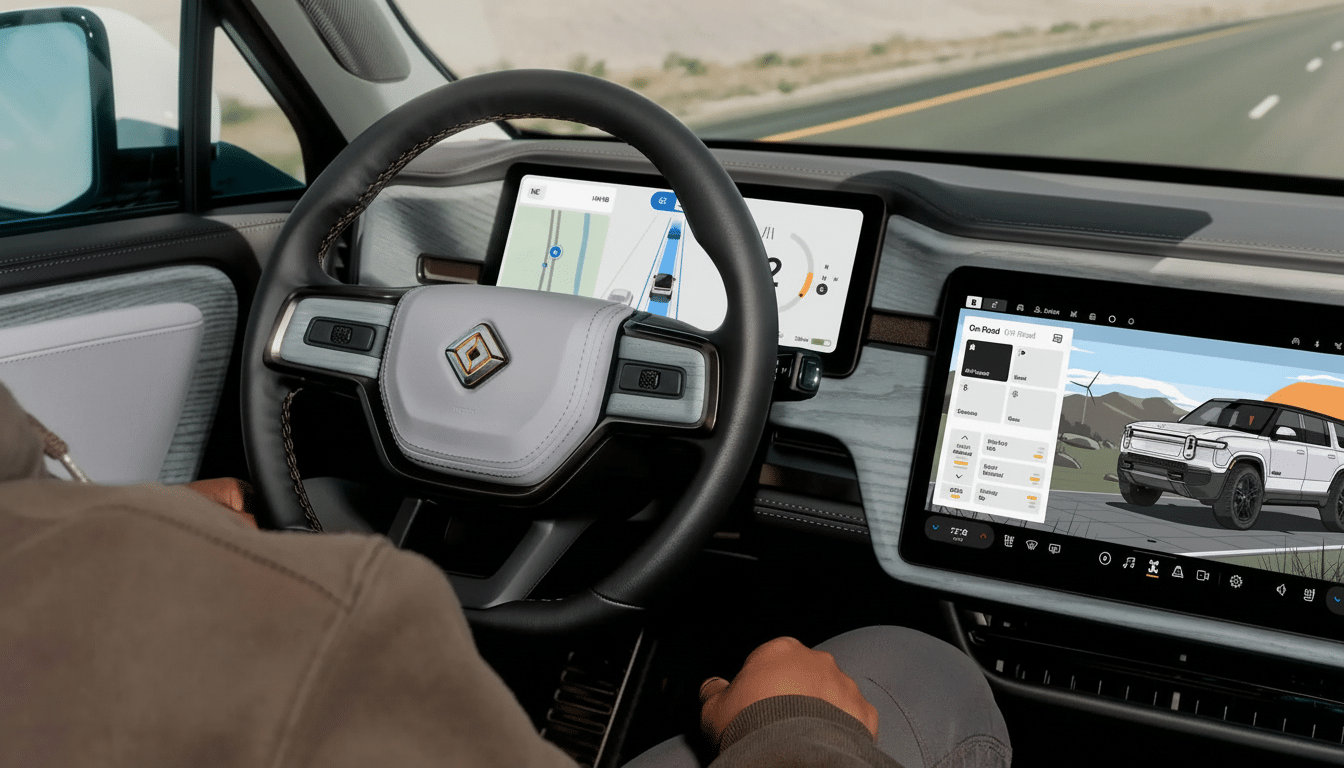
Rivian’s pitch isn’t just about lane-centering on the freeways. The executives described real point-to-point navigation in which a driver enters the destination and then lets the vehicle do most of the driving. From there, the company plans to add “eyes-off” capability that relies on strong driver monitoring, redundancy, and sign-off from regulators. The endgame is what Rivian terms personal L4: driverless operation within a geofenced operational domain, in keeping with SAE Level 4.
Custom Silicon and a New Brain for Autonomy
The leap is made possible by Rivian’s third-generation autonomy computer, which is equipped with a custom 5nm processor designed in partnership with Arm and produced by TSMC. The company claims the new platform is capable of ingesting around 5 billion pixels per second, a throughput suitable for vision-heavy, end-to-end machine learning pipelines that process camera, radar, and lidar streams in real time.
Rivian has been training something it calls the large driving model, an end-to-end deep learning network conceptually similar to large language models but instead optimized for perception, prediction, and planning. On the move to custom silicon — which will give Rivian control over inference performance per watt and reduce latency while lowering long-term bill of materials, an approach that leaders in overlapping domains have already taken — it also reduces reliance on merchant silicon roadmaps and licensing limitations.
The new autonomy computer will be rolled out into the mass-market R2 platform in the future, with backward compatibility enabling incremental safety and convenience improvements on works in progress. That staggered approach parallels the way premium carmakers launch high-compute models while continuing to broadly upgrade fleets via over-the-air updates.
Lidar Enters the Sensor Debate for Advanced Driving
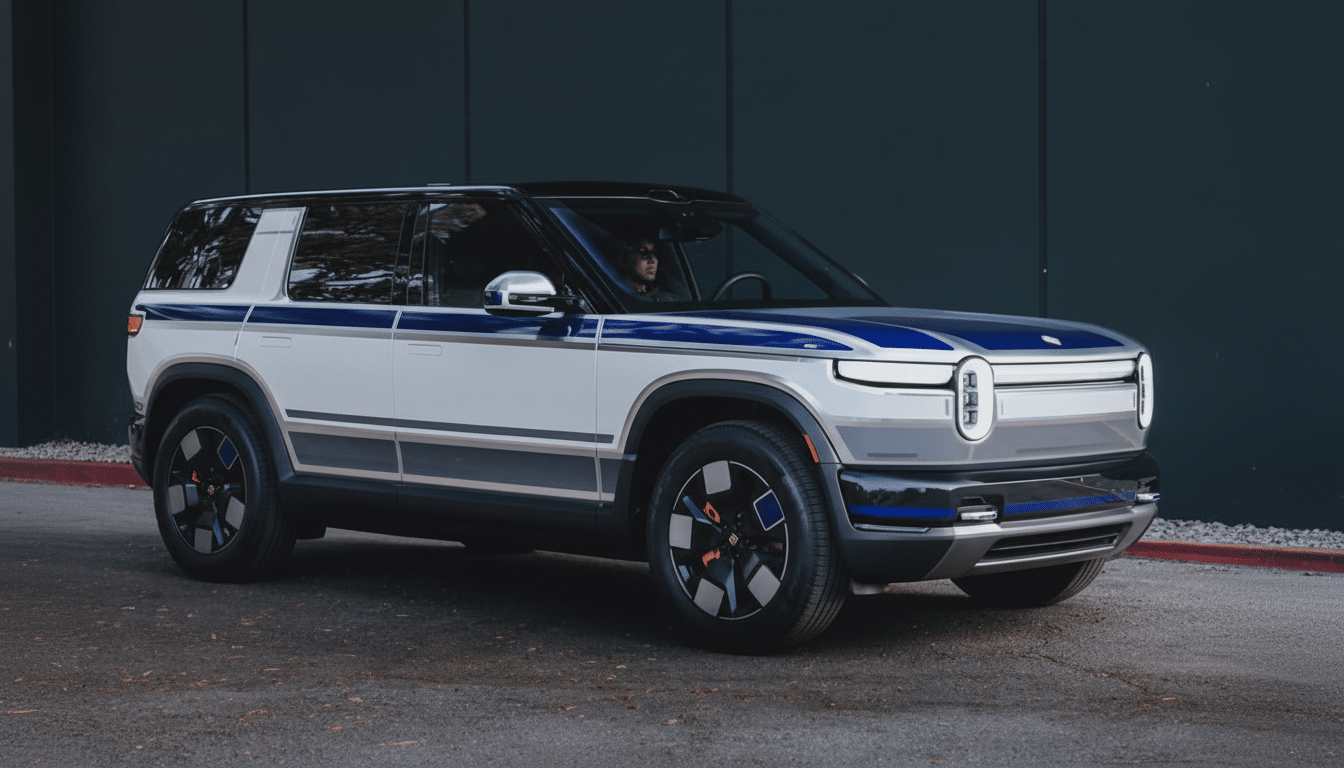
Rivian is also installing a roofline lidar above the windshield to enable dense 3D range data and long-range, low-light performance. The move puts space between Rivian and camera-only philosophies, betting that lidar-plus-vision increases redundancy, cuts false positives, and deals with “edge cases” — unlit debris, ambiguous lane markings, or complicated merges in poor weather — more effectively for the end product.
Autonomy leadership at the company describes the target in terms of “superhuman” sensing, which is used to contrast multimodal fusion that works better than a human driver on key scenarios. That posture mirrors the choices made by developers of robotaxis: Waymo and Cruise have long relied on lidar and radar for geofenced driverless services, while a few consumer systems from GM and Ford are based on high-definition maps working with strong perception to enable hands-free operations on prevalidated roads.
From Personal L4 to Robotaxis Potential and Plans
Rivian’s near-term focus remains privately owned vehicles, a category that represents the lion’s share of miles traveled in federal transportation data. But executives also conceded that the same autonomy stack could serve as a ride-hailing product. Put practically, that means fleet-grade telematics, remote assistance workflows, predictive maintenance, and a tight operational design domain — features robotaxi operators have built up over years and millions of driverless miles.
A shift from consumer freedom to service robotaxis is not a sure thing. The safety case, certification, and economic case for high utilization fleets will drive feasibility. And yet, Rivian’s vertically integrated compute and sensing leave it with a plausible path to iterating fast, collecting edge-case data at scale, and shortening validation cycles.
Why It Matters for Rivian and the Market Right Now
An established hands-free system across millions of miles could elevate Rivian’s brand and drive up margins via software revenue. The subscription and one-time pricing combine to form a dual customer on-ramp, while custom silicon implies a long-term cost and performance moat if the company can execute. For investors, the strategy takes on an important question: can Rivian set itself apart beyond design and off-road capability by competing on the cutting edge of autonomy?
Regulatory momentum is mixed. The NHTSA is staying focused on partial automation, and independent groups like IIHS are tightening up ratings to reward systems that help the driver resist misuse. That sets the standard for driver monitoring and system limitations information. Should Rivian hit those forecasts while bringing lidar-capable vehicles and a scaled autonomy computer online, it will squeeze incumbents as well as challengers using just cameras.
The takeaway is simple: to Rivian, autonomy is no longer a bulleted list feature. With a custom chip, lidar in the loop, and an explicit line-of-sight to personal L4 — and a possible robotaxi branch — the company is committing to an architecture tailored for both everyday drivers running errands without fear of touching the steering wheel and future fleets.
