


Rivian is working on a native AI assistant for its electric trucks and SUVs, a move that illustrates its determination to take the in-cabin experience more in-house than it might have liked at first. Instead of bolting a generic chatbot to the dashboard, Rivian is building a model-agnostic architecture that it hopes will be able to orchestrate multiple AI models, perform essential tasks in-car locally and reach out to the cloud when necessary.
Why Rivian is building an in-house assistant right now
Capable foundation models have flooded the market amid the golden age of generative AI, via players such as OpenAI, Google, Anthropic and Meta. Rivian’s pitch: Cars want more than a single omniscient bot; they want an architecture that can switch out models as they get better, route tasks efficiently and respect the realities of driving. Company leaders say they’re taking model and platform agnosticism all the way down to emissions levels, mirroring Rivian’s overall strategy of owning key software and hardware layers from top to bottom.
- Why Rivian is building an in-house assistant right now
- How Rivian’s in-car AI assistant is architected and run
- What owners can expect from Rivian’s new AI assistant
- Safety, privacy and reliability considerations and goals
- Rivian’s position in the increasingly crowded car AI race
- Volkswagen tie-up remains separate from Rivian’s AI push
- What to watch next as Rivian tests and rolls out features
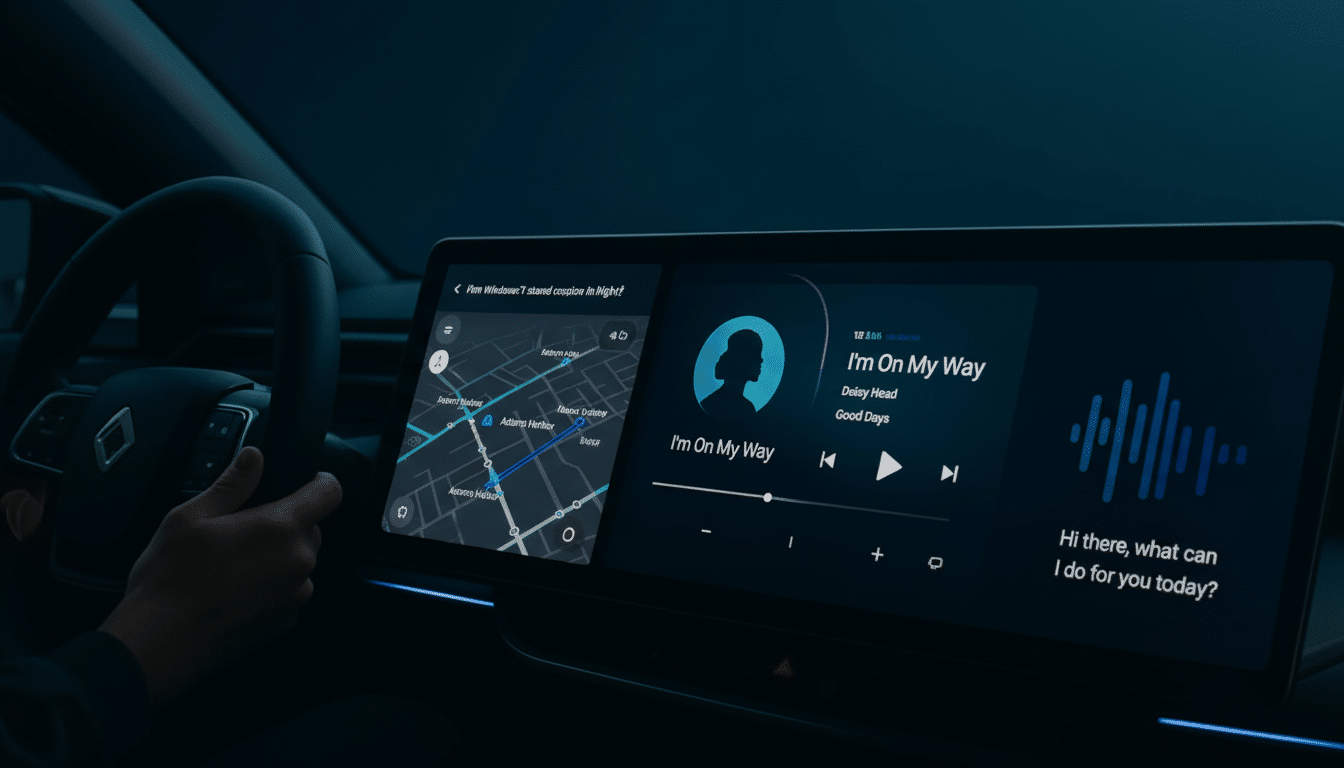
This is in line with broader vehicle redesigns at the company that have given it more control of batteries, sensor suites and infotainment. The same logic now also applies to in-cabin intelligence.
How Rivian’s in-car AI assistant is architected and run
Rivian’s staff (the company is based in Palo Alto) has developed a so-called agentic framework — an orchestration layer that behaves much like an air traffic controller for AI. Rather than build one big model to do it all, there are specialized models for specific tasks: navigation, optimizing charging schedules at various rates, cabin control and trip planning. The orchestrator schedules jobs, resolves conflicts and carries context so the car can drive home or to work in a consistent way.
It’s a hybrid stack. Timestamped commands (say, defog the windshield, adjust suspension settings or interpret a lane-keeping alert) can run on the vehicle’s compute at the edge, while more burdensome linguistic or vision tasks can be escalated to the cloud. That split reduces latency for safety-critical functions and conserves bandwidth for cases where large models are actually necessary.
Rivian claims it has created its own custom models and much of the orchestration software, while bringing in outside vendors for certain agent behaviors. The goal, it appears, is to be flexible rather than lock the car into a single AI provider.
What owners can expect from Rivian’s new AI assistant
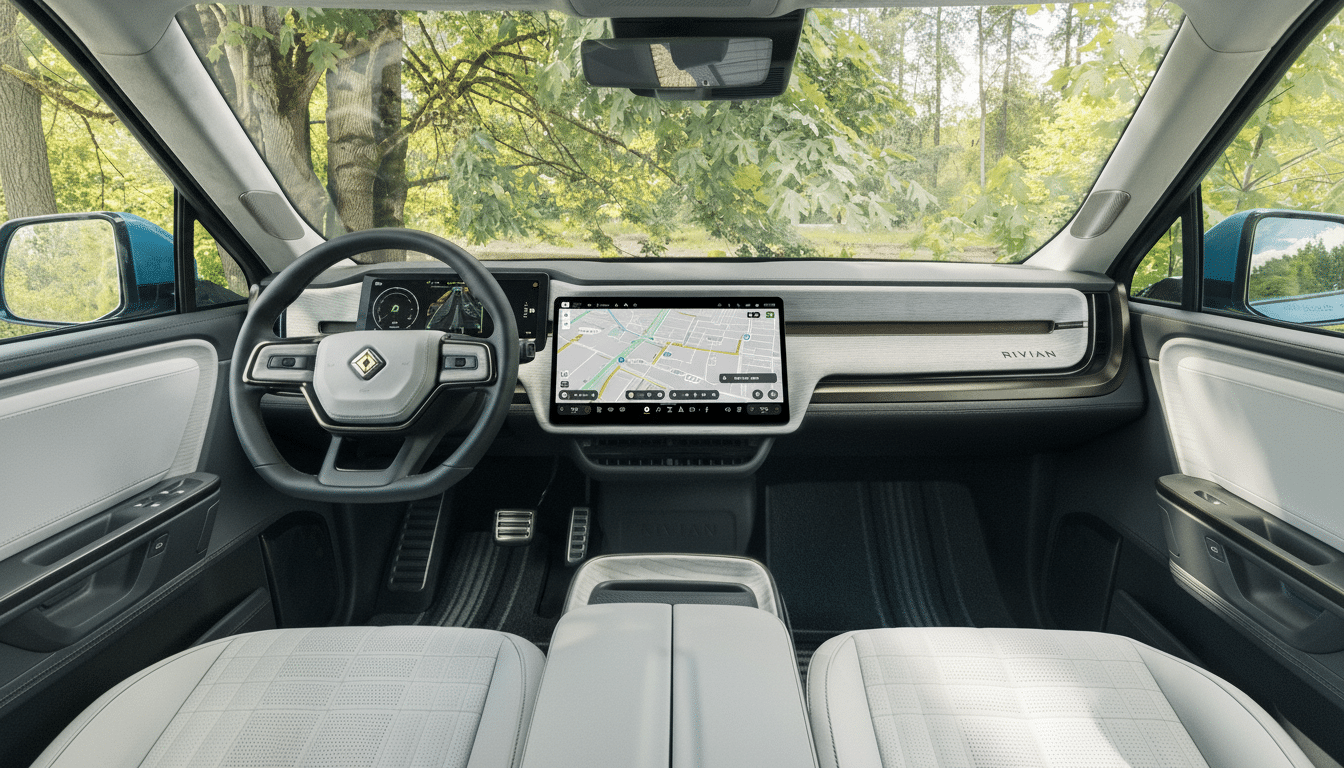
The company has not published a feature checklist, but the architecture telegraphs its priorities. Anticipate context-aware tips: the assistant ought to know when you are towing, off-roading or camping and factor that into route planning, range estimates and thermal management. It must weigh charging plans, charger availability, terrain and weather, and driver preference — then explain its reasoning in plain language.
Of course, voice-first control is table stakes, but the orchestration layer opens up space for multimodal cues. For instance, if you request a scenic route but also tap on a charger location marked on the map, those suggestions can be harmonized by the assistant without forcing you to navigate menus. Importantly, the system is being laid out to earn trust and encourage engagement rather than novelty: predictable behavior and clear confirmations count for more than snazzy quips of welcome from a moving vehicle.
Safety, privacy and reliability considerations and goals
Automotive AI must adhere to rigorous safety and usability requirements. Rivian’s stack is set alongside a real-time operating system that controls core vehicle functions. The assistant may minimize latency and bound failure modes by using fast, safety-critical tasks performed locally and constrained to deterministic control logic. This is consistent with safety standards, such as ISO 26262, and human-factors guidelines from regulators such as NHTSA.
Hat tip to privacy, a hybrid approach enables more processing on-device too. Luxury vehicle owners are starting to demand that their sensitive in-cabin data — voice commands, cabin camera footage, biometric indicators — remain within the vehicle. If Rivian is to turn the assistant into more of a daily habit rather than just something knowing it’s there but hardly ever tapping it, transparent settings and permission flows, including clear data-retention policies, will be key.
Rivian’s position in the increasingly crowded car AI race
Rivian is driving into a crowded lane. Mercedes used ChatGPT in MBUX to enhance natural language interaction. BMW has partnered with Amazon to incorporate large language models into its Intelligent Personal Assistant. Volkswagen has upstreamed its IDA assistant with generative enhancements. Many older plans out there are built on third-party tech stitched into infotainment stacks.
What makes Rivian different here is the focus on orchestration and model flexibility, rather than a monolithic LLM. That approach targets a genuine couple of pain points: J.D. Power surveys have been calling out voice recognition as one of the most annoying in-car features for years. If Rivian’s assistant can bring faster response times, fewer hallucinations and interesting control over vehicle systems than the others, it could turn one of the industry’s lowest satisfaction scores into a brand advantage.
Volkswagen tie-up remains separate from Rivian’s AI push
Rivian’s software joint venture with Volkswagen is worth up to $5.8 billion, and focuses on electrical architecture, zonal compute and infotainment. The AI assistant and automated driving are beyond that scope for now, company executives said. That separation opens the door for Rivian to iterate on its own experience without colliding with a multi-brand roadmap, while the JV works on shared underlying platforms that can be more widely scaled across a broad portfolio.
What to watch next as Rivian tests and rolls out features
Rivian has not announced the timing of a launch or any kind of public beta. Signs to watch for include the depth of on-device capability, integrations with charging networks and mapping providers, third-party app hooks, and how the company measures safety and accuracy in real driving. Just as important will be guardrails that prevent conversational features from becoming distracting to drivers.
If Rivian pulls it off, the assistant could form a fundamental layer of the brand’s software-defined vehicle strategy — less a parlor trick, more like a true co-pilot that helpfully wrangles energy, comfort and convenience on every drive.
