


Riverside’s new AI-driven Rewind recap is the kind of feature that makes creators groan, then immediately send a link to it to all their friends.
It borrows Spotify’s social magic of year-end summaries and squashes a season of sessions into snackable clips that range from delightful to extremely silly. I hate that I love it — and that tension says a lot about where AI is at in podcasting right now.
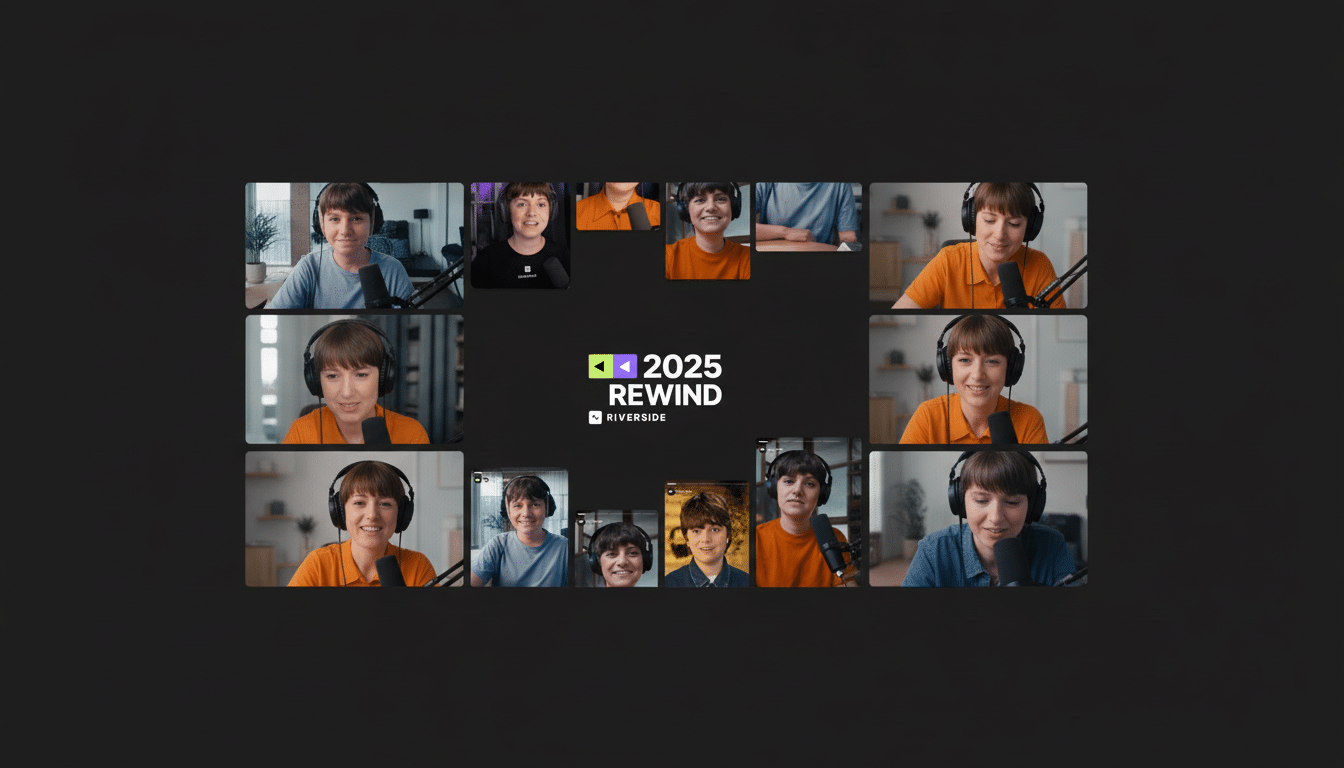
Rewind makes short, self-jamming videos — a laugh-a-minute reel, a supercut of filler words, and a one-word crown for the word you said most often while recording your voice. It’s cheeky, instantly memeable, and specifically engineered to be shared across feeds and group chats. It’s also, depending on your tolerance for AI whimsy, either a delightful bit of levity or yet another sign that our creative stack is being buried beneath features we never requested.
How Rewind Works And Why It Gets You Hooked
Behind the scenes, Rewind relies on AI transcripts to count word frequency as well as acoustic and language cues for laughter and filler words. None of that is revolutionary — platforms like Descript, Auphonic, and even Adobe’s speech models have provided similar building blocks for years. The conjuring, in this case, is packaging: 15-second highlight reels that are low-lift and high-smile, a sweet spot of the moment perfectly tuned for short-form feeds.
There is strategic sense behind the whimsy. Recap products consistently “punch above their weight” in increasing reach as users share them for free. “The only thing that’s ever come close to being the blueprint for that has been Wrapped,” she said, referring to what many people assume is an industry leader in taking up space in the social zeitgeist every December and giving artists and fans a reason to share their data stories. Riverside is following the same playbook for hosts — driving top-of-funnel awareness while giving established users something to celebrate.
The Fun Masks A Deeper AI Tension In Podcasting
Love the clips, fear the creep. AI is becoming fast, loose, and widespread in its application across the audio workflow, but not all those experiments maintain respect for the craft. An effort to spin up AI-generated daily news podcasts at The Washington Post is indeed a cautionary tale: internal testing showed that 68 percent to 84 percent of those products did not meet the publisher’s own editorial standards, featuring made-up quotes and mistakes, researchers from Semafor (full disclosure: I am an investor in this company) have discovered. Large language models are probabilistic engines, not truth meters — and that matters when you’re working with journalism or high-stakes storytelling.
Even beyond the world of news, good podcasting depends on human judgment — pacing, chemistry, the call to let a tangent run because it’s unexpectedly revealing. AI can transcribe, summarize, and suggest edits; it’s not so good at knowing what’s truly hilarious or what works to build narrative tension. That divide is also exactly why Rewind feels so safe: it’s breezy, non-editorial postgame “content,” not a replacement for an editor.

Where AI Really Helps Podcasters Improve Workflow
But there are a few places where AI already pulls its weight. Fast, accurate transcripts make content more accessible and discoverable by transforming episodes into indexable text and aiding creators in following accessibility best practices. Automated leveling, noise reduction, and silence detection shave hours off post-production; chapter suggestions and speaker diarization speed up edits. These are force multipliers, not substitutes.
The market environment itself encourages more of such augmentation. Edison Research finds that podcast listening is at an all-time high in the U.S., and IAB reports strong growth for U.S. podcast ad spend on a trajectory to hit multibillion-dollar levels. As the industry grows more competitive, teams require tools that can keep them from becoming mired in drudgery, so they can devote their energies to reporting, booking, and narrative construction — essentially the human tasks audiences might actually appreciate.
What Creators Should Watch With AI Recap Tools
Rewind’s appeal poses practical questions. If a platform is sifting through transcripts to create viral assets, what data does it retain, who has access to it, and for how long? Hosts need to read consent terms for guests, particularly in territories covered by GDPR or CPRA, and agree on whether derivative content can be used for marketing. Transparent disclosures and easy opt-outs will be key as recap features mutate from party tricks to growth engines.
It would also be valuable to measure real utility. Does a supercut of “um” serve to help you edit future episodes or just feed the algorithm? The best AI capabilities close the loop: recognize the habit, recommend a fix, and monitor improvement over time. Think of Rewind combined with per-speaker filler rates over the course of a season, or laughter maps overlaid on segments so producers can see what’s landing and why.
Bottom Line On Rewind And AI’s Role For Creators
Riverside’s Rewind charms me because it encapsulates the joy of making shows — the giggles, the glitches, and the inside jokes that only two cohosts notice. I’m cautious because I’ve seen what it looks like when that same technology is aimed at the hardest parts of the craft and told to supplant them. Keep the recap. Keep the fun. But leave AI where it belongs: serving creators, not grinding out their work into shareable slop.
