


Ring moved quickly to tamp down privacy fears after a leaked internal email suggested its camera network could one day help “zero out crime in neighborhoods.” The company says the phrasing was aspirational, not a product roadmap, and rejects the idea it plans to expand into tracking people.
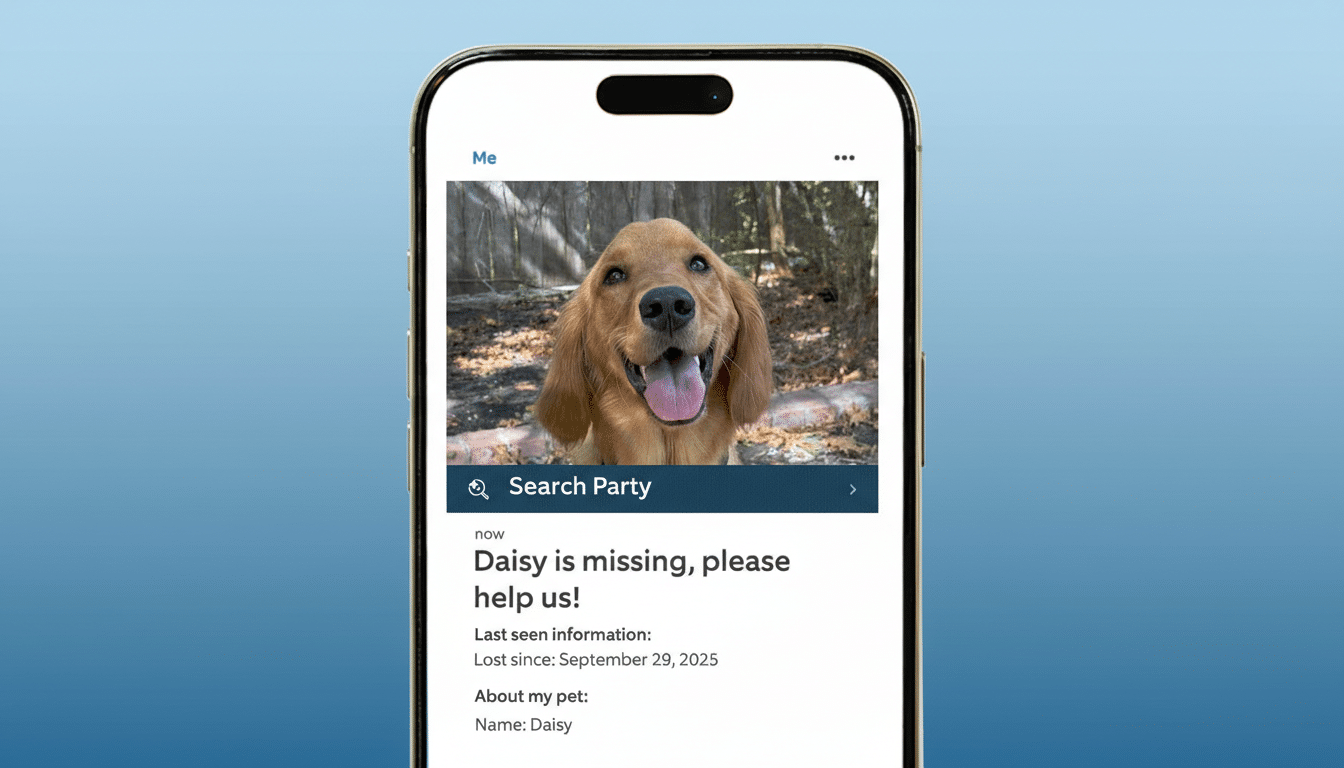
In a statement provided to TechRadar, Ring said founder Jamie Siminoff’s comments were meant to describe the long-term potential of “customer-controlled features” working together to support safer communities. The company emphasized that no single feature is designed to eliminate crime and reiterated that its new Search Party tool is limited to lost pets and does not process human biometrics.
- What Ring’s Search Party Actually Does and Doesn’t Do
- Why the Language Sparked a Backlash from Privacy Advocates
- AI Identification Versus Biometrics: Key Differences
- Ring’s Trust Gap And The Road To Reassurance
- What Users Can Do Right Now to Protect Their Privacy
- Bottom Line on Ring’s Email Leak and Search Party Limits

What Ring’s Search Party Actually Does and Doesn’t Do
Search Party for Dogs uses AI to scan footage from participating cameras for pets that match a missing-dog report. Ring says the system is designed for animal detection and matching only. It does not identify humans, store facial templates, or analyze gait or other human biometrics.
Participation is on by default, but users can opt out in settings. Ring also stresses that owners decide if and when to share clips, and that sharing remains optional even when Search Party flags a potential match.
Why the Language Sparked a Backlash from Privacy Advocates
The “zero out crime” phrasing hit a nerve because Ring already sits at the center of a sprawling neighborhood surveillance ecosystem. Civil liberties groups have long warned that networked doorbell cameras can normalize always-on monitoring and expand police access to private footage.
By 2022, more than 2,000 US police departments had partnered with Ring’s Neighbors platform, according to the Electronic Frontier Foundation. The Federal Trade Commission also ordered Ring to pay $5.8 million after alleging that lax controls allowed employees and contractors to access customer videos and that the company failed to implement sufficient security safeguards. And in a letter to Congress, Amazon acknowledged that Ring shared videos with police without owner consent on multiple emergency occasions in a single year, underscoring how “exception” pathways can broaden access in practice.
AI Identification Versus Biometrics: Key Differences
Technically, there is an important distinction between object detection and biometrics. Pet search relies on classifying shapes, textures, and movement to spot dogs and compare features across clips, akin to searching for a make and model of car. Biometric identification links footage to a specific person using unique characteristics like facial landmarks, voiceprints, or gait signatures.
Ring says Search Party sits squarely in the former camp. Critics argue that once a company builds large-scale matching pipelines across millions of cameras, pressure can grow to repurpose those systems for people. The concern is not what the feature does today, but whether the architecture could be extended tomorrow without robust guardrails, independent audits, and explicit opt-in consent.
Ring’s Trust Gap And The Road To Reassurance
Trust in consumer surveillance tech tends to hinge on three pillars: clear technical documentation, narrow purpose limitations, and verifiable oversight. Ring’s statement hits the right notes on intent, but intent alone won’t satisfy privacy advocates who want enforceable boundaries and transparent logs showing how data flows and when it’s shared.
Policy signals matter too. Cities from San Francisco to Boston have restricted government use of facial recognition, reflecting public skepticism toward expansive monitoring. In that climate, marketing language about eliminating crime reads less like optimism and more like a prelude to mission creep.
What Users Can Do Right Now to Protect Their Privacy
If you own a Ring device, take a minute to audit settings:
- Opt out of Search Party if you’re uncomfortable.
- Review which cameras share to the Neighbors feed.
- Disable video requests or notifications you don’t need.
- Turn on two-factor authentication.
- Prune old clips you don’t intend to keep.
- Restrict shared access to household members who truly need it.
For added transparency, keep an eye on company transparency reports and ask your local police department whether it engages with neighborhood camera platforms and under what rules. Clear local policies can prevent “exception” requests from becoming the norm.
Bottom Line on Ring’s Email Leak and Search Party Limits
Ring is signaling that “zero out crime” was blue-sky talk, not a surveillance pivot, and that Search Party is purpose-built for lost pets without human biometrics. Whether that calms fears will depend less on statements and more on product behavior, auditability, and hard limits that keep animal-finding tools from sliding into people-tracking systems.
