


Ring is introducing a new line of connected sensors that gets rid of the need for a hub, connecting by default through an internet connection straight out of the box and without depending on home Wi‑Fi. The lineup leverages Amazon Sidewalk, the company’s long‑range, low‑bandwidth neighborhood network, so setup is as easy as powering on your device and registering it to your account.
Why a hubless smart home matters for everyday users
Two pain points have slowed smart home adoption: hubs you must hide and feed, and sensors you don’t realize aren’t set properly until something leaks in the middle of a 4 m² section of carpeting. Many security systems continue to be stuck with Zigbee or Z‑Wave hubs, while Wi‑Fi sensors suffer issues of range and battery life. In doing away with both, Ring is aiming at a setup experience more like that of wireless earbuds than a networking project.
- Why a hubless smart home matters for everyday users
- How Amazon Sidewalk works under the hood and coverage
- The new Ring sensor lineup for Protect, Safety, Control
- Setup should take seconds with Sidewalk‑enabled sensors
- Security and privacy questions around Amazon Sidewalk
- How it stacks up against Wi‑Fi, Zigbee, Z‑Wave, and Thread
- Pricing and availability for Ring’s new Sidewalk sensors
- Beyond sensors: AI alerts and wildfire detection efforts
How Amazon Sidewalk works under the hood and coverage
Amazon Sidewalk combines Bluetooth Low Energy and sub‑GHz radio to reach over much larger distances than standard Wi‑Fi. Echo speakers and some cameras all serve as gateways, pooling a sliver of their bandwidth to form a neighborhood mesh. Amazon has claimed that Sidewalk already covers more than 90% of the U.S. population, and developer documentation lists a maximum data rate of around 80 Kbps with a monthly cap on data transfer at 500 MB per account — enough for sensors sending quick status pings, not high‑quality video feeds.
Practically speaking, that means a contact sensor on an outbuilding or a water leak detector next to your hose can communicate without tangling with your router’s range. Ring says one participating gateway can reach up to about a quarter mile in open conditions, so it can prove useful for coverage in places where Wi‑Fi extenders aren’t practical.
The new Ring sensor lineup for Protect, Safety, Control
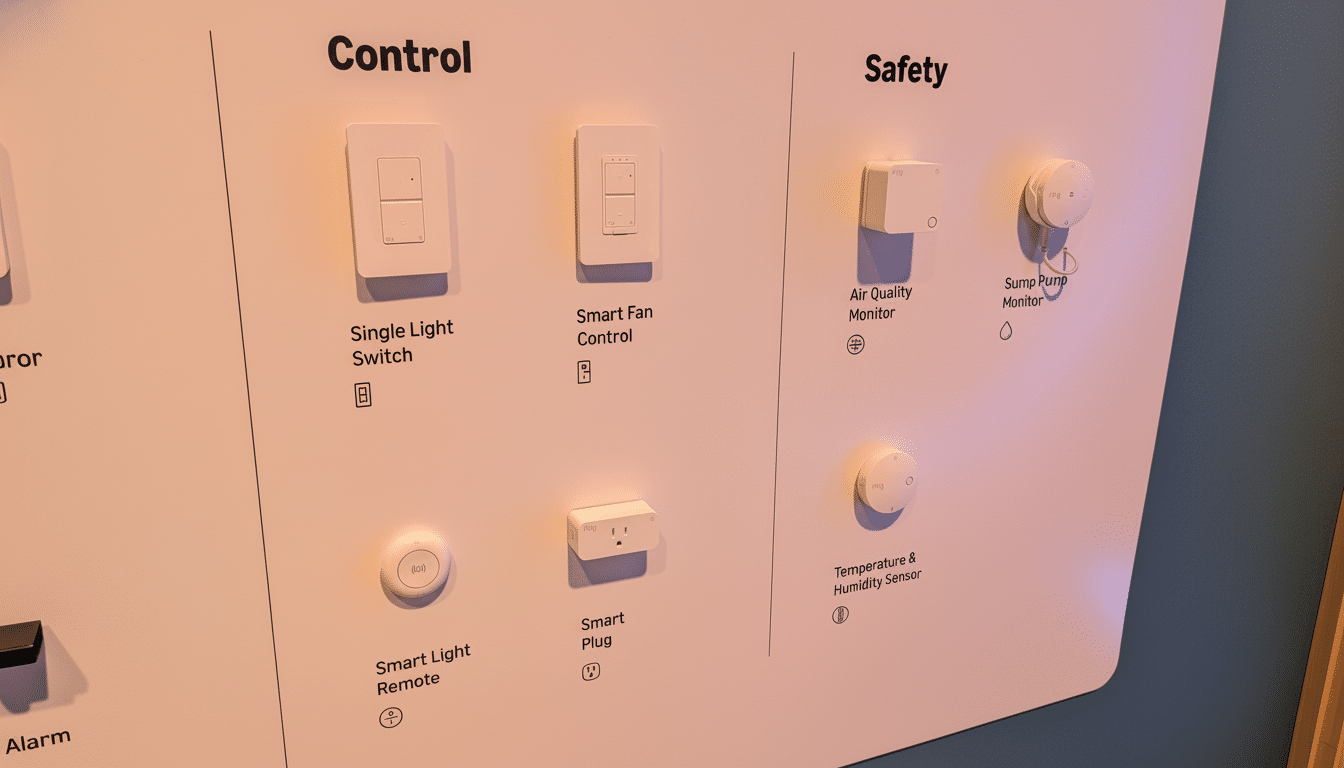
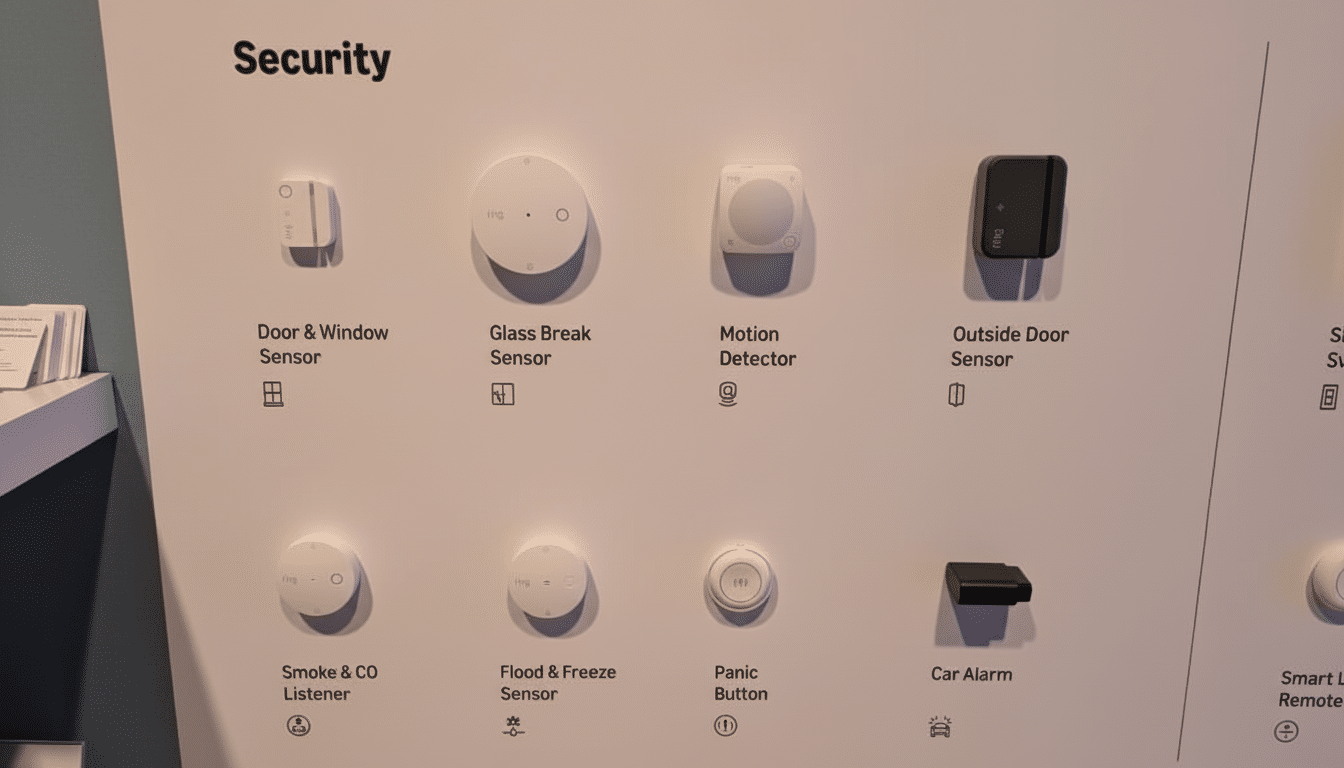
Ring is organizing the devices into three buckets. Protect gets you basic security gear like motion and contact sensors. Safety adds an environmental focus, with flood and freeze detectors and a sensor listening for your smoke and carbon monoxide alarms from any company you may already own. Control features automation elements such as smart plugs and fan controls that can connect routines.
There is also a Sidewalk‑powered Ring Car Alarm, which uses your car battery to alert you to potential break‑ins and track movement when the vehicle is away from home, including when parked on the street. It’s a high‑profile test case for Sidewalk, which promises to deliver low‑data connections over stretches of sidewalk, driveway, and street where Wi‑Fi tends not to work well.
Setup should take seconds with Sidewalk‑enabled sensors
Because the sensors use Sidewalk, onboarding is more like pairing a set of headphones than setting up a hub. You turn the device on, open the Ring app, and there your product is for claiming — no SSID, no password, no scanning for a Zigbee channel. For us, as gadget testers with previous experience with other Sidewalk devices, the biggest practical gains have materialized on the edges of a property: gates, mailboxes, detached sheds, and basement corners where Wi‑Fi flirts with dead zones.
Security and privacy questions around Amazon Sidewalk
Amazon’s Sidewalk documentation lists three layers of encryption, daily device identifier rotation, and tight bandwidth caps. Sidewalk is enabled by default on a number of Echo devices, though users can turn it off in settings. Privacy advocates, including the Electronic Frontier Foundation, have called for continued transparency around mesh participation and data handling, and consumers should check their Sidewalk settings in the Alexa app to see if they match that comfort level.
For a professional response, Ring’s security sensors can be connected to optional 24/7 monitoring with a subscription; however, you won’t need to pay for basic sensor operation. That divide reflects a wider market trend, whereby professional monitoring is still an add‑on to many DIY systems, according to research firms that follow smart home adoption and service attach rates.
How it stacks up against Wi‑Fi, Zigbee, Z‑Wave, and Thread
Even most other competitive DIY systems — from straight‑up alarm companies to the ecosystem plays based on Zigbee, Z‑Wave, or Thread — still require a hub or border router. Matter over Thread eases cross‑brand control, but it usually needs a Thread border router like a recent smart speaker or hub. Ring’s approach is to offload the complexity to Sidewalk so that a sensor can work even when there’s no local hub, nor local Wi‑Fi credentials. The trade‑off is ecosystem lock‑in; Sidewalk is an Amazon technology, so integration beyond Ring and Sidewalk‑enabled partners may be limited at launch.
Pricing and availability for Ring’s new Sidewalk sensors
Ring has not announced pricing. The sensor family will expand widely, the company says, and Ring Car Alarm will be the first debut to use that same Sidewalk backbone. You’ll get the usual Ring app control, battery‑friendly designs that are standard in low‑power radios, and the optional subscription services built on top of basic functionality.
Beyond sensors: AI alerts and wildfire detection efforts
Also alongside the sensors, Ring is beefing up camera intelligence with new alerts for unusual activity and “Active Warnings,” which are spoken, tailored deterrence messages that the cameras can say out loud, like calling out a suspected package theft on an unattended front porch. The company is also working with the nonprofit Fire Watch to crowdsource wildfire information; its AI can identify signs of smoke or fire in outdoor footage and alert users, which could be important in high‑risk areas, according to emergency management organizations.
Taken as a whole, the hub‑free sensors, Sidewalk connectivity, and AI features seem to signal a strategic shift: security should be easier to start, smarter at the edges of your property, and more resilient when Wi‑Fi can’t get through. Assuming real‑world performance lives up to the promise, this may be the most consumer‑friendly Ring upgrade in years.
