


TV manufacturers are about to converge at CES with a rare consensus: RGB backlights are the big story, and your living room is about to get a whole lot bigger. Look out for wall-filling flagships based around tri‑color LED arrays and a renewed push to bring high-end picture tech to sizes/prices we can all be sensible about.
Following years of continuous OLED and mini‑LED enhancements, coming are red, green, and blue LEDs as the light source itself. Couple that change with the market’s pivot toward 85‑inch to near‑100‑inch models and you’ve got the most stark reset in TV priorities in years.
- Why RGB LED backlights are everywhere in new TVs
- Bigger screens move into the TV mainstream at CES
- Smaller screens level up with premium TV features too
- OLED pushes downmarket without dimming its appeal
- Art TVs and lifestyle sets get serious about quality
- How to judge the new TV sets on the CES show floor
- The bottom line on RGB backlights, OLED, and big TVs
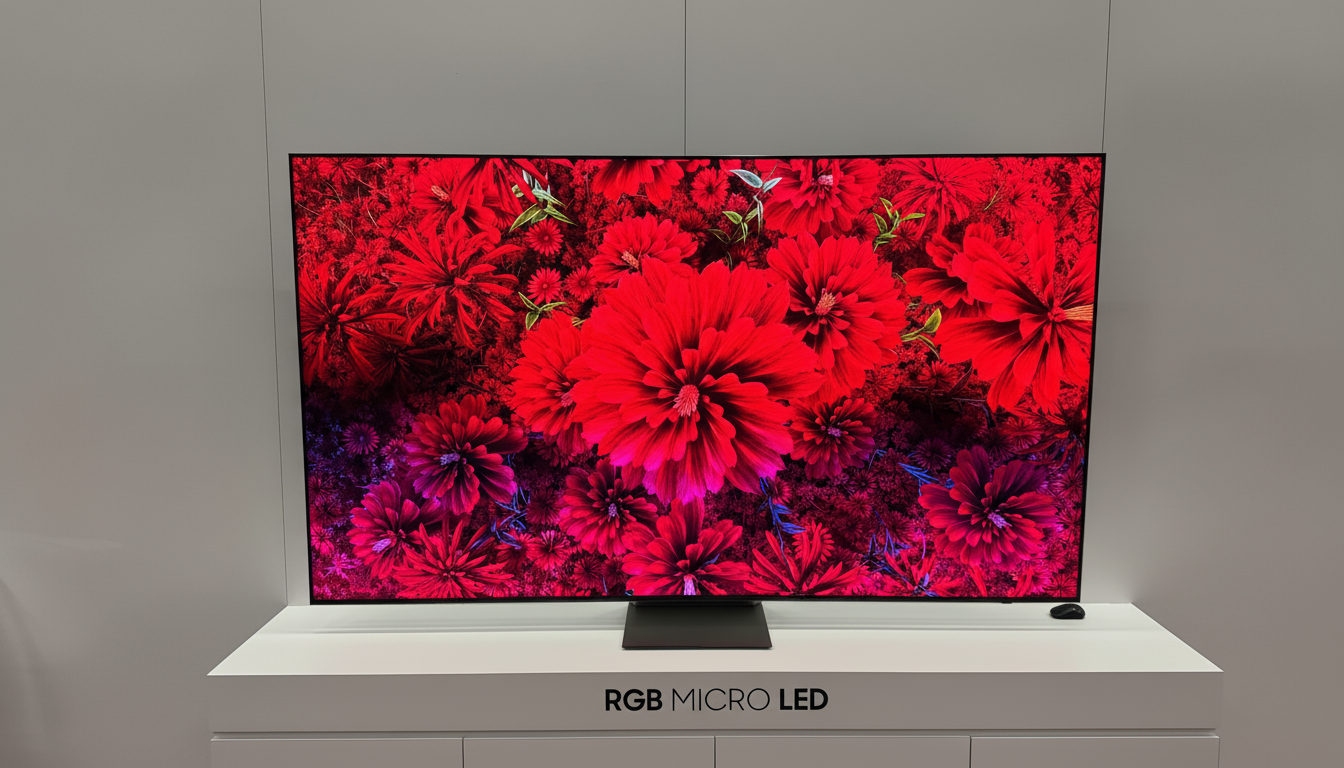
Why RGB LED backlights are everywhere in new TVs
Traditional QLED or mini‑LED sets primarily employ white (or blue) LEDs and depend on a quantum dot layer to produce color. The next generation replaces that with dense arrays of red, green, and blue LED emitters—actual tri‑color light sources that offer greater color volume than CRTs, cleaner spectral peaks for better emulated hue separation, and more precise control. Some brands are teasing “Micro RGB,” “RGB mini‑LED,” or “True RGB,” but the underlying concept is identical: edge closer to 100% of the BT.2020 color space with greater luminance than OLED and better blooming control compared to regular local dimming.
Since these arrays can segment control over far more zones than normal dimming, that should translate into better contrast—particularly in problematic scenes that combine small highlights with deep shadow. Expect inevitable claims of four‑figure nits, yet this time while still retaining black levels that previously needed OLED. But there are real trade‑offs: it’s harder to manage manufacturing yield, heat, and uniformity when you’re driving three times as many LED emitters. Display Supply Chain Consultants has always pointed out that yield and thermal problems are gating items for next‑gen backlights; you’ll hear it in the way vendors discuss longevity and effectiveness, not just color.
Bigger screens move into the TV mainstream at CES
Large formats are no longer some kind of halo curiosity. Many lineups now begin at 75 inches and push into 85‑inch, 98‑inch, and even the occasional gargantuan model, if you prefer thin bezels and lighter chassis that can fit into smaller installation spaces. Omdia noted that average TV size has been on an upward trend, and in markets such as China 75‑inch‑plus panel shipments have represented the fastest‑growing slice of the market.
Two forces conspire to make the move irreversible. One, the cost per inch keeps dropping as panel makers get more glass out of larger‑substrate fabs (typically Gen 10.5/11). Second, living‑room habits have changed: 4K streaming and bigger game worlds, in addition to better room‑light handling, mean the leap from 65 to 85 inches seems less extravagant and more like next year’s default. It speaks to us that even our design‑centric sets—think: “art TVs”—are inching toward near‑100‑inch options.
Smaller screens level up with premium TV features too
Supersizing isn’t the whole story. Brands are also “yassifying” the 32‑ to 55‑inch category with premium features that were once exclusive to flagships. Look for a 55‑inch tier of RGB‑backlit models, as well as smaller art TVs that undercut the costliest gallery‑style sets. Hisense, for example, recently introduced a 32‑inch QLED “décor” model that includes more favorable pricing, and Samsung and LG both keep premium options in the 42‑ to 48‑inch range available for gamers or apartment living.
The result is choice: you won’t need a murky expanse of wall to gain access to best‑in‑class processing, anti‑glare coatings, or 120/144 Hz gaming with VRR and low input lag.
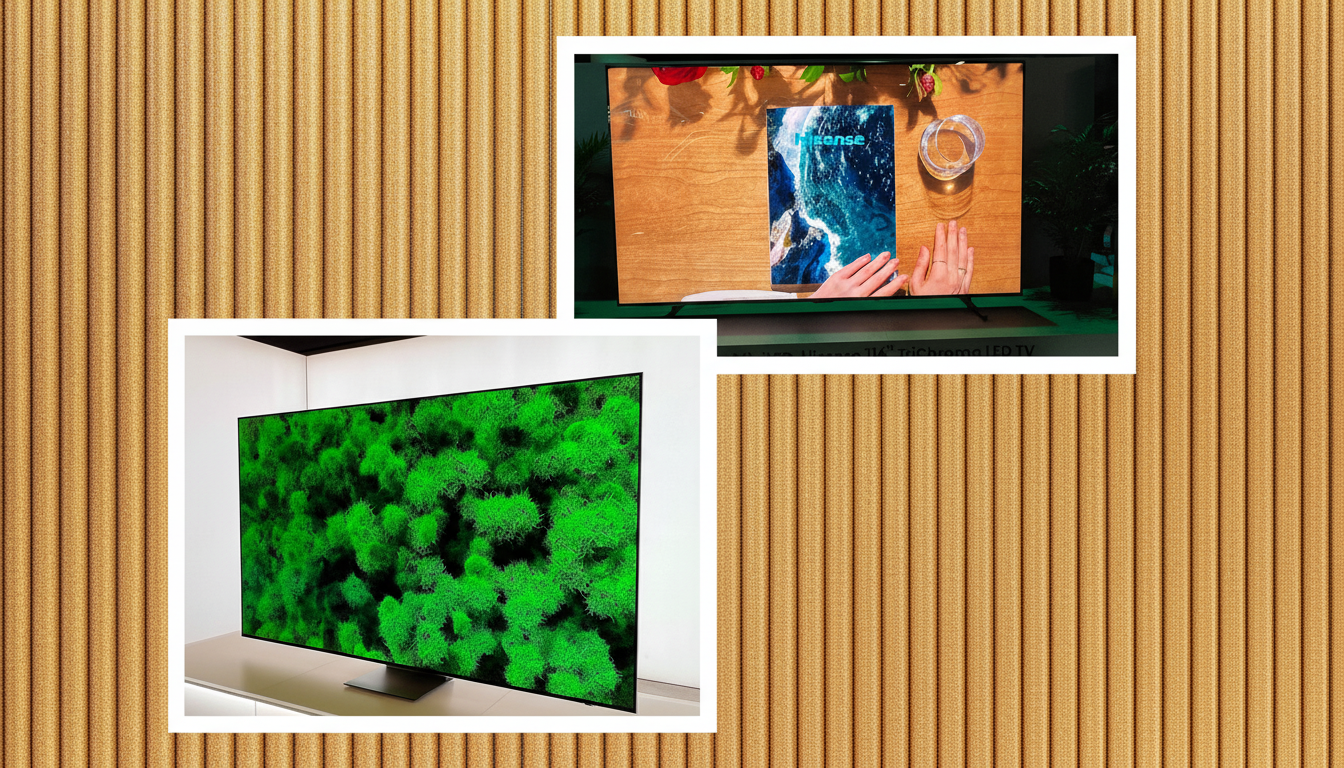
HDMI 2.1 features are now table stakes on a larger range of sizes, and cloud‑gaming integrations from the likes of NVIDIA and Xbox are filtering through mid‑tier SKUs.
OLED pushes downmarket without dimming its appeal
As RGB hogs the headlines, OLED is getting simpler and cheaper to purchase—and a lot smarter for builders. Tittle‑tattle from the industry hints at even more aggressively priced 55‑inch screens—numbers in the region of $1,000 have been bandied around—as a result of improving yields on WOLED and QD‑OLED panels, plus scaled‑up glass usage. DSCC has emphasized the shift in panel efficiencies and simplified stack designs that contain cost without neutering performance.
Expect more mid‑tier OLEDs with slightly reduced peak brightness but that same inky blackness, plus premium choices that keep adding color volume and heat management tricks to resist ABL dimming. It’s the classic trickle‑down: one cycle’s leading act is next cycle’s value play.
Art TVs and lifestyle sets get serious about quality
The lifestyle category is also drawing contestants. LG is launching its first true portrait TV—it’s equipped with a matte anti‑glare finish, ambient light sensing and, crucially, full‑array local dimming versus edge lighting—designed to take on established art‑TV foes. TCL has an NXTVISION art model in China with decent dimming zones that’s fit for wider release, and I expect we’ll continue to see Hisense bring refreshes of its frame‑style lineup.
As the category matures, the distinctions move past frames and screensavers to fundamentals: panel type, dimming architecture, and reflectance. Pricing for custom‑curated galleries is ending up around similar monthly fees, so the picture quality is all that will make or break this feature.
How to judge the new TV sets on the CES show floor
On the show floor, search for more than splashy color demos.
- Ask to see measurements or reputable statements on BT.2020 coverage and color volume at high luminance, and black‑level performance with subtitles or star fields.
- Confirm peak brightness calibrated to a D65 white point, not just Vivid mode.
- Check anti‑reflective coatings under overhead light, and watch for blooming around small highlights against dark backgrounds.
- If you’re a gamer, verify full‑bandwidth HDMI 2.1 ports, 4K at 120/144 Hz, VRR ranges, ALLM, and Dolby Vision Gaming when available.
- For movie lovers, make sure it supports HDR10+ or Dolby Vision, as well as Filmmaker Mode and UHD Alliance certifications.
- Consider energy consumption, as regulators hone efficiency standards; the power profile of tri‑color backlights is an important question.
The bottom line on RGB backlights, OLED, and big TVs
RGB‑backlit LEDs will revolutionize the way LCDs produce color, and panel economics are propelling 85‑inch and up into the mainstream. OLED isn’t going anywhere; it’s just becoming cheaper. No matter if you’re finally getting that home theater upgrade or are outfitting a small space, this CES is poised to be the most important TV reset in years.
