


Samsung could be positioning what may be its most comprehensive challenge yet to Apple’s video crown. A separate leak now suggests the Galaxy S26 series will get an Advanced Professional Video (APV) codec, capture in 12-bit and enjoy richer color sampling on top of offering on-device LUT workflows — enough to potentially steal some pro mobile filmmaking thunder from the iPhone 17 Pro should they arrive as described.
Apple’s Pro models have always led the pack with ProRes, Apple Log and Dolby Vision HDR. But those strengths are the ones directly targeted by the rumored S26 toolset, with proposed increased color fidelity, more resilient capability to edit and more flexible frame rate support baked into Samsung’s camera pipeline.
- APV goes for near-lossless video that doesn’t bloat files
- LOG capture with custom LUTs, on‑device managed
- Higher frame rates for smoother shots and clean slow‑mo
- How it compares to iPhone Pro video features and codecs
- The hardware and workflow caveats to watch at launch
- Bottom line: a legitimate attempt at video dominance
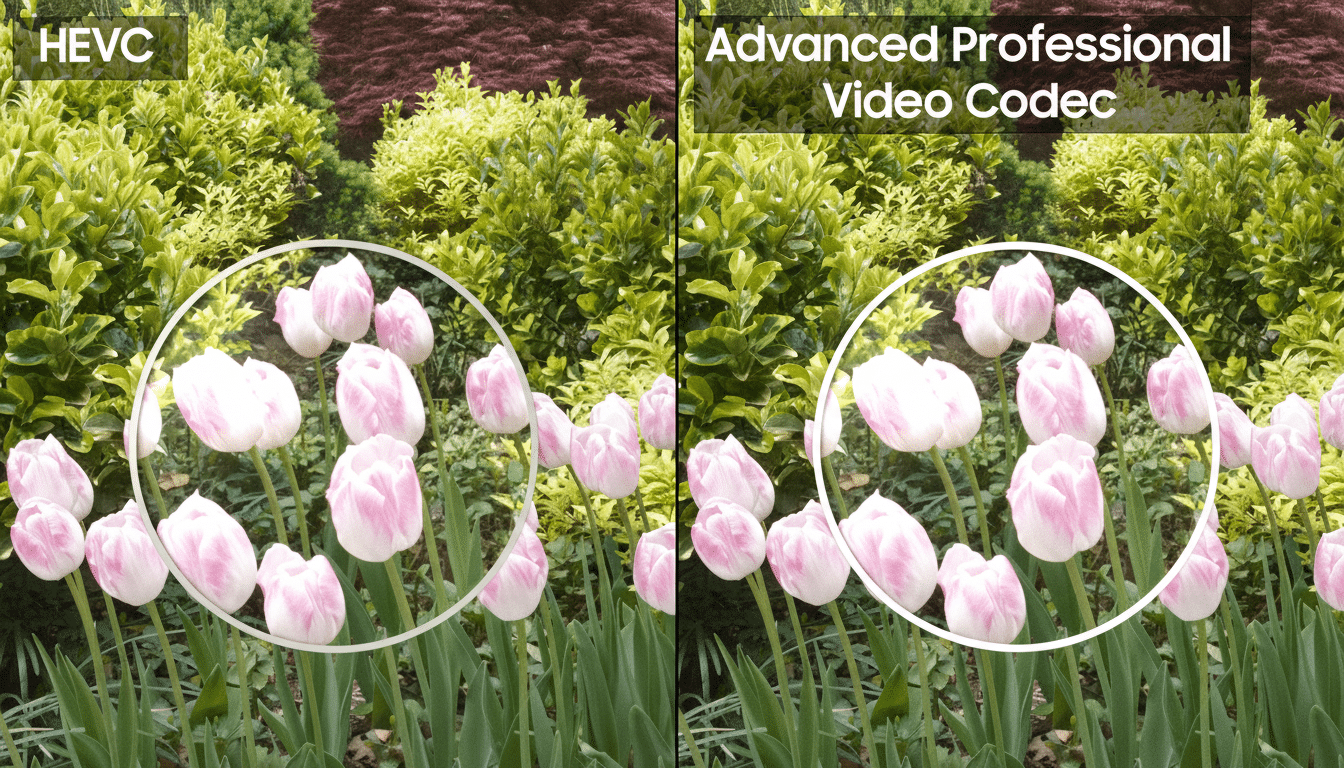
APV goes for near-lossless video that doesn’t bloat files
Based on SammyGuru reporting/media notes on the codec, APV is intended for near‑lossless recording and manageable file sizes. It has been claimed that it can support bit rates in the gigabit per second range and will have greater storage efficiency than other lossless or RAW containers. This balance is critical on phones where thermal headroom and write speeds are hard limits.
The headline specs are 12‑bit color and 4:4:4 chroma sampling — two things that working shooters care about. 12‑bit expands tonal steps to 4,096 levels per channel (versus 1,024 at 10‑bit), which means gradients, skies and skin transitions don’t have the potential for banding that they can under heavy editing. And 4:4:4 is, of course, full color detail at every single pixel — which matters for chroma keying but also fine text and saturated edges (all dirty words) which have been in dire want of with 4:2:0 or even 4:2:2 subsampling.
One such interesting aspect is the “frame tiling” (i.e., partitioning and encoding frames in parallel). It also offers better quality retention at more passes (encode and decode) than when footage undergoes multiple cut/trim/export cycles through apps. It’s the kind of pro‑workflow detail that you normally only hear mentioned in broadcast and post houses, not hacker‑y techie smartphone leaks.
LOG capture with custom LUTs, on‑device managed
They also claim that APV will come to LOG and HDR modes, but the kicker is custom LUT support right within Samsung’s Gallery app. The existing Galaxy line already allows users to color‑correct LOG footage on the phone; importing LUTs would take that up a whole cross‑pipeline notch. Imagine you can apply a Rec. 709 look, a punchy creative look, or match footage to a particular camera profile — without ever having to leave the default tools.
12‑bit LOG means more detail in highlights as well as shadows while maintaining richer, livelier colors and a finer tonal response in the mid‑range.
In other words, maximum latitude to delicately capture every gradation, providing you with full control in scenes saturated with light and shadow. Mobile creators who are ordinarily sending work to desktop suites could get dailies out on‑device, or at least create a true “look” preview for clients and talent on the set.
Higher frame rates for smoother shots and clean slow‑mo
Samsung is also testing a wider frame‑rate palette: 25fps, 50fps and 100fps across Full HD and 4K as well as, for some reason that matters more than it sounds, 25fps at 8K.
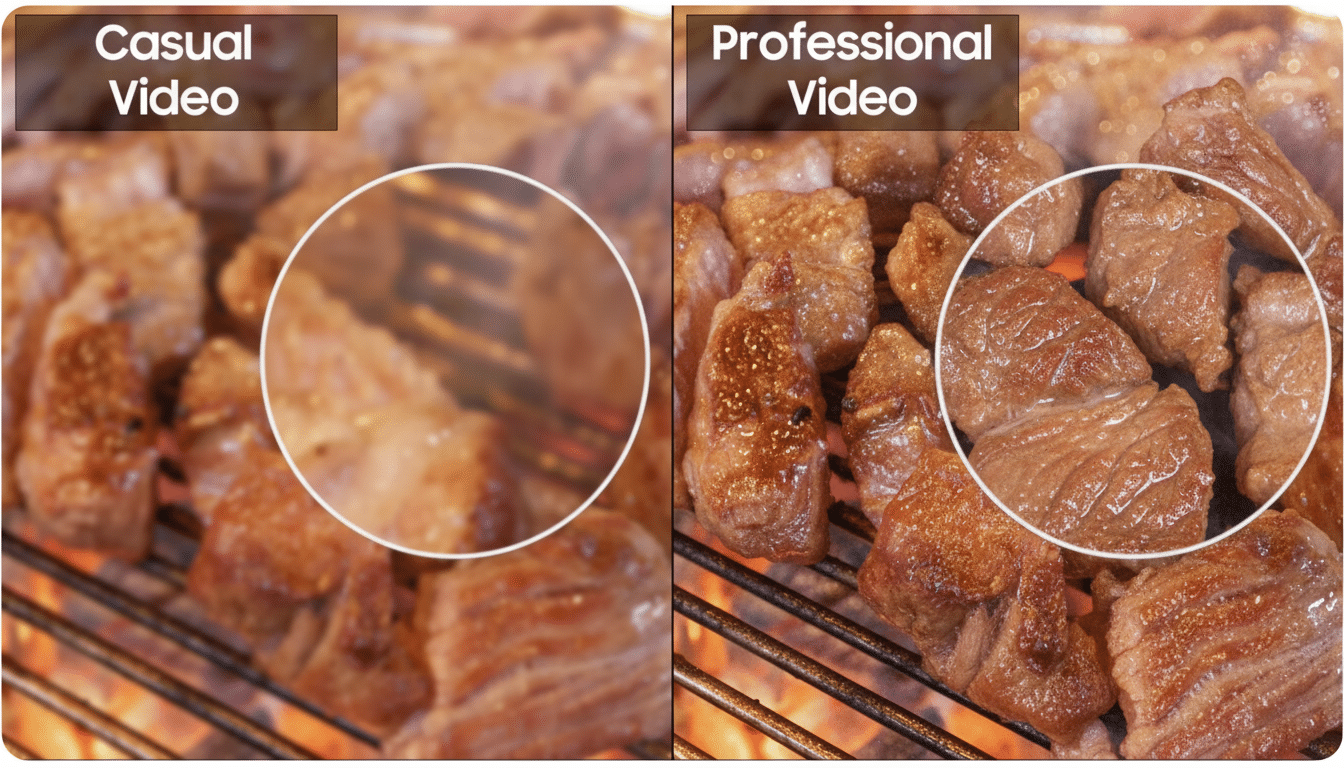
The 25/50fps options are also useful for PAL territories, as it won’t flicker under 50Hz lighting prevalent in Europe and parts of Asia. A native 100fps setting allows for a clean 4x slow‑motion output to a 25fps timeline without the need for interpolation.
Another rumored inclusion is “Horizon Lock,” a stabilization mode that keeps the horizon level as you rotate your phone — similar to GoPro’s horizon leveling, and in the same spirit as Apple’s Action mode. For run‑and‑gun shooters, cyclists or creators going after gimbal‑like steadiness without the extra gear, this may be a high‑impact quality‑of‑life upgrade.
How it compares to iPhone Pro video features and codecs
Apple’s current blueprint is pretty formidable: ProRes recording, Apple Log, 10‑bit HDR, and external SSD capture for 4K60 on its latest Pro iPhones. According to Apple’s documentation, ProRes 422 HQ data rates at 4K fall into the hundreds of megabits per second and will offer strong editing performance on most mainstream NLEs. But current iPhones do not offer ProRes RAW, and when those cameras implement ProRes it is usually 10‑bit 4:2:2, not 12‑bit 4:4:4.
Assuming Samsung can get solid APV at 12‑bit 4:4:4 with near‑lossless efficiency, it would give them an on‑paper lead over the iPhone in terms of color depth and chroma faithfulness. Paired with the various on‑device LUT workflows and global‑friendly frame rates, the S26 range could be a more versatile pocket option for grade‑heavy projects, VFX keys or brand work that requires tight color control.
The hardware and workflow caveats to watch at launch
That’s not to say specs will be the reason a winner is crowned. Supporting gigabit‑class video with matching stills performance is a combination of factors. It takes both a fast sensor readout, as well as a burly ISP/NPU and storage that won’t stall out. Look for questions about thermal throttling on long 4K60 or 8K takes, whether the camera can record APV shots to external USB‑C drives, and how quickly the Gallery app will apply LUTs to long clips before melting your battery.
Editor compatibility also matters. Final Cut Pro, Premiere Pro and DaVinci Resolve are dominated by ProRes. If APV is new in those ecosystems, Samsung has an urgent need for plug‑in SDK or native support at launch, as transcoding that isn’t part of a smooth workflow kills any gains.
Bottom line: a legitimate attempt at video dominance
From what’s been said, Samsung homes in on those very pain points that have kept so many filmmakers interested in the iPhone: color fidelity, editing robustness and high‑quality pro controls. If APV, 12‑bit 4:4:4, custom LUTs and smarter stabilization do ship as described — and are thermally reliable to boot — the Galaxy S26 could reset mobile video and put real pressure on the iPhone 17 Pro to respond.
