


PocketBook is leveling up the Kindle aesthetic for your den. The firm’s new InkPoster family introduces big, wall-mounted color E Ink displays to home and office walls; the matte finish promises paper-like qualities alongside ultra-low power draw. The 31.5-inch version begins at $1,699, with a separate 28.5-inch IGZO model selling for $2,399, which means that InkPoster is pretty upmarket décor with a techy backbone.
What these E Ink posters are and how they function at home
With InkPoster, you are essentially looking at framed, scaled-up color e-paper. Opposite the usual LCD or OLED screen, E Ink displays are reflective (not emissive), so they look like printed art in ambient light and remain readable even under harsh sunlight without any glare. PocketBook’s philosophy is based on stillness and thoughtfulness: put up one image and let it sit for months, or cycle curated works from an accompanying app without adding a TV-sized glow to the room.
- What these E Ink posters are and how they function at home
- How E Ink technology transforms wall art and display decor
- Cases where E Ink posters feel intuitive in real-world spaces
- Cost versus digital frames and TVs, and the trade-offs
- Limitations and design realities of large color e-paper
- Who is likely to buy these E Ink posters right now
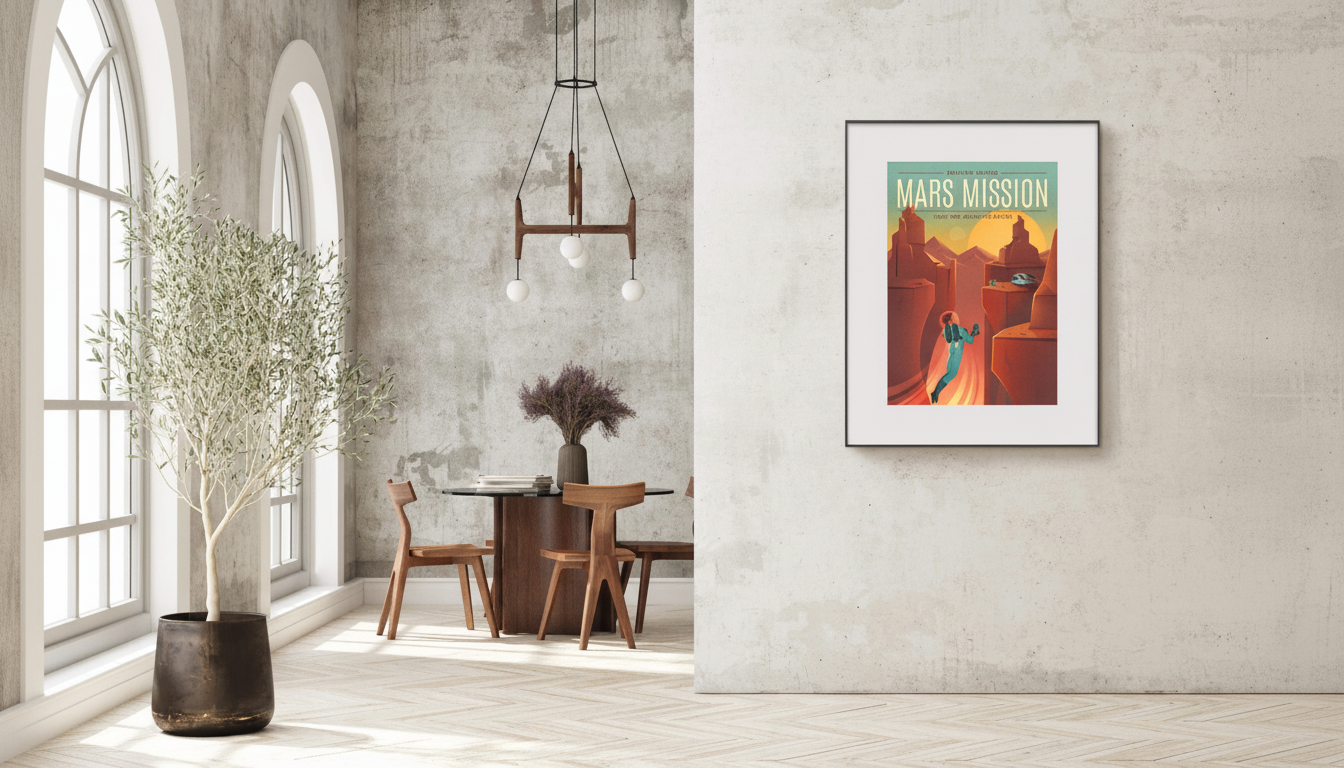
The higher-end 28.5-inch model reveals an IGZO backplane, a technology seen widely in high-end monitors for its strong electron mobility and lower leakage, enhancing ease of driving at larger sizes as well, with improvements in efficiency and stability when compared to LTPS-based models.
Both models were designed for wall mounting and framing to encourage the idea that these are art objects first, displays second.
How E Ink technology transforms wall art and display decor
What gives E Ink its fundamental advantage is that it’s using power only when the image changes. According to E Ink Corporation’s promotional materials, once a page is displayed, the screen “consumes power only when changing.” In practice, this means a static poster may go for weeks or months without recharging, while even scheduled changes only require quick bursts of energy — often just one watt-second during refresh.
Color e-paper has come a long way in recent years, with improved saturation and contrast, but it is still optimized for still images rather than motion. You can count on quiet, gallery-like visuals: no animations, no video, a refresh that rewards patience over spectacle. That’s the point for a lot of buyers. The result is a display that blends into the decor until you’re ready to switch out the art.
Cases where E Ink posters feel intuitive in real-world spaces
InkPoster fits snugly in places where a TV would be obnoxious and paper prints might feel too permanent. Home libraries, dining rooms, and reception areas are all natural fits. [Q&A: An interview with Amanda Friis on the design of Sample-Space offices and ski resorts] “Facilities departments can update promotional or seasonal graphics from their desktops without reordering and reprinting new art.” Already, transit agencies and retailers have been able to show the model at scale: London (and Sydney) have tested E Ink bus stop boards, which offer daylight readability and easy remote updates.
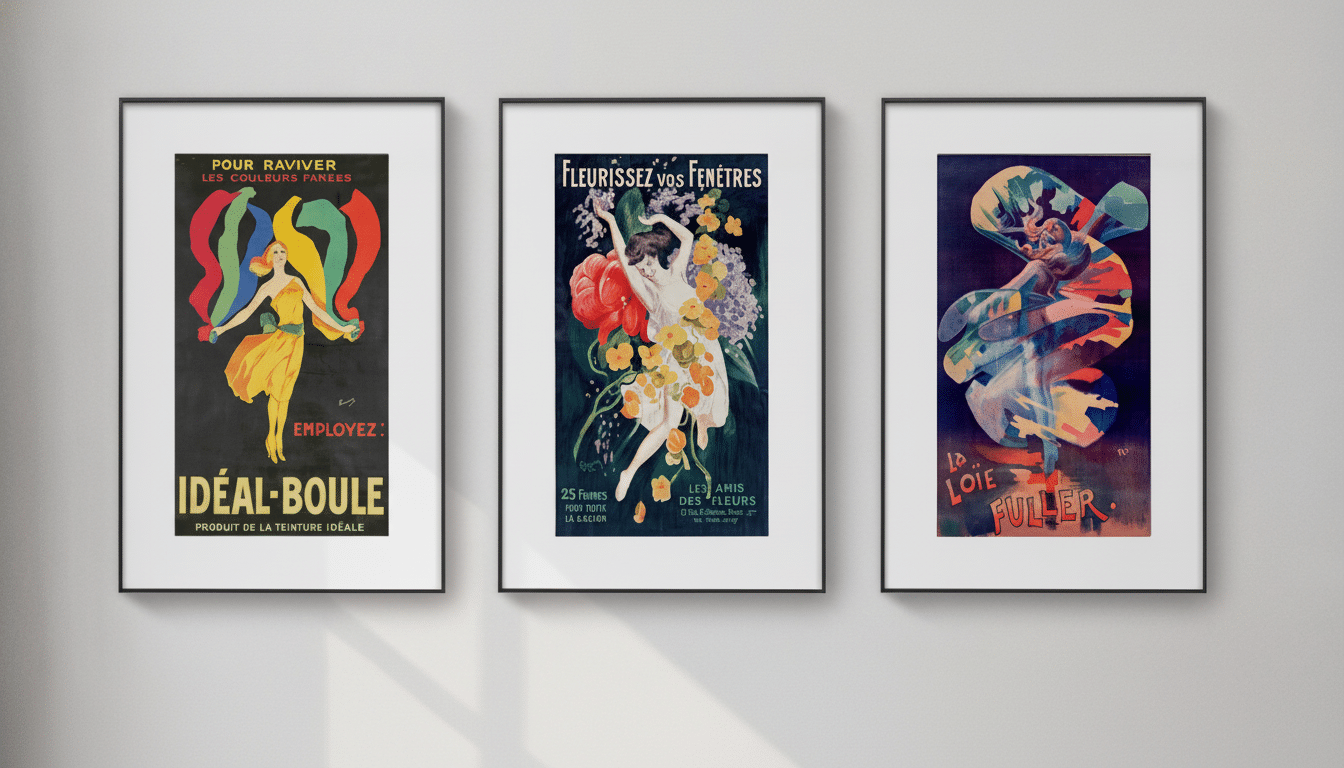
And PocketBook comes at that experience from the consumer-friendly angle of an app-driven library. Buyers can also upload their own photography or pick from curated sets to create rotating galleries. The display isn’t backlit, so art reads with the tactile quality of pigment on paper — a treat for illustration, monochrome photography, and text-forward poster design.
Cost versus digital frames and TVs, and the trade-offs
At $1,699 to $2,399, InkPoster is substantially more than those popular digital frames that generally run between $150 and $300, but also pricier connected frames that peak around $500. It also lives in a world of designer TVs that are sold as set pieces but are backlit and use power if they’re constantly on. It’s an aesthetic and energy profile trade-off too: E Ink gives you a print-like surface and vanishingly low idle power, while a TV has motion and brightness but must constantly use energy.
For energy-attuned purchasers, that dormant profile comes into play. Residential monitors and televisions can consume dozens to hundreds of watts under typical usage, according to efficiency tests compiled by the U.S. Department of Energy. A poster made from E Ink that updates once per day and is otherwise completely motionless hardly registers on the monthly utility bill, perhaps an ideal option for businesses looking to install hundreds of these things all over their ginormous spaces.
Limitations and design realities of large color e-paper
Color e-paper’s palette is less harsh than a backlit display, and its refresh speed remains deliberate rather than instantaneous. That’s fine for art and professional photography, less so for video or quickly shifting dashboards. Resolution and the pixel structure on large panels also reward viewing at a reasonable distance — think “gallery wall” rather than “loupe.” Those are intentional design decisions that put a restful, print-adjacent experience first.
The high cost of the IGZO version is a reflection of the ongoing difficulty scaling up e-paper while maintaining consistency. IGZO backplanes (a technology found in a lot of high-end tablets and monitors) are known for their stability and can help preserve image quality across larger areas without eating into battery life. For buyers running after the best execution of the idea, that’s an engineering detail that will make a difference.
Who is likely to buy these E Ink posters right now
InkPoster seems like an excellent fit for design-conscious early adopters, galleries, boutique hotels, and offices where visual solace is part of the brand. It may seem like a niche purchase right now, but it suggests what home displays might become: fewer glowing rectangles and more ambient objects that disappear into the room. Should production volumes increase as color e-paper gets better, prices could drop and accessibility could broaden.
These are, for the time being, luxury canvases for people who want a modicum of digital flexibility and restraint similar to print. If you’ve ever thought that your walls should function more like a library of first editions and not just like some static digital photo frame, PocketBook has just presented you with the right kind of screen.
