


A lifetime subscription to Skoove puts structured, song-led piano instruction on your phone, tablet or laptop — with none of the calendar juggling and monthly fees. The Premium subscription gets you 400+ interactive lessons, instantaneous feedback on how you’re playing, whether you use a MIDI keyboard or an acoustic piano, using your device’s microphone to understand notation and rhythm. It’s on sale now for $109.97, 63% off the regular price of $299.99.
The pitch is straightforward: learn piano on your own time. Squeeze in scales on a lunch break, refine a chorus before bed or chip away at technique while the coffee brews. For adult beginners and returnees, smoothing the path is often the difference between good intentions and lasting progress.
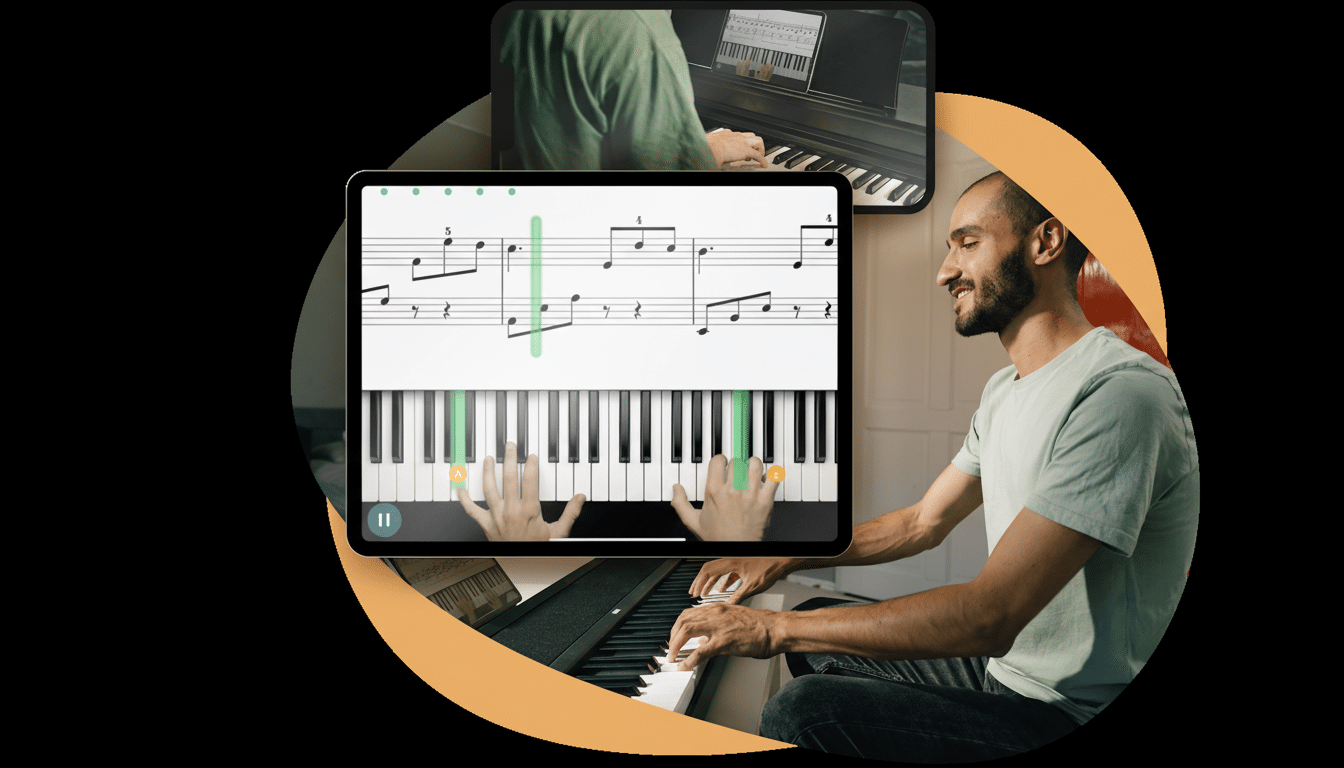
Modifying the learning pace to enable self-paced piano learning
Science of learning as a field consistently finds that immediate, personalized feedback and practice in bite-size chunks improve retention. And psychologist Anders Ericsson’s work on deliberate practice makes plain the power of regular, focused repetitions with immediate corrections — just the sort of thing responsive apps can provide. As the software listens, and flags up timing or note accuracy in real time, you learn a precise muscle memory faster.
Time and expense are the main factors that hold music learners back, according to surveys cited by the NAMM Foundation and Academy of Music: ABRSM. Self-paced formats ease the logistical burden. Instead of committing to a weekly lesson in a teacher’s studio and an arduous commute, you practice in small, frequent chunks — more in keeping with how most people live and work.
What's included with the Skoove lifetime plan
Skoove’s curriculum is arranged by level, taking beginners with no experience through posture, hand position and basic notation before progressing on to chords, rhythm and improvisation. Lessons are centered around familiar music — think Let It Be or Bach’s Minuet in G — so concepts are taught not in isolation but in context. You learn the I–V–vi–IV chord progression not as a theoretical concept but as the harmonic engine beneath a chorus you’ve known for years.
Listening to you play, the app pinpoints the right notes and catches late entries, nudging your tempo toward the pocket. Hook up a MIDI keyboard for the utmost accuracy in tracking, or have it listen to an acoustic piano through your device’s microphones. And because the platform works across devices, it’s easy to practice sitting at a desk or on the couch, or with your tablet on the music stand.
Premium access also includes sheet music for hundreds of songs, exercises and a music instructor to turn to when you’re constantly hitting walls.
New lessons come on board incrementally, and there are no renewal cycles to deal with; once you have the lifetime license, you can use the software for as long as you want.
Cost and value versus traditional lessons
Private lessons are still the gold standard in custom coaching, but they don’t come cheap. In most U.S. cities, weekly 30-minute lessons tend to hover around $30 to $60 per session; longer formats can leave monthly totals in the triple digits. Over a year, that can end up being $1,000 or more for regular lessons.
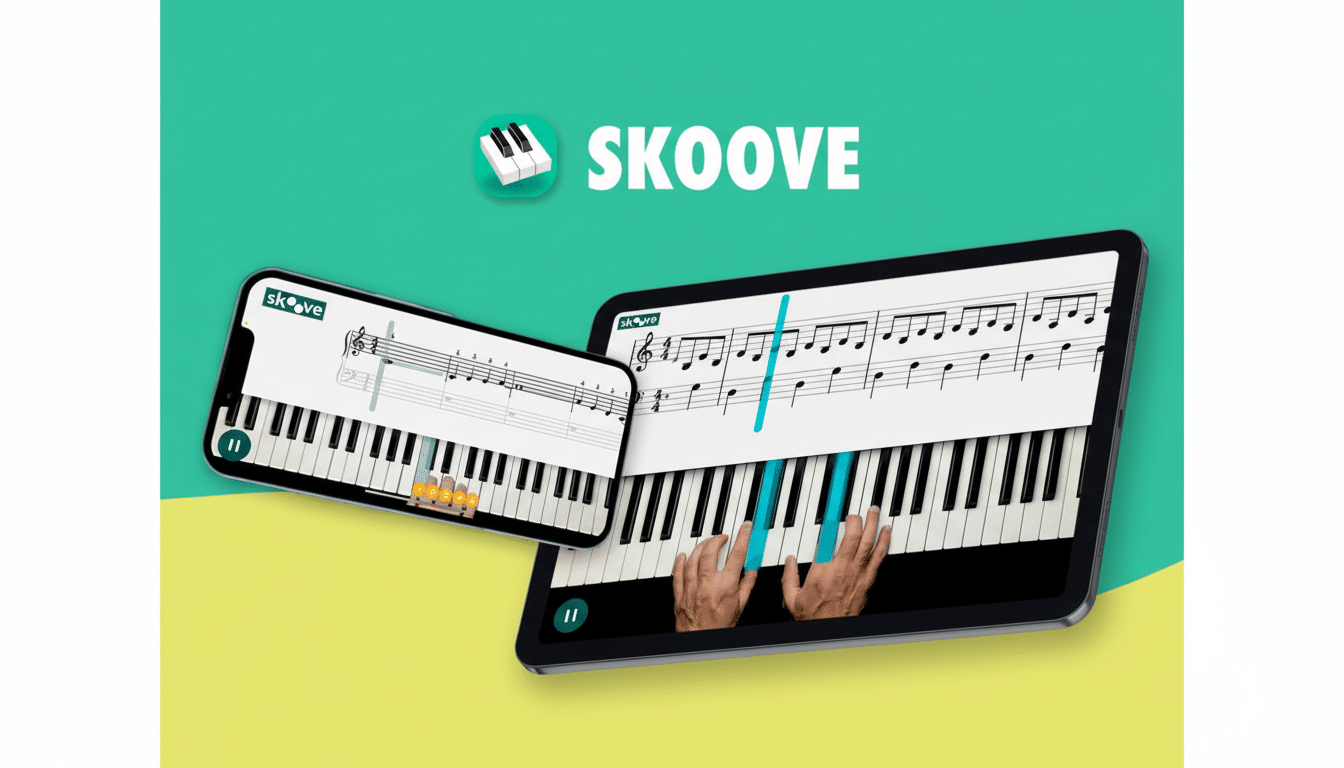
At $109.97 for lifelong access, Skoove costs less than even a couple in-person sessions. It’s not a substitute for a conservatory-trained teacher, but it can take you through a huge part of the foundation journey — especially if what you want as a player is reading, chords, accompaniment patterns and working on rhythm. If you’re a student pursuing graded exams through boards like ABRSM or the Royal Conservatory, an app like Skoove can make for a good little partner between check-ins with another human being in your area.
Who will benefit from Skoove — and who might not
Beginners seeking a low-pressure on-ramp, rusty returning adults and hobbyists looking to play pop standards will find the format accessible. Parents teaching kids to play piano can reach for familiar songs that will motivate the student, and older children should be able to work semi-independently with occasional supervision.
Players in pursuit of more advanced repertoire, intensive ear training for auditions or deep-dive explorations into jazz voicings will still crave specialized coaching. Instead, think of Skoove as a top-notch practice partner and curriculum, rather than something that can completely replace specialized pedagogy at the highest levels.
How to get the most out of Skoove’s piano lessons
Make micro-goals you can nail in 15–20 minutes at a time — one hands-together passage, a chord inversion drill or tighten up that metronome marking by 4–6 bpm. Thanks to consistency’s defeat of marathon sessions, short and directed practice can eliminate frustration.
Find a MIDI keyboard if you can for the best feedback and, every week, document yourself playing so that you can detect posture, tension and dynamics. Switch up your repertoire work with technique and throw in a little theory (like seventh chords or syncopation) that you can start using in a song you love immediately — context crushes mastery.
If you’ve been waiting for the “right moment,” a lifetime license takes two common excuses off the table — budget and time.
Thanks to structured lessons, real-time feedback and its repertoire of popular songs you already know, Skoove helps you actually stick with the piano rather than viewing it as another project.
