


Hardware startup Plaud is moving into AI note-taking with a pair of devices, the NotePin S “recording pin” wearable and a desktop device for capturing meeting minutes digitally from across apps.
Revealed in advance of CES, the pair is part of an emphasis on making sure both in-person and remote conversations are supported, unhindered.
A Wearable Device For Frictionless Capture
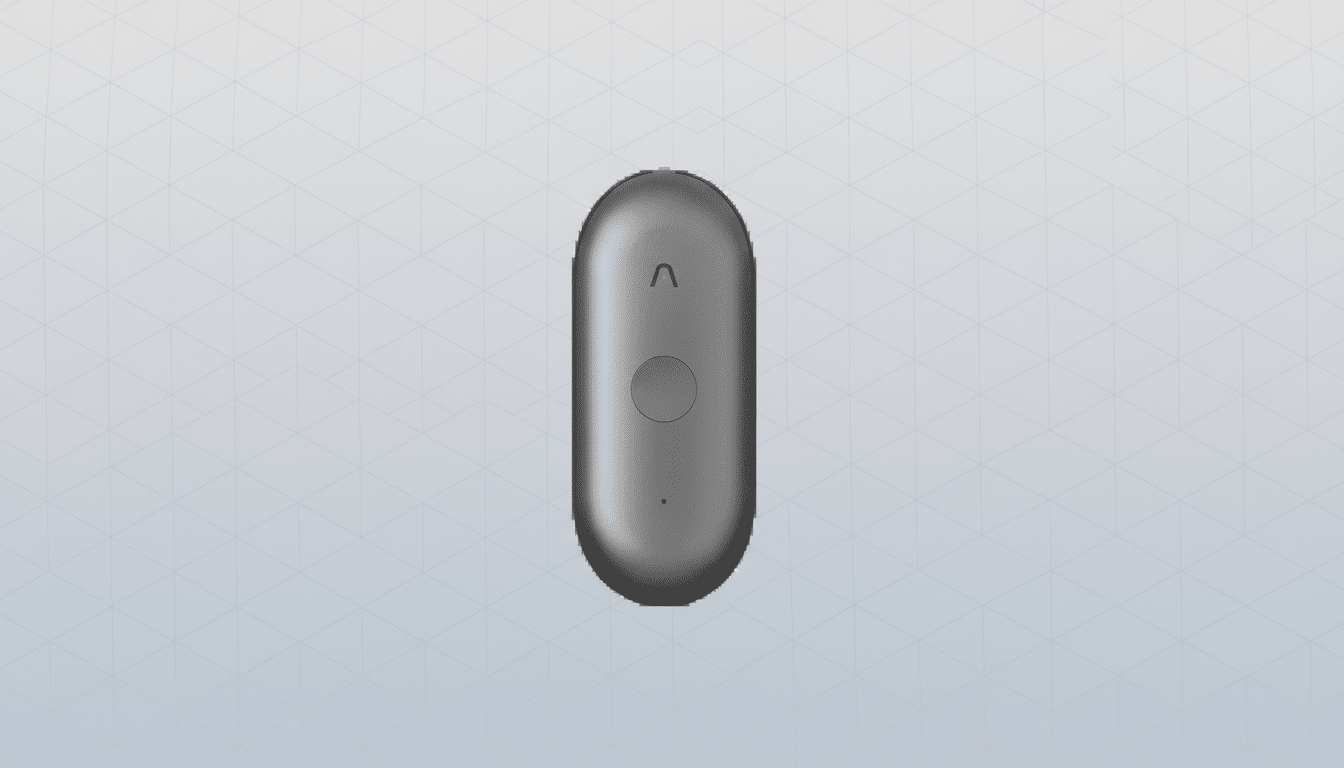
Building on the company’s pin-style recorder, the Plaud NotePin S has a physical button to record and stop sessions as well as to drop highlights during a conversation. That basic level of control can matter in the real world, where fumbling around with a phone or app can get in the way of the moment you wanted to preserve.
Priced at $179, the pin ships with a clip, lanyard, magnetic backing and even a wristband, so it can be worn or mounted as desired for the setting. Apple Find My support is included, drawing on a massive discovery network of Apple devices to help you retrieve a lost unit—a useful feature for road warriors or students.
Under the hood, the NotePin S retains the same core specs as its previous generation: 64GB of onboard storage, dual MEMS microphones that are rated to capture voices within about 9.8 feet and up to 20 hours of continuous recording on a single charge.
Plaud comes with 300 free minutes of AI transcription per month, with additional paid tiers for heavy users.
At the expense of battery life and pickup range, though, it is less costly than a larger device like the Note Pro. This makes it more suitable for hallway interviews, campus lectures or impromptu client chats where discretion and weight count for more than stadium-scale capture.
Desktop Notetaker Tames Virtual Meeting Mayhem
Plaud’s new Mac desktop app taps into system audio in order to record calls from services like Zoom, Google Meet, Microsoft Teams and others without a bot joining the call. The app knows when a meeting starts and can nag you to begin recording — a small touch that prevents the all-too-typical “forgot to hit record” moment.
After the capture, Plaud leverages AI to structure the transcripts into bite-sized notes with summaries, key points and action items. The company is also stretching its multimodal ethos from mobile: users can append images and typed notes to every session so that whiteboard snapshots or screenshots of the agenda live alongside the transcript.
The appeal for teams that field dozens of calls a week is the combination of passive capture and automatic organization. That speaks to a familiar pain point: lots of platforms out there promising meeting recordings, but the value comes when raw audio can be made searchable, shareable as well as decision-ready minutes.
How It Stacks Up In A Crowded Field Of AI Notetakers
The desktop app also puts Plaud in direct competition with a new wave of AI notetakers such as Granola, Fathom, Fireflies and incumbents like Otter. One key difference is that Plaud has a hardware-software combo: one account works on both a wearable for face-to-face capture and a desktop client for online meetings, cutting down on fragmentation across tools.
Another benefit of the system-audio approach is that it skirts IT security measures, which can sometimes block meeting bots. That convenience entails responsibility: recording laws differ by region, anywhere between one-party and all-parties consent depending on where you live. Many organizations tend to follow the lead of organizations such as EFF and IAPP in crafting recording policies that comply.
A Bet On Purpose-Built AI Wearables For Note-Taking
Where some AI wearables strive to be general-purpose assistants, Plaud is doubling down on a focused job: capture and comprehension. The company says it has sold over 1.5 million devices across four products, a sign that task-specific hardware still clicks when combined with competent software.
You see that focus in practical touches: device-side storage so recordings don’t get lost in the cloud, a physical highlight button to mark key quotes on-the-fly and Find My support so gear doesn’t go missing. For buyers, the question will be less about raw specs and more about whether Plaud’s pipeline consistently turns messy conversations into reliable, shareable summaries.
Early Outlook For Plaud’s AI Note-Taking Devices And App
AI-powered note-taking is a table stakes feature in productivity suites, and the differences will be all about accuracy, latency of voice recognition and smooth workflows that span both physical and virtual sessions. If the Plaud desktop client can reliably capture phone calls, structure notes cleanly and synchronize smoothly with my NotePin S recordings, however, it might yet carve out a defensible niche for people straddling both worlds.
For now, the pitch is simple: a wearable that makes in-person capture easy-peasy and a desktop app that wrangles the online meeting sprawl. The tool that probably wins in an era of endless conversation is the machine that helps people remember what matters — and do something about it — without getting in their way.
