


A new user survey and months of hands-on testing offer a look at what may be an unexpected divide between Google Pixel phones and the wireless chargers that people are actually buying. A lot of owners are hooking Pixels up to chargers that throw them into slow fallback modes, stranding them at 3–5W instead of the 10–25W rates listed on spec sheets. The problem goes both ways: older Pixels frequently trip up on newer Qi2 pads, while the new Pixel 10 series snubs legacy Qi hardware.
What the Survey Shows About Pixel Phones and Qi/Qi2 Chargers
Two data points stand out. For starters, 26.85% of over 2,600 respondents admitted to buying a Qi2 charger when they have a Pixel 9 or older model. That “future-proof” strategy often backfires: those handsets can fall down to the 5W Basic Power Profile (BPP) when put on a Qi2 pad, even though they support 12W via typical Qi. Second, 48% reported, across 400+ Pixel 10 series owners, that the new phones have tumbled down to a paltry 5W on older Qi pads and power banks that support 10–15W output through the Extended Power Profile (EPP).
- What the Survey Shows About Pixel Phones and Qi/Qi2 Chargers
- Why the Wireless Charging Handshake Fails Between Pixels and Qi/Qi2
- Real-world impact on charging speeds for different Pixel models
- Choosing the Right Charger for Your Pixel
- Troubleshooting and best practices for faster Pixel charging
- What needs to happen next for better Pixel and Qi compatibility
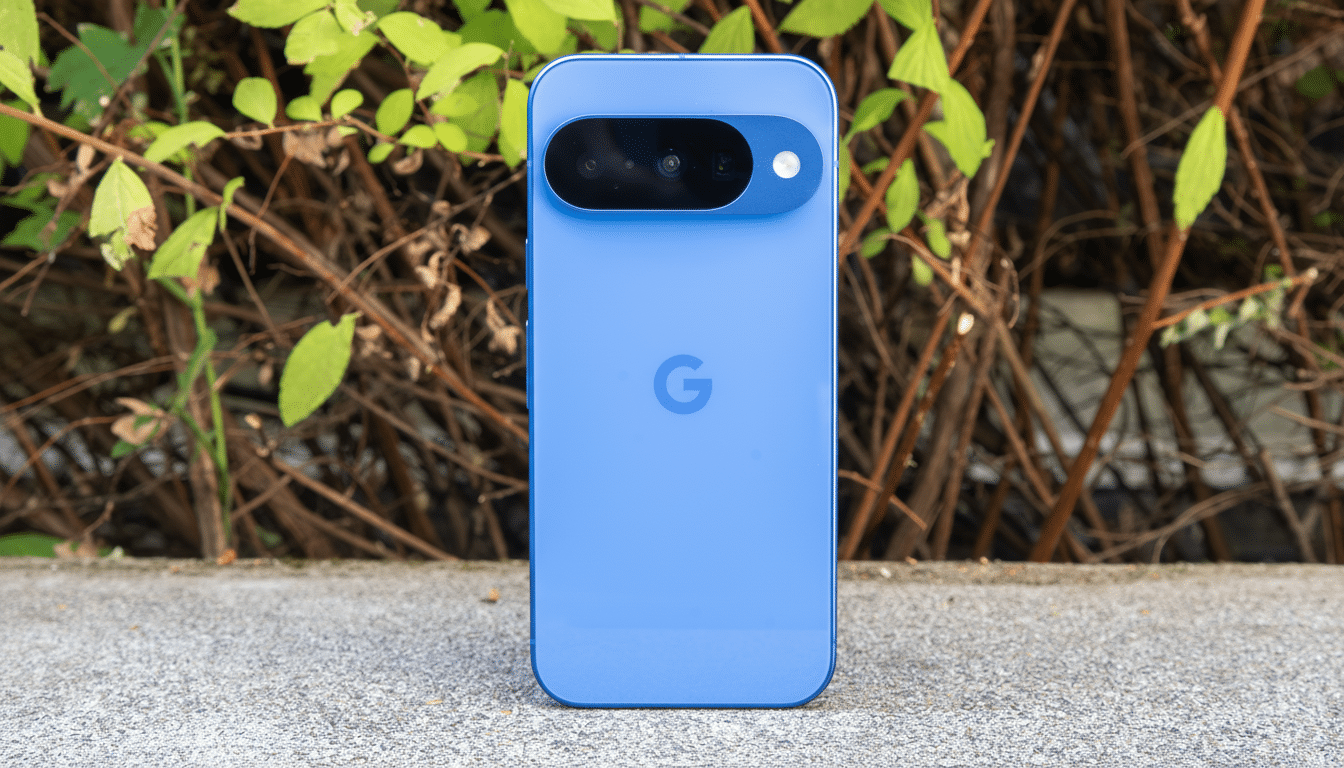
And the outcome in both cases is equally crummy: excruciatingly slow top-ups that can triple what charging times could be otherwise, despite the fact that phone and charger alike advertise higher capabilities.
Why the Wireless Charging Handshake Fails Between Pixels and Qi/Qi2
Wireless charging relies on what is called a “handshake,” which sets the power profile. The Wireless Power Consortium (WPC) classifies BPP at 5 watts, EPP for 10–15 watts, and, in the case of Qi2, a MagSafe-like Magnetic Power Profile (MPP), which standardizes alignment and allows for reliable delivery of up to 15 watts, with some companies claiming higher figures. If the phone and pad can’t get along in a safe, compatible mode—due to magnets, coil alignment, firmware oddities, or thermal constraints—the phone asks for BPP.
Older Pixels without Qi2 can’t communicate properly with the Qi2 hardware, especially magnetic pads, and play it safe. In the other direction, the Pixel 10 family (which physically supports Qi2) can be conservative with legacy Qi EPP pads as well, reverting to 5W. We’re also reading reports from user forums and owner groups that can only be matched by lab-style observations—the protocol is theoretically backward compatible, but when it comes to real-world interoperability it is hit-or-miss.
Real-world impact on charging speeds for different Pixel models
In my testing, that’s meant Pixel 9 and older phones sitting on Qi2 pads stayed in the 3–4W range in practice, which isn’t super convenient when you just need to top a phone up for an hour or so. Pixel 10 series phones on ancient Qi pads manifest much the same behavior, ending up displaying real power levels in that 3–4W range once it’s all settled down. And on Qi2 as well, sustained speeds still tend to be some way off the headline figures: we’ve had word that Pixel 10 Pro XL owners, with the advertised potential of up to 25W wireless, often see a more workable figure of around 8–10W once thermal management gets busy.
Car mounts are an especially egregious repeat offender. A lot of built-in, in-car pads are BPP-only, and cabin heat makes it even worse for thermal throttling. Power banks and ultra-thin travel pads can also have alignment issues; they don’t love cases with magnets or off-center coils, both of which nudge the phone to downshift.

Choosing the Right Charger for Your Pixel
If you have a Pixel 9 or later: find yourself a Qi charger that is specifically EPP-certified for 10–15W, and avoid Qi2-first, magnet-holding pads at all costs. A fan-cooled stand from a known brand with 15W EPP and Pixel compatibility is safer and often cheaper than new Qi2 hardware. We suggest you supply it with an 18–30W rated USB-C Power Delivery adapter to ensure the pad isn’t power-starved.
If you have a Pixel 10, 10 Pro, or 10 Pro XL: find a Qi2-certified charger that uses the Magnetic Power Profile. You’ll see more consistent alignment and higher average speeds than with older Qi pads. Still, moderate your expectations—it is hard to hit and maintain 25W under sustained load in the real world because of thermal constraints. Make sure the charger is WPC certified and has strong, properly located magnets for the Pixel coil arrangement.
For cars: ensure that the mount is Qi2-certified and supports active cooling. Many factory mats remain BPP-only. Besides, if you need old-school in-car charging, it seems like wired USB-C will still be the fastest and most reliable option on long drives.
Troubleshooting and best practices for faster Pixel charging
- Check the power brick; a wimpy wall adapter can result in the pad throttling.
- Strip off thick or metal-loaded cases and re-center the phone; a few millimeters make a difference.
- Keep the pad well ventilated—heat is anyone’s enemy when trying to sustain wattage.
- Update firmware if available; some brands issue charger updates through their companion apps.
- Locks to 5W are normally caused by the power source; if your pad keeps locking to 5W and it is not fully charging, then stop using it and try a certified, known-good replacement.
What needs to happen next for better Pixel and Qi compatibility
For better cross-generation support, both sides have to chip in. Google has the opportunity to keep improving software for thermal and handshake logic, and accessory makers should be increasingly accurate in meeting WPC test suites as well as labeling what’s being delivered on products so you know whether you’re getting BPP, EPP, or Qi2 MPP—and at what sustained rates. More-specific guidance in Google’s support documentation would also help steer Pixel owners to the right gear.
Until then, the simplest advice is that it’s best to match the charger generation with your phone. Pixels without Qi2 pair best with 15W EPP; Qi2-equipped Pixels pair best with Qi2. “Future-proofing” and “backward compatible” might make nice copy on a box, but too often today they mean only going as fast as 5 watts.
